


Wal-Aquarell: Schritt-für-Schritt-Anleitung


What You'll Need
- Aquarellpapier
- Pinsel
- Bleistift
- Farben
- Zwei Becher Wasser
- Papier
Color Palette
If you’ve ever felt intimidated by "perfect" botanical illustrations or hyper-realistic seascapes, welcome to your new favorite headspace. This whale watercolor painting tutorial is all about the "sketchbook aesthetic", think loose edges, visible brushstrokes, and a watery, atmospheric feel.
We aren’t aiming for a textbook diagram here. We’re capturing the soul of a whale in a 15-minute expressive study. It’s fast, it’s beginner-friendly, and it celebrates the beautiful "mistakes" that make watercolor so magical. Put away the masking tape and the tracing lightboxes; we’re going to embrace the flow.
Schritt-für-Schritt Wal-Aquarellmalerei
Willkommen zu diesem anfängerfreundlichen Leitfaden, der Ihnen hilft, ein schönes, lockeres und ausdrucksstarkes Wal-Aquarell zu malen. Wenn Sie schon immer die majestätische, fließende Natur eines Wals in Ihrem Skizzenbuch einfangen wollten, sich aber von komplexen Techniken eingeschüchtert fühlten, sind Sie hier genau richtig.
Dieses Tutorial konzentriert sich auf eine schnelle, zugängliche „Skizzenbuch-Ästhetik“, die die inhärente Magie der Aquarellmalerei feiert – ihre unvorhersehbaren Verläufe, sichtbaren Pinselstriche und luftige Transparenz. Wir streben keine starre Perfektion an. Stattdessen ist dies eine 15-minütige Studie, die Ihnen helfen soll, den Fluss des Pigments anzunehmen und die Essenz eines Wals in nur wenigen entschlossenen Bewegungen einzufangen.
Wir werden eine begrenzte Palette durchgehen, die Form in grundlegende Formen vereinfachen und fundamentale Techniken wie Nass-in-Nass-Mischen und weiche Farbverläufe verwenden, um mühelos Dimension aufzubauen. Am Ende dieser Studie haben Sie ein charmantes, fertiges Werk und ein tieferes Verständnis dafür, wie Sie die Farbe die Arbeit machen lassen.
Bereit, einzutauchen und Ihre Reise der expressiven Wal-Aquarellmalerei zu beginnen? Wenn Sie kuratierte Sets suchen, um den Einstieg noch einfacher zu machen, entdecken Sie die Aquarellmaterialien bei Tobios Kits für alles, was Sie zum Anfangen brauchen.

Die lockere "Bohnen"-Geste
- Vergiss die komplexe Anatomie. Skizziere in deinem Skizzenbuch leicht eine „Bohnenform“ mit deinem Bleistift. Mache den Kopf stumpf und rund, verjünge ihn zu einem schmalen Schwanz. Gib ihm ein einfaches „W“ für die Schwanzflosse und eine kleine Blattform für die Brustflosse. Halte deine Linien blass – in einer lockeren Studie soll die Farbe die schwere Arbeit machen, nicht der Graphit.

Die expressive erste Lasur
Lade deinen Pinsel mit einer wässrigen Mischung aus Indigo und Ultramarin. Beginne am Oberkopf und streiche die Farbe über den Rücken.
- Der Trick: Lass ein paar „weiße Lücken“ oder Trocken-Papier-Funken entlang des Rückens, um Licht auf der Haut nachzuahmen.
- Während die Farbe noch nass ist, ziehe das Pigment mit einem etwas trockeneren Pinsel zum Bauch herunter und lass die Farbe natürlich in ein blasses, wässriges Blau übergehen.

Nass-in-Nass-Charakter
- Während deine Grundschicht noch feucht ist (glänzend, nicht pfützend), tropfe eine konzentrierte Mischung aus Paynes Grau entlang der „Unterkurve“ des Kopfes und der Flossenunterseite. Beobachte, wie das Pigment aufblüht! Das schafft sofortige Tiefe, ohne dass du Schatten „malen“ musst. Diese spontane Vermischung ist das Markenzeichen eines großartigen Walaquarells.

Details & Verzierungen definieren
Once the paper is about 90% dry, use the tip of your brush with a thick, "creamy" consistency of Payne’s Gray.
- The Eye: One tiny, deliberate dot.
- The Mouth: A single, soft sweeping line that follows the curve of the head.
- The Fin: Add a few darker strokes at the base of the fin to pop it forward from the body.
- Notice the subtle "cauliflower" blooms and hard edges in the reference? Those are our friends! If you have a bit of excess water, let it dry into a "bloom" to create skin-like texture. If you're feeling extra expressive, add a few tiny splatters of Indigo around the tail to suggest a gentle splash.
Variations: Blue Whale, Galaxy Whale, and Tail Silhouette
Same skills, different vibes. Try one of these when you want a second painting without reinventing the wheel.
1) Blue whale version (more realistic color)
To lean into a blue whale watercolor painting look:
- Make your base mix more Ultramarine-heavy for a deeper, natural blue.
- Use Payne’s Gray sparingly for the underside shadows.
- Keep the belly lighter and cleaner for contrast.
2) Galaxy whale
- Wet the whale shape and drop in Ultramarine and Phthalo.
- Add deeper Indigo at the edges.
- While damp, flick clean water for soft “stars,” then add a little splatter once dry.
3) Whale tail silhouette
- Draw only the tail flukes (big “W” shape) coming out of the water.
- Paint the tail as a dark silhouette (wet-on-dry).
- Add wet-on-wet ocean around it, then splatter for spray.
Conclusion
A strong whale watercolor painting comes down to three things: a simple outline, one smooth base wash, and a darker back gradient with soft shadows. Add a tiny eye, a gentle mouth line, and maybe some bubble splatter, and you’ve got a piece that looks finished without feeling fussy.
If you want more guided, low-stress projects like this, head to Tobio’s Kits for inspiration and supplies, then keep the momentum going with the watercolor tutorials. Paint the whale, let it dry, and try not to “fix” it to death. That’s the real pro move.
Mel, Founder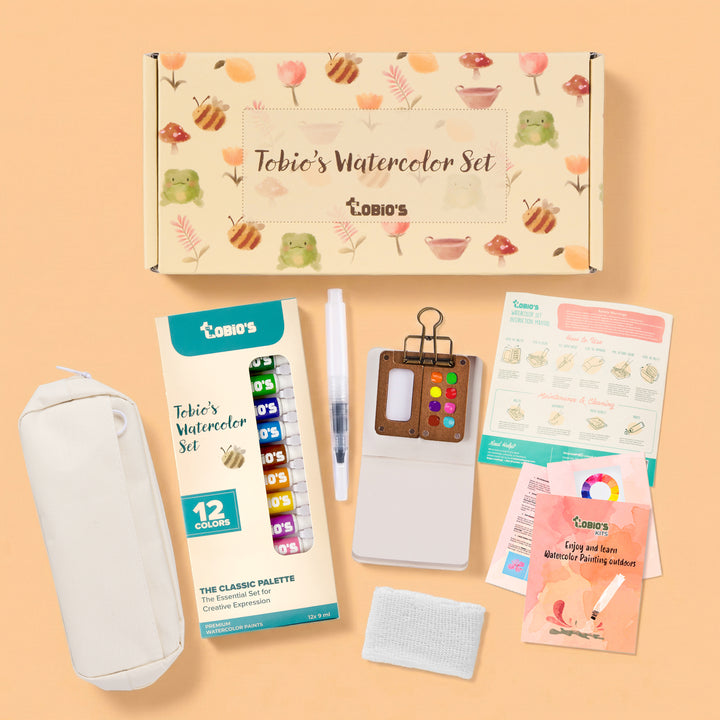
Bereit zu Malen?
Dieses Tutorial wurde für die Verwendung mit unserem Aquarell-Set entwickelt.
Link zum Link


