


Dipinto di balena ad acquerello: tutorial passo dopo passo


What You'll Need
- Carta per acquerello
- Pennelli
- Matita
- Colori
- Due bicchieri d'acqua
- Carta
Color Palette
If you’ve ever felt intimidated by "perfect" botanical illustrations or hyper-realistic seascapes, welcome to your new favorite headspace. This whale watercolor painting tutorial is all about the "sketchbook aesthetic", think loose edges, visible brushstrokes, and a watery, atmospheric feel.
We aren’t aiming for a textbook diagram here. We’re capturing the soul of a whale in a 15-minute expressive study. It’s fast, it’s beginner-friendly, and it celebrates the beautiful "mistakes" that make watercolor so magical. Put away the masking tape and the tracing lightboxes; we’re going to embrace the flow.
Pittura di Balena ad Acquerello Passo dopo Passo
Benvenuto in questa guida per principianti progettata per aiutarti a creare un bellissimo, sciolto ed espressivo dipinto di balena ad acquerello. Se hai sempre voluto catturare la maestosa e fluida natura di una balena nel tuo taccuino ma ti sei sentito intimidito dalle tecniche complesse, sei nel posto giusto.
Questo tutorial si concentra su un'estetica da taccuino veloce e accessibile che celebra la magia intrinseca dell'acquerello: le sue fioriture imprevedibili, le pennellate visibili e la trasparenza aerea. Non puntiamo alla perfezione rigida. Invece, questo è uno studio di 15 minuti pensato per aiutarti ad abbracciare il flusso del pigmento e catturare l'essenza di una balena in pochi movimenti decisi.
Esploreremo una palette limitata, semplificheremo la forma in forme base e useremo tecniche fondamentali come la miscelazione bagnato su bagnato e sfumature morbide per costruire dimensione senza sforzo. Alla fine di questo studio, avrai un pezzo affascinante e completo e una comprensione più profonda di come lasciare che la pittura faccia il lavoro.
Pronto a tuffarti e iniziare il tuo viaggio di pittura espressiva di balena ad acquerello? Se cerchi kit curati per iniziare ancora più facilmente, esplora i materiali per acquerello su Tobios Kits per tutto ciò di cui hai bisogno per cominciare.

Il gesto sciolto a "fagiolo"
- Dimentica l'anatomia complessa. Nel tuo taccuino, disegna leggermente con la matita una forma a "fagiolo". Rendi la testa smussata e arrotondata, assottigliandola verso una coda stretta. Dai una semplice "W" per le pinne caudali e una piccola forma a foglia per la pinna pettorale. Mantieni le linee leggere: in uno studio libero, vogliamo che sia il colore a fare il lavoro pesante, non la grafite.

Il primo lavaggio espressivo
Carica il pennello con una miscela acquosa di Indaco e Ultramarino. Partendo dalla cima della testa, stendi il colore lungo il dorso.
- Il trucco: Lascia alcune "zone bianche" o scintillii di carta asciutta lungo la sommità del dorso per simulare la luce sulla pelle.
- Mentre il colore è ancora bagnato, trascina il pigmento verso il ventre con un pennello leggermente più asciutto, lasciando che il colore sfumi naturalmente in un azzurro pallido e acquoso.

Personaggio bagnato su bagnato
- Mentre il tuo strato base è ancora umido (lucido, non con pozzanghere), deposita una miscela concentrata di Grigio di Payne lungo la "curva inferiore" della testa e la base della pinna. Guarda il pigmento fiorire! Questo crea profondità istantanea senza che tu debba "dipingere" le ombre. Questa mescolanza spontanea è il marchio di un grande acquerello di balena.

Definire i dettagli e gli abbellimenti
Once the paper is about 90% dry, use the tip of your brush with a thick, "creamy" consistency of Payne’s Gray.
- The Eye: One tiny, deliberate dot.
- The Mouth: A single, soft sweeping line that follows the curve of the head.
- The Fin: Add a few darker strokes at the base of the fin to pop it forward from the body.
- Notice the subtle "cauliflower" blooms and hard edges in the reference? Those are our friends! If you have a bit of excess water, let it dry into a "bloom" to create skin-like texture. If you're feeling extra expressive, add a few tiny splatters of Indigo around the tail to suggest a gentle splash.
Variations: Blue Whale, Galaxy Whale, and Tail Silhouette
Same skills, different vibes. Try one of these when you want a second painting without reinventing the wheel.
1) Blue whale version (more realistic color)
To lean into a blue whale watercolor painting look:
- Make your base mix more Ultramarine-heavy for a deeper, natural blue.
- Use Payne’s Gray sparingly for the underside shadows.
- Keep the belly lighter and cleaner for contrast.
2) Galaxy whale
- Wet the whale shape and drop in Ultramarine and Phthalo.
- Add deeper Indigo at the edges.
- While damp, flick clean water for soft “stars,” then add a little splatter once dry.
3) Whale tail silhouette
- Draw only the tail flukes (big “W” shape) coming out of the water.
- Paint the tail as a dark silhouette (wet-on-dry).
- Add wet-on-wet ocean around it, then splatter for spray.
Conclusion
A strong whale watercolor painting comes down to three things: a simple outline, one smooth base wash, and a darker back gradient with soft shadows. Add a tiny eye, a gentle mouth line, and maybe some bubble splatter, and you’ve got a piece that looks finished without feeling fussy.
If you want more guided, low-stress projects like this, head to Tobio’s Kits for inspiration and supplies, then keep the momentum going with the watercolor tutorials. Paint the whale, let it dry, and try not to “fix” it to death. That’s the real pro move.
Mel, Founder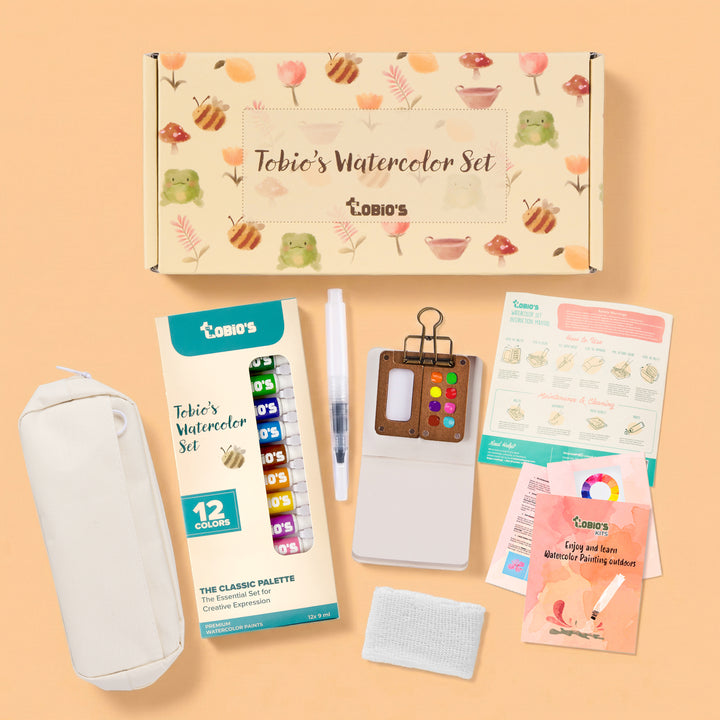
Pronto a Dipingere?
Questo tutorial è stato progettato per l'uso con il nostro Kit di Acquerelli.
Link al link


