


How to Paint a Watercolor Cactus: Fast 15-Minute Study


What You'll Need
- Watercolor paper (140lb cold press)
- Sap Green watercolor
- Hooker's Green watercolor
- Burnt Umber watercolor
- Two cups of water
- Paper towel
- Pencil + eraser
- Medium round watercolor brush
- Small round watercolor brush
- Watercolor palette
Color Palette
If you've ever tried a cactus watercolor painting and ended up with a green blob that looks more like a pickle with anxiety, you're not alone. Cacti are deceptively simple. While this is a tutorial on how to paint one, we are throwing out the complex layering and professional tracing. Instead, we are focusing on a fast, beginner-friendly Loose Sketchbook Style.
This expressive study is about capturing the juicy, organic feel of the plant using wet-in-wet techniques and confident strokes. You don't need perfect drawing skills; you just need a relaxed hand and a willingness to let the watercolor do its magical, unpredictable thing.
To get that fresh look shown in the study, you only need three specific pigments. Keeping your palette limited is the secret to preventing your greens from turning into muddy swamps: Sap Green for the main body, Hooker's Green to drop into the wet base for instant shadow and depth, and Burnt Umber for those quick, expressive little spines.
Step-by-Step: Fast Cactus Watercolor Painting
Watercolor thrives when you don't overwork it. We are going to build this cactus in just a few decisive steps. The goal here is to capture the juicy, spiky essence of the plant, not a photorealistic botanical study. Let the water do the heavy lifting. If you find yourself enjoying this relaxed approach, explore plenty of other beginner-friendly projects in our full collection of watercolor tutorials.

The Invisible Structure
Keep your initial sketch as light as possible. If you can draw a potato or a pickle with confidence, you can sketch this cactus.
- Draw a tall, rounded column for the main body.
- Add two smaller, curving oval arms branching off the sides. Don't worry about perfect symmetry; organic shapes are wonky by nature. Ensure your pencil lines are barely visible.

The Juicy Base Wash
This step needs to be done quickly while the paper is wet.
- Mix a generous puddle of Sap Green (a milk consistency).
- Using your medium round brush, quickly fill in the entire cactus shape. Work confidently.
- Crucial Detail: Notice in the reference image how there is a lighter streak down the center of the left arm and main body? Before the Sap Green dries, rinse your brush, dry it slightly on a paper towel, and gently lift a stripe of color away to create that instant, soft highlight.

Spontaneous Shadow Drops
We are going to build dimension using a wet-on-damp technique.
- While your base layer of Sap Green is still glistening and damp (but not forming puddles), load your brush with the darker Hooker's Green.
- Carefully drop this darker pigment along the left edge of the main body, under the curves of the arms, and down the right side.
- Let the water do the work! The dark green will naturally bleed and soften into the lighter green, creating a beautiful, rounded shadow without any harsh lines or manual blending. Now, step away and let it dry completely.

Expressive Spines and Texture
Only proceed when the paper is bone dry to the touch.
- Switch to your small round brush and load it with a dense mix of Burnt Umber (think syrup consistency).
- Add the spines using quick, flicking motions. Notice in the reference image that the spines are not a uniform barcode. They are small, energetic ticks and tiny v shapes.
- Concentrate a few more spines along the outer edges and the shadow lines, keeping them sparse in the highlighted areas. Less is more. Stop before you think you are finished.
Troubleshooting: Common Beginner Mistakes (Fixed)
My cactus looks flat
Add one more shadow layer on the darker side and under overlaps. Keep highlights clean. Flat usually means not enough value change.
My colors turned muddy
Let layers dry before adding more. Mud happens when you overblend wet layers or mix too many pigments together.
My edges are messy
Use less water on the brush when painting near edges. Also, paint slower around the outline and let the paper do the work.
I overdid the spines
Pause. Let it dry. Glaze a very light green wash over the area to push the spines back visually. Next time, add half as many and stop earlier than you think.
For more practice with structured, beginner-friendly steps, check these watercolor tutorials and apply the same layering approach to any design.
Questions, answered
What are some common mistakes to avoid in watercolor painting?
The four most common watercolor mistakes are overworking wet layers (causes mud), using too many pigments at once (also mud), painting with too much water near edges (messy outlines), and adding too many small details too early (overworked spines, cluttered washes). Let each layer dry, limit yourself to two or three pigments, and stop one stroke before you think you're done.
What is the easiest cactus for beginners to paint in watercolor?
A saguaro-style three-armed cactus is the easiest beginner subject. The shape is forgiving (organic curves, no symmetry), it only needs three colors (Sap Green, Hooker's Green, Burnt Umber), and the whole painting can be finished in 15 minutes using a wet-in-wet base wash and quick spine flicks.
Is this cactus watercolor painting tutorial good for beginners?
Yes — this 15-minute expressive sketchbook study is designed for absolute beginners. You don't need perfect drawing skills, complex layering, or professional tracing. The loose style lets the watercolor do most of the work for you.
What paint colors do I need to paint a loose watercolor cactus?
A simple three-color palette is all you need: Sap Green for the main body base wash, Hooker's Green (or any dark cool green) to drop in for spontaneous shadows, and Burnt Umber for the spines. Keeping the palette this limited is the secret to preventing muddy greens.
How do I add shadows to a watercolor cactus without harsh lines?
Use a wet-on-damp technique. While the Sap Green base layer is still glistening but no longer puddling, load your brush with darker Hooker's Green and drop it along the edges. The water in the base layer will pull the darker pigment outward, blending it softly without any manual brush strokes.
How do I paint cactus spines without ruining the painting?
Wait until the green base is bone dry. Use a small round brush with a syrupy Burnt Umber mix, and add spines with quick flicking motions — small ticks and v shapes, not a uniform barcode. Concentrate them along the outer edges and shadow side, and stop before you think you're done. Less is always more.
Conclusion
A good cactus painting comes down to three things: light base layer, clear shadows, and restrained texture. Keep your washes clean, let layers dry, and don't turn spines into a full-time job. If you want more guided practice, head to Tobio's watercolor tutorials or browse Tobio's Kits to keep the momentum going.
Mel, Founder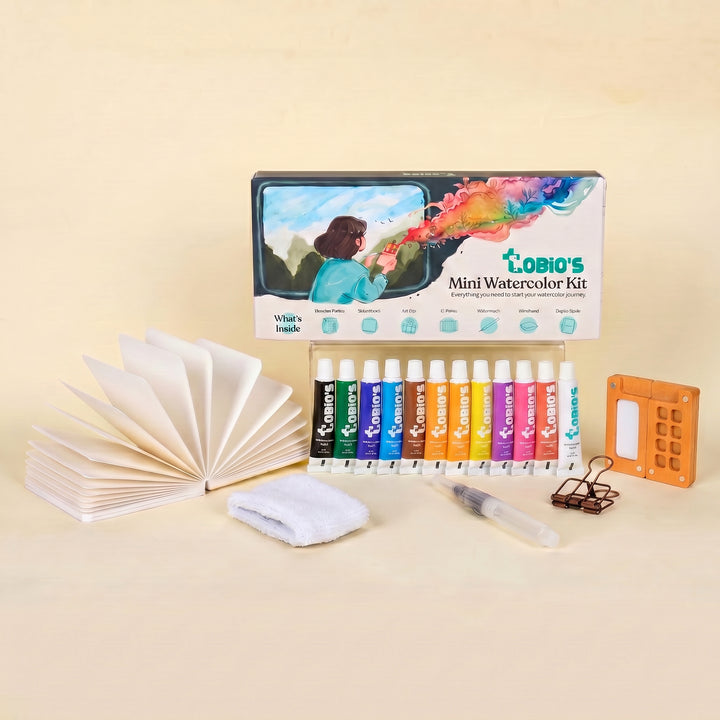
Ready to paint along?
Everything Mel uses in this tutorial: three watercolor pigments, brushes, and 140lb cold-press paper. All in our beginner-friendly kit.
Shop the Kit


