How to Paint a Squirrel: Step-by-Step Tutorial


What You'll Need
- Watercolor paper
- Pencil and eraser
- Two water cups
- Paper towel or clean cloth
- Round brush
- Washi tape
Color Palette
Let’s be honest: sometimes you don’t want to spend three hours painting every individual hair on a rodent. Sometimes, you just want to open your sketchbook, clip it down, and capture the vibe of a critter before your coffee gets cold.
This tutorial is about that freedom. We are moving away from hyper-realism and into a fun, loose squirrel watercolor painting style. This approach relies on negative space, confident brushstrokes, and letting the water do the heavy lifting.
If you want more projects like this after you finish, you can browse our full library of step-by-step lessons on Watercolor Tutorials.
The "Pocket Palette" Setup
Looking at our reference study, we aren't using a complex 24-color studio rig. We are using a simple travel setup. To achieve the warm, nutty tones of this squirrel, you only need four specific pigments and sturdy paper.
The Paper:
- 140lb (300gsm) Cold Press Sketchbook: You need this weight so the paper doesn't buckle under the washes. The texture (cold press) helps the pigment settle nicely into the "fur" shapes.
The Color Palette:
Based on the warm, golden-brown hues in the study, here is your mixing list:
- Yellow Ochre: This is your base "glow." It’s used for the lightest parts of the fur.
- Burnt Sienna: The classic reddish-brown. This creates the mid-tones and the warmth on the squirrel's back.
- Burnt Umber: A cool, dark brown for the shadows under the legs and the deep textures in the tail.
- Lamp Black (or Payne's Gray): Strictly for the eye.

The "Blob" Sketch
Keep your pencil loose. We aren't drawing anatomy charts; we are drawing shapes.
- Draw a tilted oval for the body.
- Add a smaller circle for the head.
- Sketch the tail as a large, sweeping "S" or question mark shape.
- Crucial: Mark the eye placement now, but keep it small.

The Golden Wash (Save the Whites!)
Mix a watery puddle of Yellow Ochre.
- Paint the entire squirrel shape except for the belly and the chest.
- Look at the reference image: see how the white paper creates the chest and the highlight around the eye?
Do not paint there.
Negative space is your white paint. - Let this layer dry completely. If the paper feels cool to the touch, it's not dry yet

Toasty Mid-Tones
Now, switch to Burnt Sienna.
- We aren't washing over the whole thing this time. We are "sculpting" the squirrel.
- Paint the curve of the back, the shape of the thigh (that round drumstick shape), and the top of the head.
- Add a swoop of this color to the tail. Leave some of that Yellow Ochre showing through, it makes the fur look shiny.

The "Crunchy" Details
Mix a thicker amount of Burnt Umber (less water, more paint).
- The Tail: Use the tip of your brush to make swift, curved marks on the tail. Don't color it in solid! The gaps make it look fluffy.
- The Shadow: Add a tiny bit of dark brown under the arm and where the legs meet the belly. This grounds the squirrel so it doesn't look flat.
The Life Spark
This is the make-or-break moment.
- Take your Lamp Black on a small detail brush.
- Paint the eye, but leave a tiny speck of white paper unpainted inside the black circle. That glint of light is what makes him look alive.
- If you missed the white spot, don't panic. You can add a dot of white gouache or gel pen later.
Easy Background Ideas (Optional, But It Helps)
A background isn’t required, but it can make your squirrel look intentional instead of floating in the void.
- Soft shadow ellipse under the feet (simple, classy)
- Light wash circle behind the squirrel (great for framing)
- Minimal branch with a couple of leaves (keep it faint so it doesn’t steal the show)
Keep background values lighter than the squirrel so the subject stays the boss of the page.
Fix Common Beginner Problems Fast
Problem: My squirrel looks muddy
- Let layers dry fully before glazing
- Use fewer pigments per mix (two is plenty)
- Lift muddy areas gently with a damp clean brush and blot
Problem: Hard edges everywhere
- Soften an edge with a clean damp brush while it’s still slightly wet
- Use a lighter touch and more water for the first wash
Problem: The tail looks like a broom
- Go back to “mass first, texture second”
- Add fewer crisp hairs and more soft value transitions
Problem: The eye looks creepy
- Make the highlight smaller
- Darken the top edge slightly (suggests an eyelid)
- Keep the eye shape simple and clean
Inspiration: Why This Style Works
This loose, sketchbook approach is perfect for:
- Backyard & Park Journals: Capture the vibe of a morning coffee on the porch or a sit on a park bench without needing the squirrel to freeze (because let’s be real, they never do).
- Woodland Nursery Art: Frame two or three of these studies in light wood for instant, cozy room art that fits perfectly with the popular woodland aesthetic, feeling handmade rather than mass-produced.
- Beating "Perfect" Paralysis: A squirrel watercolor painting is a forgiving subject (they are basically just fuzzy question marks). It’s the perfect low-stress way to practice organic shapes and flow without worrying about rigid anatomy.
Frequently Asked Questions
Is a squirrel watercolor painting suitable for beginners?
Yes. The key is to paint in layers: light wash first, then midtones, then texture, then details. That sequence keeps things clean and prevents overworking.
What materials do I need for a squirrel watercolor painting?
You need watercolor paper, a basic warm-brown palette, one medium brush for washes, one small brush for details, plus pencil, eraser, water, and paper towel.
How do I paint fur texture without making it messy?
Use fewer strokes, follow the direction of the form, and vary your values. Suggest fur with selective texture instead of outlining every hair.
Conclusion
The secret to a lively squirrel watercolor painting isn’t precision, it’s knowing when to put the brush down. A loose sketchbook study breathes because of the imperfections, not in spite of them. Embrace the blooms, let your wonky pencil lines show, and trust that a confident splash of Burnt Sienna captures the spirit of a squirrel better than a thousand perfectly painted hairs ever could.
If you want to keep the momentum going with guided projects and less supply guesswork, head over to Tobio’s Kits and pick a kit that makes painting feel like a break, not a battle.
Mel, FounderLike these guides? Set Tobio's as a preferred source on Google and our pages will show up first when you search for watercolor questions.
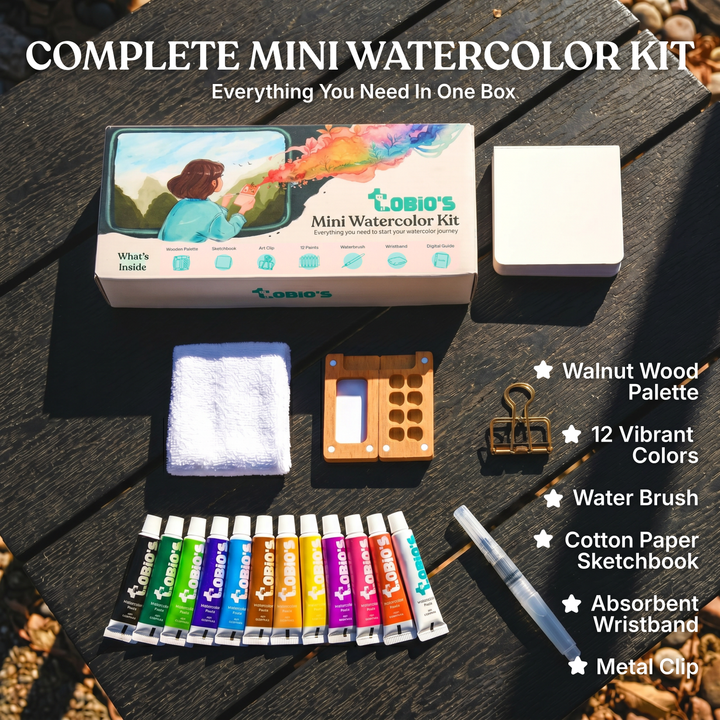
Ready to paint along?
Everything you need to paint anywhere and feel inspired doing it.
- Ultra compact
- Express yourself creatively
- For total beginners