


Famous Watercolor Artists: 20 Painters Every Beginner Should Know
Twenty famous watercolor artists, from a German printmaker sketching a hare in 1502 to an American realist whose best known picture turns out to be tempera, with the painting that made each of them, where to see it today, and one thing worth stealing from every single one.
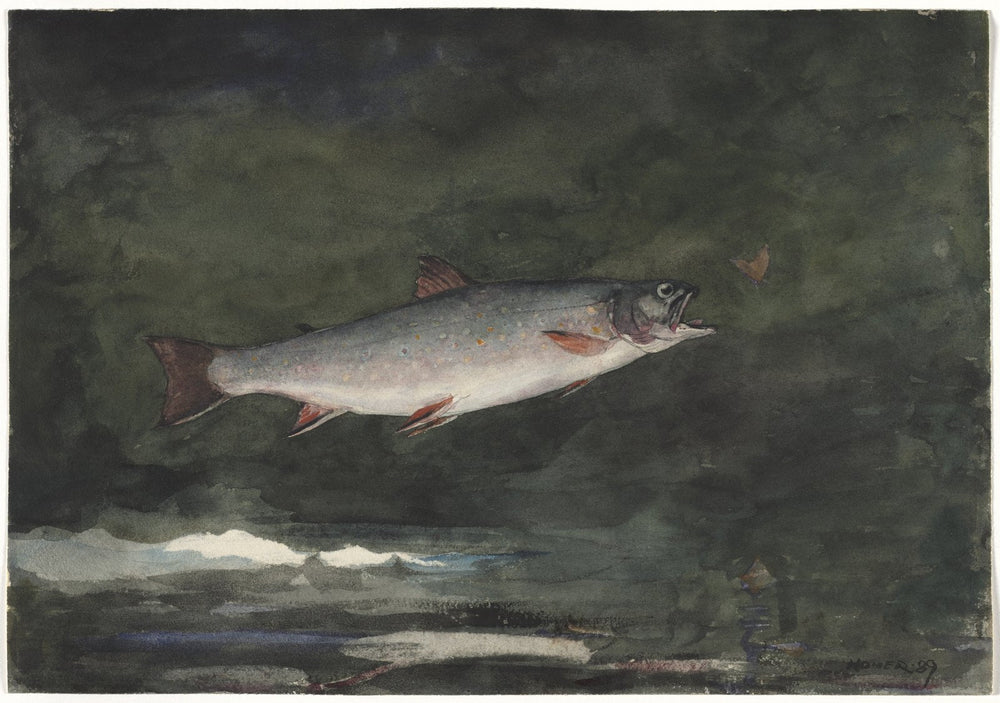
This is a list of twenty famous watercolor artists, chosen because watercolor was a main event for each of them rather than a sketch on the way to an oil painting. Some of the paintings below are hundreds of years old. A few are barely a century old. Every one is a watercolor you can go and see in a museum.
I picked painters across five centuries, from a German printmaker painting a hare in 1502 to an American realist whose most famous picture, oddly, is not a watercolor at all. I left off a few names people expect on a list like this because I could not verify a single work of theirs well enough to stand behind it here.
Read it front to back for a rough history of the medium, or skip straight to the painter whose subject matches what you are working on this week. Either way, each entry ends with one thing you can steal for your own painting by this weekend.
Albrecht Dürer
Dürer painted a hare in 1502 that looks ready to bolt off the paper, every whisker drawn as if he had all week to spare. He worked mainly as a printmaker in Nuremberg, and watercolor was the notebook he kept on trips across the Alps.
Two sheets carry his reputation past five centuries: the hare, and a square of turf and weeds painted the following year with the same close attention. Both hang at the Albertina in Vienna. I find it oddly comforting that the most famous watercolor in the world is, underneath the fame, just a very good drawing of a rabbit.
William Blake

Blake said he saw angels sitting in a tree as a boy, and by the time he had a studio of his own he was still painting them, only bigger. He trained as an engraver and used watercolor with his own relief etching process to illustrate the Bible, Dante, and Milton.
His angels are enormous and his humans are small, on purpose. In one sheet a giant angel stands over a man writing at a desk, wildly out of scale with him. That size difference is the whole argument of the picture, made without a word.
Nobody bought much of it while he lived, since he painted what he actually saw rather than what would sell.
Thomas Girtin

Girtin was dead at twenty seven, and Turner, his friend and rival since their teens, is said to have remarked that if Tom Girtin had lived, he would have starved. Take that as a compliment measured in fear, since nobody wrote it down until after both men were gone.
What Girtin actually did in his short run was paint broad, confident washes of warm brown and slate gray, none of the fussy underdrawing painters had leaned on for a generation. Single strokes of color stood in for a whole hillside.
His best known sheet, a low white house against a wide Chelsea sky, hangs at Tate Britain, proof of how much he did in so little time.
J. M. W. Turner

Turner spent his last working decade painting mountains that are barely there, dissolved into mist until the rock underneath is almost a rumor. He had been the most skilled painter in England for forty years and could have kept selling the tight, detailed views that made his name. Instead he scratched highlights out of wet paper with his thumbnail.
The clearest proof is a small sheet of the Rigi at sunrise over Lake Lucerne, painted in 1842 when he was sixty seven, now at Tate. The mountain is barely more than a blue silhouette against a sky doing all the work.
Late Turner is what happens when a painter stops proving he can paint things and starts painting what he actually sees.
John Sell Cotman
Cotman painted a stone bridge over the River Greta in 1805 using so few flat shapes of color the picture reads almost like colored paper cut and glued down. He was a leading member of the Norwich School, a group of painters who took their local landscape seriously in its own right.
Where most watercolorists of his generation built a picture up in soft washes, Cotman flattened everything into clean, cut out patches with a hard edge between them. It should look crude. It does not.
That bridge, now at the British Museum, is the picture art students are still told to copy to learn what a shape is. I have a soft spot for a painter who got more out of doing less.
John James Audubon
Audubon shot the birds he painted and wired the bodies into lifelike poses before he worked, which explains why his birds look so alive. He was born on a sugar plantation in Saint-Domingue, now Haiti, before settling in America as a young man.
Over more than a decade he painted, at life size, every bird species he could find, using watercolor built up with pastel and thin glazes to fake the texture of feathers. The original watercolors for The Birds of America, published between 1827 and 1838, are held today by the New-York Historical Society.
Nobody before him had tried to paint an entire continent's worth of birds at their actual size, a scale worth remembering next time one leaf feels like too much detail to bother with.
James McNeill Whistler
Whistler went to Venice on a three month commission and stayed fourteen, producing fifty etchings alongside small, loose watercolors of the canals and the fog. He was American by birth, though he spent nearly all his working life in London and Paris.
His watercolors are small and quick, closer to notes than finished statements, a handful of strokes standing in for a whole building. One small nocturne of Amsterdam in winter, painted in 1882 and about eight inches tall, is held today at the Freer Gallery in Washington.
In his last years he painted small seascapes, many of them in watercolor. Not worse than his younger work. Just quieter, made for himself rather than a buyer.
Winslow Homer

Homer spent two years, 1881 to 1882, in the fishing village of Cullercoats on the English coast, painting the women who worked the boats while their husbands were out at sea. He came back with a heavier, more serious watercolor style that stuck for the rest of his career.
One picture from just after that stay, a woman braced against the wind with boats behind her, is called Inside the Bar and hangs at the Met. Everything about it is sturdier than his earlier work.
Cullercoats looks to me like the best two year residency any American painter ever gave himself, and he did not plan it that way.
Thomas Moran

Moran joined a government survey team in 1871 for forty days in a region most Americans only knew from rumor, and came back with watercolor sketches that helped persuade Congress to set Yellowstone aside as the first national park the following year.
He signed his later work Thomas Yellowstone Moran, which tells you how much that one trip defined his career. His watercolors of the desert plains further west show the same eye for scale.
Not many painters can say their sketchbook changed a piece of land's legal status. That is a bigger achievement than most museum walls.
Paul Cézanne

Cézanne left broad patches of bare white paper inside his late watercolors, on purpose, letting the paper stand in for light. He painted more than forty watercolors of the same mountain near his home in Provence, treating it less like scenery and more like a problem he kept solving slightly differently each time.
A path through trees, with patches of blue and green wash floating over graphite lines rather than filling them in, shows the method plainly. Color does not describe the tree trunks so much as sit near them.
Painters who came after him, Matisse and Picasso among them, treated him as the one to learn from. I still find that a strange kind of fame for work that looks, at first glance, barely finished.
John Singer Sargent

Sargent built his reputation on formal oil portraits of society clients who paid him well and occasionally complained about the result. His watercolors were the opposite: quick holiday studies of mountains and friends dressed up for fun, painted with a fluid confidence the portraits never allowed him.
In 1909 he showed eighty six of these watercolors in New York, and the Brooklyn Museum bought eighty three outright, an unusually large purchase of a living artist's work on paper.
Reading about that sale, I keep thinking about how rarely an artist gets to sell the work they actually enjoyed making, in bulk, in their own lifetime.
Maurice Prendergast

Prendergast painted crowds, not portraits, filling his sheets with dozens of small figures until the whole scene reads as one busy pattern. He was born at a trading post in Newfoundland and did much of his best work in watercolor and monotype.
His technique of small, mosaic like dabs of color gave even a crowded park scene a flat, decorative calm. A May Day crowd of women and children fills one such sheet from 1901, dozens of tiny figures adding up to a single mood.
Deafness cut him off from easy conversation for much of his life, which makes it feel apt that his paintings are full of people not really talking to each other either.
Wassily Kandinsky
Kandinsky dated one small untitled watercolor to 1910 and called it his first entirely abstract picture, made of loose colored shapes with no object hiding underneath them. Scholars who have gone through his sketchbooks since usually place the sheet closer to 1913, which makes the claim a little shakier than the legend suggests.
Either way, the picture marks a real turning point: a painter trained to render recognizable landscapes deciding color and form alone could carry a picture. The sheet lives at the Centre Pompidou.
The muddled dating makes me like him more. Even the man who claimed to invent an entire way of painting could not remember exactly when he did it.
Beatrix Potter
Potter is best known for a small book about a rabbit in a blue jacket, published in 1902, but for years before that she painted fungi with the accuracy of a scientific illustrator, not a children's author killing time. A mycologist she met on holiday in Scotland taught her taxonomy.
Kew Gardens would not take her seriously as a woman without formal training, and a paper she submitted to the Linnean Society in 1897 had to be read aloud by a man, since she could not attend. She withdrew it after finding contamination in her own samples.
Her fungi watercolors are kept at the Armitt Museum in Ambleside, still consulted by specialists. Admitting her own samples were flawed strikes me as more impressive than the rabbit.
Paul Klee

Klee spent about two weeks in Tunisia in April 1914 with two painter friends, and came home changed. He put it plainly in a diary line that gets quoted more than almost anything else he wrote: "Color and I are one. I am a painter."
Before Tunisia his work leaned on line and draftsmanship, color used carefully and sparingly. After it, he started building pictures almost entirely from grids of colored rectangles, treating a palette the way a composer treats a set of notes.
A watercolor scene from 1923, small figures scattered over a pale gridded ground, still carries that Tunisia lesson nearly a decade later.
Edward Hopper
Hopper struggled for years as an illustrator before watercolor gave him his first real break. In the summer of 1923, encouraged by the woman who would become his wife, he turned to watercolor in Gloucester, Massachusetts, painting houses with their turrets and mansard roofs.
Six of those Gloucester sheets were shown at the Brooklyn Museum that year, and the museum bought one, a picture called The Mansard Roof, for its permanent collection. It was his first museum sale in years, and it came from watercolor rather than the oils he had struggled to sell.
Watercolor made his name well before his oil paintings did, which is easy to forget given how famous the oils later became.
Charles Demuth

Demuth was diagnosed with diabetes as an adult and was among the first in the United States treated with insulin, which kept him alive but left limited energy for large work. He turned that limit into a style, painting small, precise still lifes rather than the big city scenes some contemporaries preferred.
A watercolor of red amaryllis blooms against bare white paper, from about 1923, shows the tight control he brought to a small subject: careful outlines, a few clean washes, nothing wasted.
Working inside those limits shaped his whole late career, and the result holds up better than plenty of paintings made by healthier hands with room to spare.
Georgia O'Keeffe
O'Keeffe ran the art department at a small teachers college in Canyon, Texas, from 1916 to 1918, and it was there, watching sunrises over Palo Duro Canyon, that she found the loose style that later carried into her oil paintings of flowers and desert bones.
A watercolor of the canyon from that stretch, blue and green pigment fused into soft gradations, is held today by West Texas A&M University. She resigned in 1918 to move to New York at the invitation of the photographer Alfred Stieglitz, who later became her husband.
Everyone remembers the flowers. Fewer remember she learned to trust her own eye first, in a flat, wind blown corner of Texas most famous painters never bothered to visit.
Egon Schiele

Schiele died at twenty eight in October 1918, three days after his wife Edith, six months pregnant, died of the same influenza pandemic. He had spent barely a decade as a working artist, drawing bodies bent into angles no life class would have permitted.
He worked in gouache and watercolor laid over graphite drawing, which let the nervous, exact line of his drawings stay visible underneath the color rather than get lost beneath it. A portrait of a small boy in a patterned jacket, painted in 1916, shows real tenderness for a sitter who, for once, was not himself.
Two lives ended three days apart, and Klimt, his mentor, had died earlier the same year. It is a brutal reminder of how much talent a single bad season can erase.
Andrew Wyeth
Wyeth's Christina's World, from 1948, is the single image most people would name if asked to picture American realism, a woman sprawled in a dry field facing a house in the distance. It is painted in egg tempera, not watercolor, learned from his brother in law, and hangs at the Museum of Modern Art in New York.
Watercolor was where Wyeth actually lived day to day, used for quick studies and for a drier technique called drybrush, water squeezed from the brush before it touches the paper, leaving a scratchy line closer to drawing than painting.
That his best known picture is not even in the medium most people attach to his name feels like the right note to end on.
Famous watercolor paintings at a glance
| Painting | Artist | Year | Where it is |
|---|---|---|---|
| Young Hare | Albrecht Dürer | 1502 | Albertina, Vienna |
| The White House at Chelsea | Thomas Girtin | 1800 | Tate Britain, London |
| The Blue Rigi, Sunrise | J. M. W. Turner | 1842 | Tate, London |
| Greta Bridge | John Sell Cotman | 1805 | British Museum, London |
| Inside the Bar | Winslow Homer | 1883 | Metropolitan Museum of Art, New York |
| The Ruby Range, Nevada | Thomas Moran | 1879 | The Cleveland Museum of Art |
| In Austrian Tyrol | John Singer Sargent | 1911 | The Cleveland Museum of Art |
| May Day, Central Park | Maurice Prendergast | 1901 | The Cleveland Museum of Art |
| Untitled (First Abstract Watercolor) | Wassily Kandinsky | 1910 to 1913 | Centre Pompidou, Paris |
| Amaryllis | Charles Demuth | about 1923 | The Cleveland Museum of Art |
| The Mansard Roof | Edward Hopper | 1923 | Brooklyn Museum, New York |
| Christina's World | Andrew Wyeth | 1948 | Museum of Modern Art, New York |
Abstract and contemporary watercolor artists
Kandinsky and Klee are the two names here who pushed watercolor toward pure abstraction, one through a disputed first abstract sheet, the other through grids of color learned on a trip to Tunisia. Neither treated color as decoration. Both used it as the subject.
A different pull toward simplification came from still life. Cézanne left patches of bare paper around fruit and trees until the object barely needed drawing, and Demuth painted flowers with the same discipline decades later, working small because his health forced him to.
I do not rank living painters here, mostly because a painter's reputation is still moving while they keep working, and I would rather be wrong about someone from 1805 than about someone from last year. To see where the tradition stands now, go to an American Watercolor Society or Royal Watercolour Society annual show, or ask a museum's works on paper room to pull something from storage.
How to learn from a famous watercolor painting
Pick one painting from this list, ideally one you can see in person or in a large reproduction, and copy it in three values only, light, medium, and dark, using a single color mixed at different strengths. Give yourself twenty minutes and do not touch a second color until they are up.
Once the values work, the same painting will teach you something in real color that a fresh subject never will, because you already know where the darks and lights sit. Try it again, still timed, letting yourself use two colors instead of one.
From the Tobio's kit, Twilight Indigo alone gets a convincing three value study of almost any sky on this page, and Venetian Red does the same for anything closer to Cotman's or Demuth's warm palette. Payne's gray is the closest tube equivalent to what several of these painters mixed by hand for their own shadows.
Every painter on this page started with a small box of colors and a lot of bad paintings. The Tobio's Watercolor Kit is the small box: twelve colors that mix, a walnut palette, cotton paper and a water brush. The bad paintings you have to make yourself.
Get the kitQuestions people ask
Who is the most famous watercolor artist?
What are some famous watercolor paintings?
Who are some famous abstract watercolor artists?
Are there any famous still life watercolor artists?
Where can I see watercolor paintings by famous artists in person?
Why does Christina's World show up on a watercolor list if it is tempera?
Sources
- Albrecht Dürer, Wikipedia
- J. M. W. Turner, Wikipedia
- The Blue Rigi, Sunrise, Tate
- Thomas Girtin, Wikipedia
- John Sell Cotman, Wikipedia
- Nocturne: Amsterdam in Winter, Whistler, National Museum of Asian Art
- Winslow Homer, Wikipedia
- Inside the Bar, Winslow Homer, The Metropolitan Museum of Art
- John James Audubon, Wikipedia
- Wassily Kandinsky, Wikipedia
- Beatrix Potter, Wikipedia
- Paul Klee, Wikipedia
- Georgia O'Keeffe, Wikipedia
- Andrew Wyeth, Wikipedia
Keep going

Like these guides? Set Tobio's as a preferred source on Google and our pages will show up first when you search for watercolor questions.