


How to Make Black Watercolor: 12 Tips for Rich Darks


What You'll Need
- Any beginner palette with a blue, a red-brown, a green and a crimson (the Tobio's kit works)
- A synthetic brush that holds thick paint
- Scrap watercolor paper for swatches
- Two jars of water, one for rinsing and one clean
- A pencil, for labeling your swatch sheet
Color Palette
Tube black often looks like a hole in the paper. Flat and dead.
The richest blacks are not squeezed from a tube. They are mixed from other colors, colors that talk to the rest of your painting instead of sitting in it like a void. Mixed blacks have depth. They lean warm or cool. They carry hints of the colors around them.
I have split this into twelve practical tips: which colors to mix, how to shift a dark warmer or cooler, and whether tube black ever makes sense (sometimes, but not often). You will learn how to make browns and grays along the way, because they are the same recipes with the water turned up.

Why mixed black beats tube black
Tip 1: avoid the black hole
Tube black is opaque. It sits on top of your painting like a stain. Mixed black is transparent and plays nicely with everything around it.
Use tube black for a shadow and it deadens whatever it touches; the shadow looks painted on, not part of the object. That is the whole reason a mixed gray like Payne's gray earns a spot in so many palettes. Mixed blacks carry traces of the colors you made them from, so they fit the painting they are in.
There is a place for tube black: signing your name, a tiny window frame. For shadows, darks and deep values, mix it.
Tip 2: aim for a chromatic black
Chromatic black is not actually black. It is a dark neutral that still has a temperature. Warm chromatic black leans brown or red; cool chromatic black leans blue or green. Both read as black at a glance, and both hold color information that makes a painting richer. Real shadows are never neutral gray; they borrow from the light and the colors around them, and a chromatic black does the same.
Tip 3: get the consistency right
You need honey consistency for a true black. Not milk, not tea. Thick. Use a damp synthetic brush to pull concentrated pigment from the palette. Too much water and you get gray. Test on scrap: if it dries gray instead of deep dark, you need more pigment or less water.
Recipe 1: the classic duo
Tip 4: ultramarine and burnt sienna
Ultramarine blue paired with burnt sienna, or swap in burnt umber for the sienna.
This is the most versatile dark mix there is, and it works for almost everything. The blue and the brown are close enough to complements that they cancel into a rich, warm black. More blue gives you cooler darks; more sienna gives you warmer ones.
Both colors are in most starter palettes, including the Tobio's kit, so you can mix this without buying anything. Start with equal amounts, then tip it warm or cool depending on the shadow you are after.
Recipe 2: the cool deep mix
Tip 5: viridian or phthalo green with crimson
Viridian or a green combined with a crimson gives an intense, almost ink-like black with a cool edge. Up close it looks purple. Step back and it reads as pure black.
Green and red cancel each other on the color wheel; push them together at the right ratio and you land on a neutral dark that passes for black. It is perfect for a night sky or the shaded ground under a tree, anywhere the shadow sits in cool light.
One warning: phthalo green is powerful. Start with less green than you think you need and add it gradually.
Recipe 3: the primary triad
Tip 6: red, blue and yellow in equal, thick amounts
Harder to balance than the other two recipes, but it gives you a very rich, complex black once you get it right. The trick is equal amounts of all three; too much of any one and you end up with a muddy brown or a dull purple instead of black.
This black has the most depth of the three, because it holds all three primaries and light bounces around inside it differently than in a two-color mix. It takes practice. It is worth it once you have the ratios in your hands.
How to make brown watercolor
Browns are warmer, lighter versions of the blacks you just mixed.
Tip 7: the complementary rule
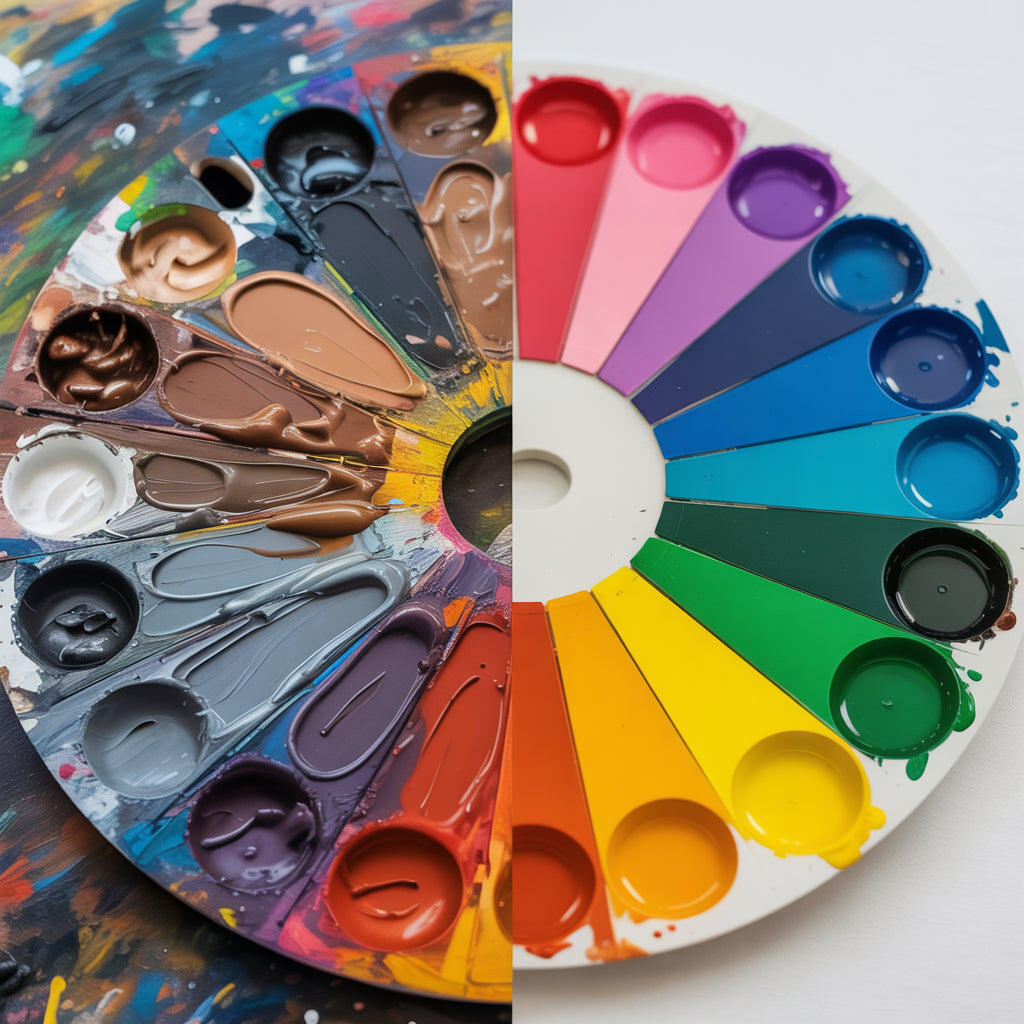
Mix opposites on the color wheel: red with green, blue with orange, purple with yellow. Complements neutralize each other. Push them far enough and you get black; stop earlier and you get brown. Red and green give an earthy, natural brown; blue and orange lean toward a muted tan.
Tip 8: adjust the bias
Want a brick red-brown? Add more red to your red and green mix. A golden ochre brown? More yellow. A chocolate brown? More blue. Browns are not one color, they are a family, and the ratios decide which one turns up. Lean warm (red, orange, yellow) for warm browns; lean cool (blue, green, purple) for cooler, quieter earth tones.
Tip 9: mute your brights with a complement, not black
Do not darken a bright color with black. Add its complement instead. A bright red with a little green becomes a deep red-brown that still has life in it. A bright yellow with the tiniest touch of purple becomes golden ochre instead of khaki mud. The color stays alive, just deeper and quieter.
How to make gray watercolor
Grays are diluted blacks, with a little more to it than that.
Tip 10: just add water
Take any of the black recipes above and add water. You now have gray. These are chromatic grays, because they still carry color information; they lean warm or cool depending on what went in. Use them for atmospheric shadows, distant hills, overcast skies, anything that needs subtle variation instead of a flat neutral. The more water, the lighter the gray, so you control the value by controlling the dilution.
Tip 11: swatch your neutrals
Keep a reference sheet. Paint each black recipe at full strength, then the same recipe at three or four dilutions, and label the colors and rough ratios. Two months from now, when you need that exact warm gray again, you will have a map instead of a guess.
When a ready-made dark is the right call
Tip 12: expand your options
Mixing is the skill. Sometimes, though, you need a specific dark right now without stopping to mix it.
The 50-color watercolor set includes convenience colors like Payne's gray, sepia and Van Dyke brown: pre-mixed darks that actually get used, not filler shades. Payne's gray is a cool, blue-leaning dark for stormy skies and shadows in cool light. Sepia is a warm, brown-leaning dark for vintage effects and warm shadows. Van Dyke brown is deep and rich and works for anything earthy.
You could mix versions of all three, or you could have them ready to go. Either way works; it depends on how you like to paint.
Questions people ask about mixing black
What two colors make black in watercolor?
Ultramarine blue with burnt sienna is the standard. For something cooler and more intense, try phthalo green with alizarin crimson.
How do I make my black watercolor darker?
Less water, more pigment. Load the brush with concentrated paint. If your black dries gray, you are using too much water.
Can I mix black with other colors?
You can, but it usually deadens them. It is smarter to mix in the color's complement: green into red, orange into blue, purple into yellow.
How do I make brown watercolor look natural?
Use complementary pairs rather than a premixed brown: red with green, or blue with orange. Adjust the ratio to control the warmth; more of the warm color gives a warmer brown.
What is the difference between Payne's gray and a mixed gray?
Payne's gray comes pre-mixed and leans blue. A mixed gray can tilt any direction, depending on what you combine and how much water you add.
How do I make a warm gray versus a cool gray?
Warm gray: dilute your ultramarine and burnt sienna mix. Cool gray: thin out phthalo green and alizarin crimson. Add more of the warm or the cool color to push the temperature.
Why is my mixed black turning green?
Too much phthalo green or viridian. Those pigments are extremely strong. Start with less green and add it gradually until the mix neutralizes to black.
Is it okay to use black straight from the tube?
For small details, yes. For shadows and large dark areas, no. Tube black reads flat and dead; mixed blacks have depth and sit inside the painting instead of on top of it.
Stop squeezing the tube
You do not need more tubes to get more colors. You need better mixing.
These twelve tips give you the core darks for almost any painting. Try each recipe a handful of times, swatch it, and see how it behaves at different dilutions. A month from now you will reach for the right dark without thinking.
When you want a dark ready-made, the 50-color set has Payne's gray, sepia and Van Dyke brown already mixed, and the workbook gives you 30 projects to practice these shadows on.
Mel, FounderLike these guides? Set Tobio's as a preferred source on Google and our pages will show up first when you search for watercolor questions.
Go deeper on the colors in these mixes


Ready to mix your own darks?
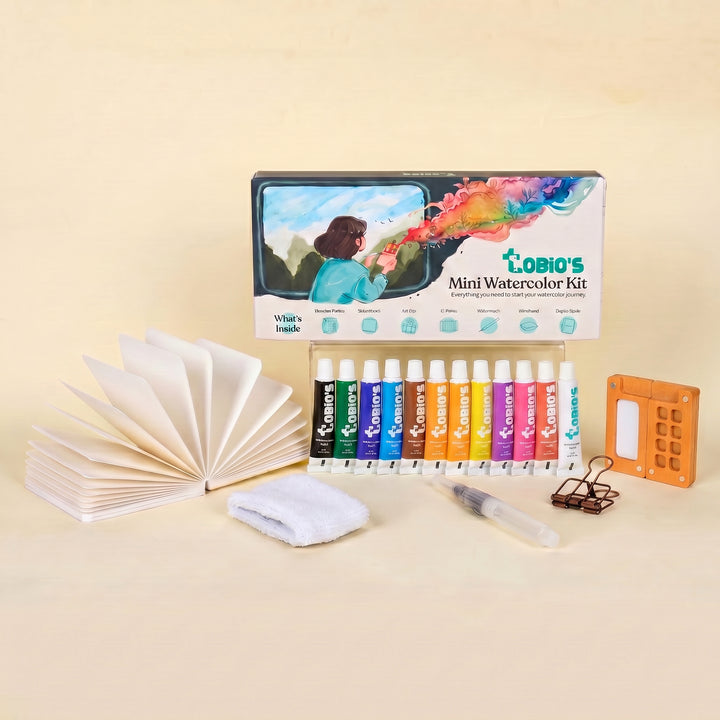
Everything in these recipes is in one beginner-friendly kit: twelve colors chosen to mix, water brushes, cotton paper and a beginner's workbook, packed in a pocket-sized wooden palette.
Get Tobio's Watercolor Kit


