


How to Clean Your Tobio’s Watercolor Kit


What You'll Need
- A cup of clean water
- A damp cloth or paper towel
- Mild soap or plain shampoo (for the occasional deep brush clean)
- The kit’s wristband, for wiping between colors
The first water brush I ever ruined, I ruined by standing it tip-down in a jar and forgetting about it overnight. It came out bent at the end and never came back — an embarrassing way to lose a brush when you make painting kits for a living.
That’s the good news buried in a bad story: almost nothing about this needs effort. Watercolor is the most forgiving medium there is to clean up after — it’s water and pigment, and it mostly wants to cooperate. The whole routine takes two minutes. Here’s how to clean your Tobio’s kit, part by part, plus the short list of things that will actually do it harm.
The quick routine
Squeeze clean water through the water brush until it runs clear. Wipe the palette with a damp cloth — dried watercolor reactivates, so it doesn’t need scrubbing. Reshape the brush tip with your fingers, and let everything air dry fully before you close the case. Mild soap only, never harsh cleansers.
In a hurry? Wipe the palette and squeeze the brush through twice — that covers most of it. The rest of this page is for when you want to do it properly, and for the handful of things that genuinely shorten the life of the kit if you get them wrong.
Cleaning the water brush
Unscrew the barrel, tip out whatever water is left, and refill with clean water. Screw it back together and squeeze it onto a paper towel until what comes out runs clear instead of colored — two barrels usually does it, three if you finished on something dark.
Wipe the bristles on the wristband between colors as you paint (that’s what it’s there for) and again at the end. Then leave the brush somewhere it can dry with the tip untouched — flat is fine, handle-down in a pot is fine. The one thing to avoid is what I did: leaving it resting on its tip in water. Painting again tomorrow? Leave a little clean water in the barrel. Putting it away for a month? Empty it first so nothing sits in there.
Cleaning the palette
The palette is walnut wood in two magnetic halves, so it wants a wipe, not a wash. Take a damp cloth or paper towel to the mixing side and lift the loose color off — that’s genuinely all it needs after most sessions.
Leave the paint in the wells alone. Dried watercolor reactivates the moment a wet brush touches it, so scrubbing the wells throws away paint you’ve already paid for (there’s more on how that works in how to use watercolor paint). Three things not to do with a wooden palette: don’t submerge or soak it (wood and water are a bad long-term mix, and there are magnets set into it), don’t put it in a dishwasher, and don’t close it away while it’s still damp. Wood picks up a little staining and character over time — that’s normal, not a fault. If the wells have gone muddy from mixing, lift the worst with a damp brush, blot on a towel, and repeat once.
Brush care and reshaping
If you’ve moved on to regular brushes like the ones in the artist brush set ($21.99), the rules shift slightly. Rinse in lukewarm water, never hot — heat loosens the glue holding the head to the handle. A little mild soap or plain shampoo is fine for a deep clean; anything stronger strips the bristles.
Work the soap through with your fingers, rinse until the water runs clear, then pinch the bristles back into shape while they’re still wet. That last step is the one everybody skips, and it’s the difference between a brush that keeps its point for years and one that goes fluffy in six months. Dry them flat or standing handle-down.
Storing the kit and looking after the notebook
Let the pages dry completely before you close the book. Cotton paper holds more water than it looks like it does, and a still-damp page pressed against the one above will cockle both — give it a few minutes longer than you think.
The wristband washes like any other bit of towel: rinse it when it’s holding more color than it lifts, let it dry, and it goes back to work. Don’t clip the palette back onto a wet page, either — that’s the fastest way to transfer color somewhere you didn’t want it, and it traps moisture against the wood. Everything dry, then everything closed, then into the bag. Stored properly, the whole watercolor kit ($36) lives happily in a drawer or a coat pocket between sessions — which is the point of it. For the fuller picture of how it holds up over time, the Tobio’s kit review covers it.
When to replace instead of clean
Some things are wear, not dirt, and no amount of cleaning fixes them — being upfront about that saves you scrubbing something that’s simply finished.
A water brush tip that has splayed and won’t pinch back into shape is done. They’re consumable by design and last a long time; when yours gives up, the water brush set ($6.99) has four in it. Paint is the other one: when a well is running low or a color has gone permanently muddy from mixing, 12 paint refills ($10.99) drop straight into the wells you already have. Student-grade paints and water brushes are built to be low-maintenance and forgiving — treat them as replaceable parts, not heirlooms. It’s cheaper than replacing the whole kit.
Where to go next
Still finding your feet with the paint itself? The watercolor for beginners guide is the place to go, and the tutorials hub has something to paint once everything’s clean and dry.
Frequently Asked Questions
How do you clean a watercolor palette?
Wipe the mixing area with a damp cloth and leave the paint in the wells — dried watercolor reactivates with a wet brush. A wooden palette should never be soaked or put in a dishwasher.
How do you clean a water brush?
Empty the barrel, refill with clean water, and squeeze it through until it runs clear. Wipe the bristles, reshape the tip, and let it dry without resting on the tip.
Should you wash watercolor brushes with soap?
For a deep clean, yes — mild soap or plain shampoo in lukewarm water. Watercolor rinses out easily most of the time, so soap is occasional, not a daily job.
How do you store a watercolor kit?
Dry, closed, and somewhere it won’t get squashed. Make sure the pages and palette are completely dry first, then the whole kit is happy in a bag or a drawer.
Two minutes now, painting again tomorrow
Finished a session? Wipe, rinse, reshape, and leave everything open to dry.
None of this is precious — the kit is built to be carried around and used, and a bit of paint on the wood is evidence of that, not damage.
Mel, FounderMore watercolor tutorials
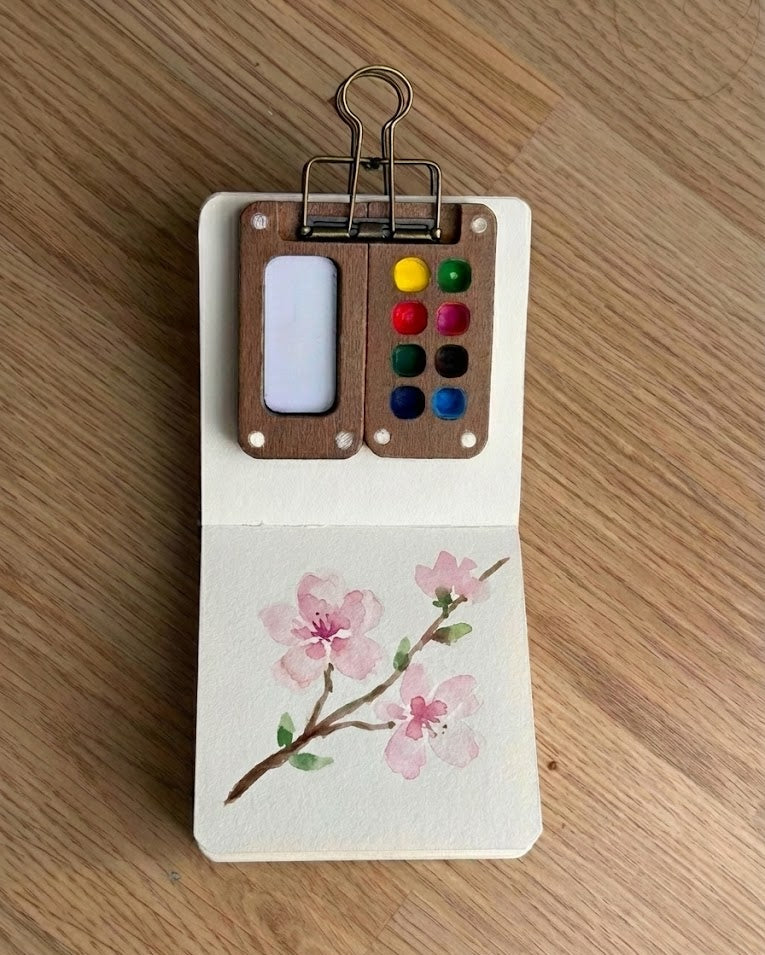
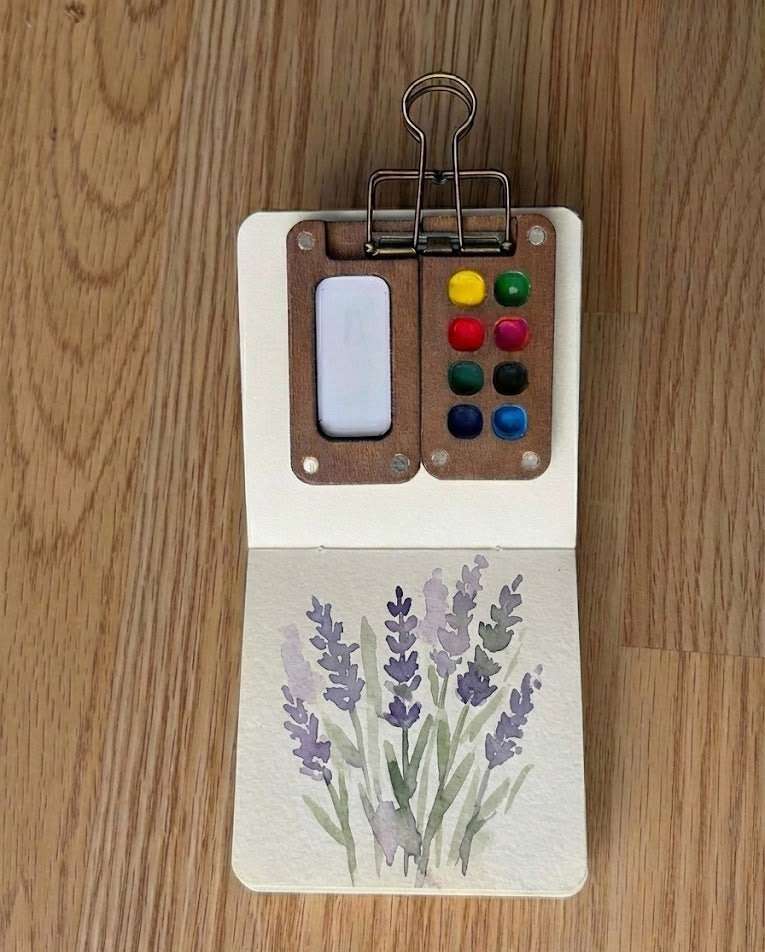
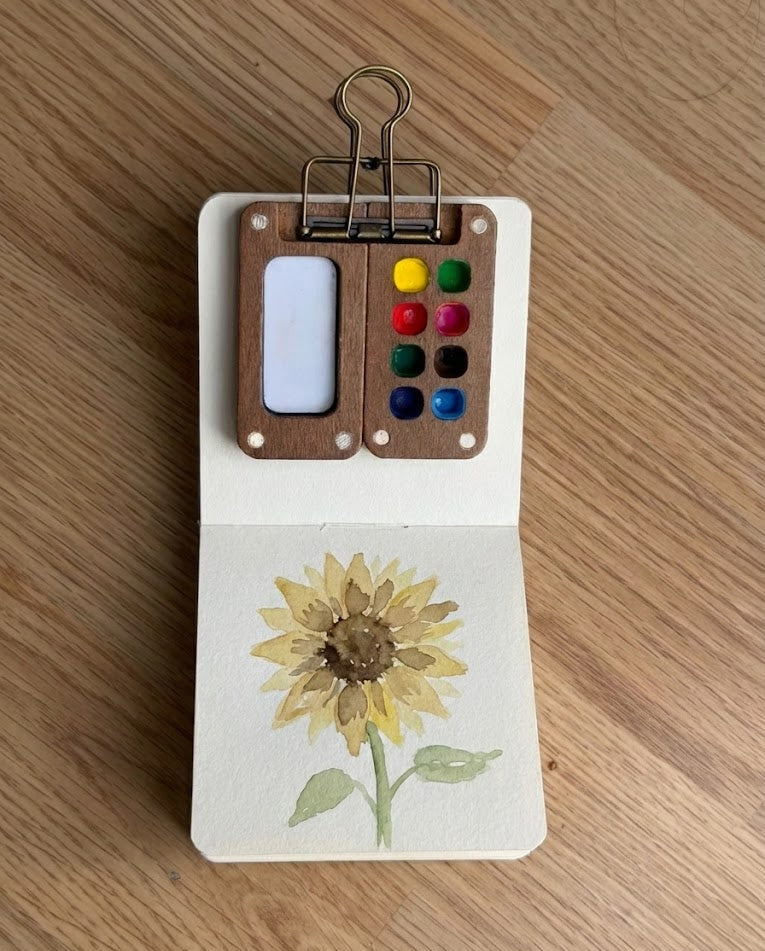
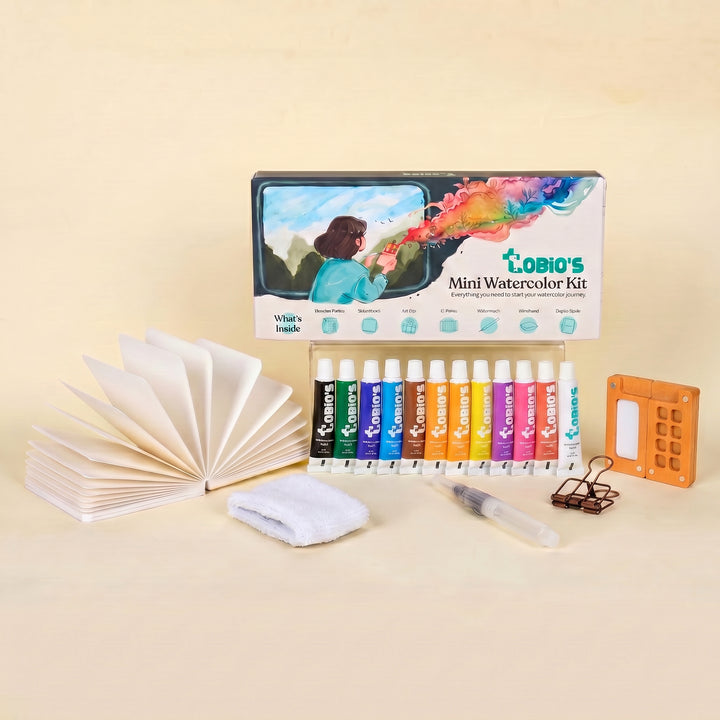
The kit that’s built to be carried and used
A magnetic walnut palette, twelve student-grade colors, a refillable water brush, and cotton paper — low-maintenance by design, and easy to keep going with refills.
Get the Tobio’s Watercolor Kit


