


Blue Crab Watercolor Painting: Step-by-Step Tutorial


What You'll Need
- Watercolor paper
- Pencil and eraser
- Two water cups
- Paper towel or clean cloth
- Round brush
- Washi tape
Color Palette
If you’ve ever tried a blue crab watercolor painting and agonized over every tiny serrated edge of the shell, stop right there. We aren't doing that today.
The sketch in the image above isn't a scientific diagram; it’s a vibe. It captures the energy of the crab without getting bogged down in anatomy. This is a "loose style" tutorial, perfect for a quick 15-minute sketchbook session where the goal is to play with water, not to produce a photo-realistic replica.
We are going to let the pigments bloom, let the edges get a little messy, and create something that feels alive.
If you want more projects like this after you finish, you can browse our full library of step-by-step lessons on Watercolor Tutorials.
The "Mini-Palette" Breakdown
Looking at the study above, we aren't using a massive 24-color pan. We are working with a limited, cohesive palette (like the travel clip shown in the photo). You only need 3–4 specific pigments to get this look:
- Ultramarine Blue: Your main workhorse for that classic crab body.
- Phthalo Green (or Viridian): To mix with the blue for those punchy teal/aqua transitions.
- Burnt Umber (or Sepia): To mix with your blue to create deep, dark navy shadows for the claw tips.
- Paper: 140lb / 300gsm cold press is non-negotiable. Even for a quick sketch, thin paper will buckle and ruin the "wet" look we’re aiming for.

The "barely there" sketch
Grab your pencil and keep it loose. We aren't drawing every joint.
- Draw a soft, wide oval for the body.
- Sketch two "mittens" for the claws.
- Draw single lines for the legs.
- Artist Tip: Keep the pencil lines light! In a loose study, the paint defines the shape, not the graphite.

The wet-on-wet body
Load your medium round brush with clean water and wet the inside of the shell shape.
- Drop in Ultramarine Blue while the paper is wet. Watch it explode (bloom) across the paper.
- While it's still wet, touch a little Phthalo Green or Teal into the center or bottom edge to vary the color temperature.
- Leave a few white gaps! See those white spots in the image? That’s the sparkle of the shell. Don't paint over them.

Pulling the legs (The "Easy" Way)
Don't paint the legs as separate disconnected stick figures.
- While the body is still damp (not soaking, just shiny), use your brush to "pull" the pigment out from the body into the leg shapes.
- This connects the legs to the shell seamlessly.
- As you move toward the tips of the legs, add a tiny bit more water to fade them out. This makes the crab look like it's scuttling, rather than posed stiffly.

The contrast and claws
This is where the image pops. You need darks to make the blues look bright.
- Mix your Ultramarine with a touch of Burnt Umber to get a near-black Navy.
- Paint the tips of the claws and the very edges of the swimming legs.
- The trick: Let this dark paint bleed slightly into the lighter blue of the arms. Hard lines look like cartoons; soft bleeds look like watercolor art.
The Deepest Depth
Finish with a tiny touch of Concentrated Navy (your darkest blue mix).
Drop a final speck into a claw joint or the corner of the shell to anchor the form.
Stop.
Put the brush down.
Overworking is the enemy of a fresh catch.
Troubleshooting: Fix Common Blue Crab Painting Problems
My colors look flat or one-dimensional
- Cause: You painted the whole shell one solid blue and killed the light.
- Fix: Leave the white paper alone! The white of the paper is your sparkle. If you’ve already painted over it, use a clean, damp brush to lift a little pigment from the center of the shell while it’s still drying.
My legs look like spider sticks
- Cause: Painting stiff, uniform lines with a small brush.
- Fix: Use the belly of the brush, not just the tip. Press down to widen the leg segment, then lift up for the joint. "Pull" the paint out from the body rather than drawing new lines attached to it.
The shell looks like a messy blob
- Cause: Too much water on the paper (puddles) or working too slowly.
- Fix: Use good quality 140lb/300gsm paper. Control your water, you want a sheen, not a swimming pool. Let the paint bloom naturally, but stop touching it once it starts to settle.
My shadows look dirty
- Cause: Using black paint or mixing too many colors.
- Fix: Mix your own darks using Ultramarine and a touch of Green or concentrated Indigo. Keep the mix cool and oceanic, avoiding warm browns that might turn your teal water into swamp water.
Inspiration: Why This Style Works
This loose, sketchbook approach is perfect for:
- Beachcombing Journals: Capture the vibe of a seaside morning without needing to sit in the hot sun for hours. It’s about recording the feeling of the critter, the scuttle and the splash, rather than counting the serrated teeth on the shell.
- Coastal Home Accents: Pop this study into a simple white frame or clip it on a mood board. It brings a breezy, "summer house" energy to a bathroom or hallway that looks effortless and artistic, not like a kitschy souvenir shop find.
- Beating "Anatomy" Paralysis: A blue crab watercolor painting often scares beginners because of the complex joints and weird angles. But in this style, a crab is just a colorful wet oval with "grabby" hands. It is the perfect way to practice wet-on-wet technique without stressing over biological accuracy.
Frequently Asked Questions
What supplies do I need for a blue crab watercolor painting?
You’ll want watercolor paper (preferably 140 lb / 300 gsm), a couple round brushes, basic blues and a neutral to deepen shadows, plus pencil, eraser, water, and a towel. Keep it simple and focus on layering.
Is this blue crab watercolor painting tutorial suitable for beginners?
Yes. The steps are built around light washes first, then gradual layering. That structure is beginner-friendly because you can correct by lifting paint early and deepen shadows later without outlining everything.
How do I keep my blues from turning muddy?
Let layers dry fully before adding the next glaze, use clean water for mixing, and avoid over-scrubbing the paper. For shadows, mute blue with a tiny bit of warm brown instead of using black.
Conclusion
The secret to expressive blue crab watercolor paintings isn’t precision, it’s knowing when to put the brush down. A loose sketch breathes because of the imperfections, not in spite of them. Embrace the blooms, leave your wonky pencil lines visible, and trust that a splash of watery blue looks more alive than a perfectly painted shell segment.
If you want to keep the momentum going with guided projects and less supply guesswork, head over to Tobio’s Kits and pick a kit that makes painting feel like a break, not a battle.
Mel, Founder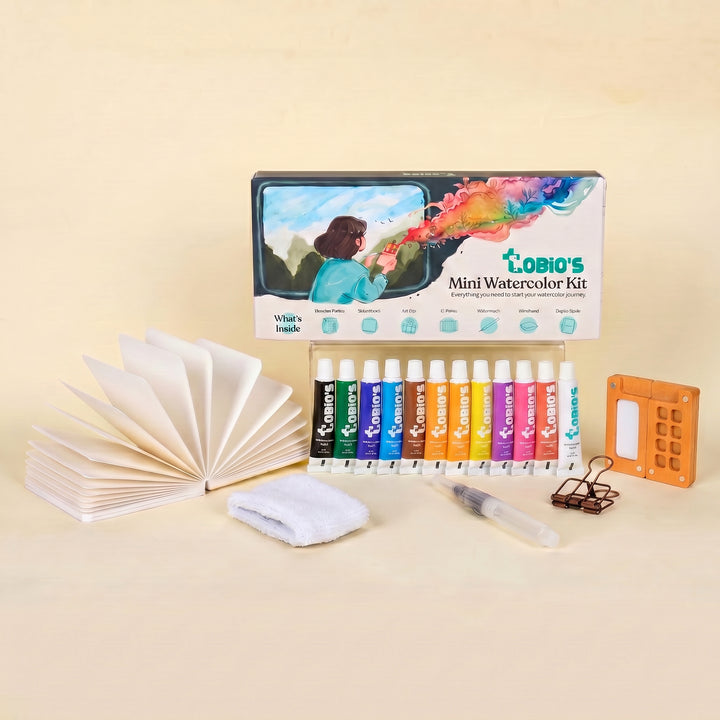
Ready to Paint?
This tutorial was designed for use with our Watercolor Kit.
Link to the link


