Blue Heron Watercolor Painting: Step-by-Step Tutorial


What You'll Need
- Paper
- Brushes
- Paint colors
- Palette
- Water cup
- Pencil
Color Palette
If you’ve ever tried a blue heron watercolor painting and ended up with a stiff, overworked bird that looks mildly disappointed in you, take a deep breath. You are not alone! Herons are a weird combo of elegant angles and soft feathers, which means your painting can easily go from "majestic" to "what is that bird" if you overthink it.
Today, we are tossing the masking tape, the professional tracing templates, and the complex layering completely out the window. Instead, we are focusing on a Loose Sketchbook Style. This method is fast, incredibly beginner-friendly, and captures the essence of the bird without agonizing over every single feather. Let's embrace the water and let the pigment do the heavy lifting.
Your Minimalist Toolkit
Keep your supplies simple so you can focus on the flow of the paint.
- Paper: 140lb / 300gsm cold press watercolor paper (a sketchbook or a small 5x7 sheet is perfect)
- Brush: One versatile Round brush (Size 8 or 10 is great for loose, juicy strokes)
- Water: Two jars (one for rinsing, one for clean water)
- Extras: A paper towel for dabbing and an HB pencil
The Color Palette
Based on our expressive reference image, we are ditching the massive color wheel. This painting relies on a moody, simplified palette. You only need three pigments to achieve this exact look:
- Payne’s Gray: The heavy lifter for the deep, dramatic shadows and the sharp beak/legs.
- Ultramarine Blue: The core cool tone for the body and wings.
- Burnt Sienna: A warm earthy tone. We won't use this on its own, but mixing a tiny touch of it into your Ultramarine Blue will create those gorgeous, natural, muted blue-greys on the chest.
Step-by-Step: Your Expressive Blue Heron Watercolor Painting
Getting started with your blue heron watercolor painting doesn't have to feel like a high-stakes exam. We are going to tackle this beautiful bird using a loose, expressive approach that celebrates the unpredictable nature of water. Instead of stressing over hyper-realistic details, you will learn to let your brush dance across the paper to capture the heron's elegant posture and moody energy. This quick study is perfect for loosening up your hand and trusting your instincts. If you are building your watercolor habit and want more calm, nature-forward projects to practice with, check out the lovely resources at Tobio's Kits. For now, just grab your favorite round brush, mix up those juicy blue-greys, and embrace the messy, magical process. Remember that watercolor thrives when you don't overwork it, so we will keep our layers minimal and our brushstrokes bold. Let’s dive straight into the four easy steps to bring this magnificent wading bird to life on your page!

The Bare-Bones Gesture
- Skip the intricate tracing.
- Using your HB pencil, lightly sketch the absolute basics: an S-curve for the neck, an egg shape for the body, and a spear for the beak.
- Keep your pencil lines shy; they should just be a loose roadmap.
- If you can see the lines clearly from an arm's length away, lightly dab them with an eraser.

The Thirsty First Wash
- Mix a very watery, pale puddle of Ultramarine Blue with a tiny hint of Burnt Sienna.
- Splash this loosely into the body, neck, and head.
- Crucial tip: Leave plenty of the stark white paper showing through!
- Keep in mind that the chest, the front of the neck, and the top of the head in the reference are just blank paper—that white space gives the bird volume and light.
- Let your brush dance and don't worry about staying inside the lines.

Dropping in the Drama
- While your first wash is still damp (wet-on-wet), load your brush with a thicker, darker mix of Ultramarine Blue and Payne's Gray.
- Drop this heavily pigmented color along the back, the bottom curve of the wing, and that signature stripe across the head.
- Let the water do the blending for you.
- If the paint blooms or bleeds unpredictably, leave it alone! That chaotic, watery texture is exactly what makes this sketchbook style look so professional and expressive.

The Confident Final Details
- Wait until the paper is mostly dry.
- Load the very tip of your brush with concentrated Payne's Gray.
- Use quick, confident strokes to carve out the sharp beak, the sweeping crest feathers off the back of the head, and the two spindly legs.
- Add a few bold, dry-brush slashes on the wings to suggest layered feathers.
- Remember that less is more—suggest the details, and let the viewer's brain fill in the rest.
Troubleshooting (Because Watercolor Has Opinions)
My wash bloomed in the background
- Cause: you added very wet paint to a semi-dry area.
- Fix: let it dry completely, then glaze a thin even wash over it.
- Prevent: work with consistent moisture, either truly wet or truly dry.
Everything looks muddy
- Cause: too many pigments mixed together, or too much brushing.
- Fix: simplify to Ultramarine + Burnt Sienna for most greys.
- Prevent: let layers dry fully before glazing again.
My heron looks flat
- Push darker values under the wing, on the back of the neck, and under the beak.
- Protect highlights on the neck and chest.
The bird looks “off” and I can’t tell why
- It’s usually proportions. Check neck length, beak angle, and leg placement.
- If needed, redraw the outline and try again on a smaller sheet. Small is forgiving.
Frequently Asked Questions
What colors are best for a blue heron watercolor painting?
For a loose, expressive style, you don't need a massive palette. You only need three main pigments: Ultramarine Blue, Payne’s Gray, and Burnt Sienna. Mixing Ultramarine Blue with a tiny touch of Burnt Sienna creates beautiful, natural blue-greys, while concentrated Payne's Gray is perfect for carving out deep shadows, the beak, and the spindly legs.
Do I need a detailed drawing before I start painting?
Not at all! For a 20-minute sketchbook study, you can skip the intricate tracing templates. Just use an HB pencil to lightly sketch the "bare-bones gesture"—an S-curve for the neck, an egg shape for the body, and a spear for the beak. Keep your lines shy so they don't show through your pale washes.
How do I prevent my watercolor bird from looking flat and heavy?
The secret to a luminous blue heron watercolor painting is protecting your white space. During your first watery wash, make sure to leave the stark white paper showing through on the chest, the front of the neck, and the top of the head. This untouched paper acts as your brightest highlight and gives the heron realistic volume.
Why did my watercolor washes turn muddy?
Muddy colors usually happen from over-mixing your pigments or over-brushing the paper. Instead of stirring your colors to death on your palette, drop thicker pigments directly onto the damp paper (the wet-on-wet technique) and let the water naturally blend them. If the paint blooms unpredictably, leave it alone—that chaotic texture looks great in a loose style!
How do I paint the feathers without overworking the painting?
Wait until your paper is mostly dry, then use a dry-brush technique. Load the tip of a round brush (size 8 or 10) with concentrated Payne's Gray and add a few bold, quick slashes on the wings. Suggest the layered feathers rather than outlining every single one, and let the viewer's brain fill in the rest.
Conclusion
A solid blue heron watercolor painting comes down to three things: soft layered washes, a controlled value range (light to dark), and just enough detail to suggest feathers without drawing every single one. Start with the quick route, then add dry-brush texture and a marsh background once your first version feels steady.
Want another subject to practice your washes, glazes, and edges without overthinking it? Head to watercolor tutorials and keep the momentum going.
Mel, FounderLike these guides? Set Tobio's as a preferred source on Google and our pages will show up first when you search for watercolor questions.
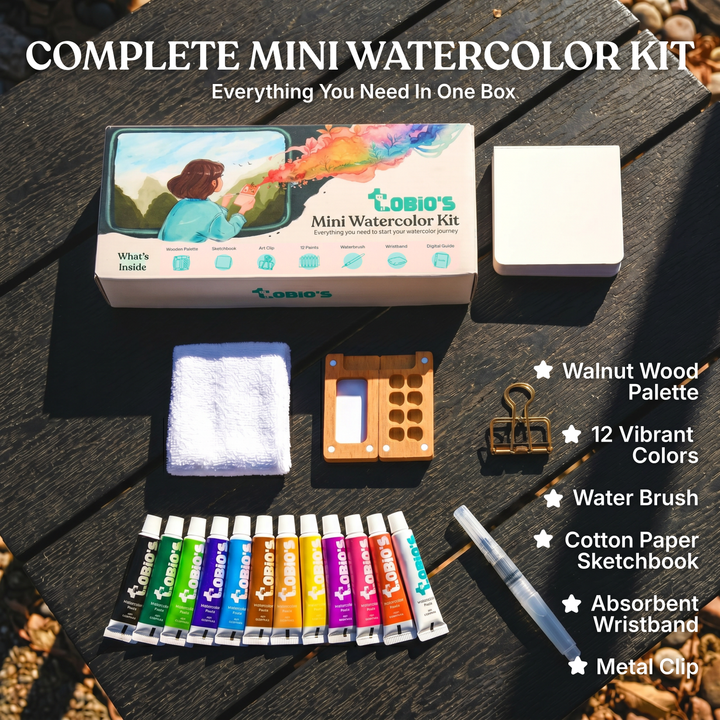
Ready to paint along?
Everything you need to paint anywhere and feel inspired doing it.
- Ultra compact
- Express yourself creatively
- For total beginners