
Bluebonnet Watercolor Painting: Step-by-Step Tutorial


What You'll Need
- Watercolor Paper
- Pencil and eraser
- Two water cups
- Watercolors
- Round brush
Color Palette
Welcome, fellow artists! If you’ve ever stared at a field of Texas blue and thought, “Nope, I’ll ruin it,” this tutorial is exactly for you. While this is a guide for a stunning bluebonnet watercolor painting, we are throwing out the rulebook. No professional tracing, no hours of masking tape, and definitely no painting every single petal (that’s a trap, trust me).
Instead, we are focusing on a "Loose Sketchbook Style." It is fast, incredibly beginner-friendly, and all about capturing the vibrant, messy, and expressive energy of the flower in just 15 minutes. Grab your sketchbook, and let’s make some beautiful, happy little blobs!
If you want more projects like this after you finish, you can browse our full library of step-by-step lessons on Watercolor Tutorials.
The Sketchbook Color Palette
To get that fresh, airy look you see in the image, we don't need a massive studio setup. Based directly on the painting in our little sketchbook, here are the exact three pigments you'll need.
Keep it simple!
- Cobalt Blue: For the lighter, airy petals at the top of the bloom.
- Ultramarine Blue: For the deep, rich, shadowy belly of the flower clusters.
- Sap Green: A natural, earthy green for those quick, confident stems and leaves.

The Confident Green Foundation
Mix a watery pool of Sap Green. Using the tip of your medium round brush, pull a few quick, thin lines upward for the stems. Then, use the belly of the brush to press and drag a couple of angled leaf shapes at the base.
Keep it light and loose so it sits visually behind the flowers.
Do not overthink it!

Dabbing the Cobalt Crown
Mix a light, watery wash of Cobalt Blue. Starting at the top of your invisible teardrop shape, make small, clustered dabs with your brush.
Crucial tip: Leave little gaps of dry, white paper showing between your marks! Those gaps become the sparkle and air that make watercolor magical.
Build a little more density as you move downward.

Dropping in the Deep Ultramarine
While your Cobalt Blue layer is still damp (but not puddling!), load your brush with a richer, thicker mix of Ultramarine Blue.
Tap this deeper color into the middle and lower parts of the cluster.
Let the water do the work, allowing the blues to bleed and blend naturally.
This creates instant depth without harsh, overworked lines.

The Final Crisp Cues
Bluebonnets read as bluebonnets because of contrast, not because you painted 200 perfect flowers. Once the paper is mostly dry, add just a few crisp, dark Ultramarine Blue accent marks near the base of the blooms.
Then, put the brush down. If you keep poking at it, you’ll lose that beautiful, loose watercolor glow!
The "Walk Away"
Resist the urge to fiddle with your petals!
The true charm of a loose bluebonnet watercolor painting comes from those unpredictable watermarks and natural color bleeds.
Drop your brush, step back, and let it dry completely.
Style Variations: Moody Twilight, Sunlit Spring, and Storybook Floral
Want to change the vibe of your bluebonnet watercolor painting?
Try these quick sketchbook adaptations:
The "Moody Twilight Field" (Dramatic & Heavy)
- Cool the palette: Lean heavily into your deep Ultramarine Blue, or mix in a touch of dark violet if you have it, to capture that fading evening light.
- Deepen the shadows: Paint the base of the flower clusters much darker, leaving only a tiny sliver of pale Cobalt Blue at the very tips of the blooms.
- Lost edges: Let the bottom stems and leaves bleed entirely into a dark, heavy, wet-on-wet ground wash to anchor them in the evening shadows.
The "Sunlit Spring Morning" (The Bright, Gentle Phase)
- Lighten the palette: Stick to highly watered-down Cobalt Blue and keep your Sap Green very pale and fresh.
- Change the proportions: Maximize the white space! Leave much larger gaps of dry paper between your dabs to make the flowers feel airy and drenched in morning sunlight.
- The "Fresh" Texture: Skip the heavy, crunchy Ultramarine shadows entirely. Keep the washes light and smooth for a delicate, sun-bleached look.
The "Storybook Wildflower" (Simplified for Cards & Patterns)
- Exaggerate shapes: Push the shape language into perfectly stacked, geometric teardrops or distinct, stylized triangles.
- Bring back the speckles: Lean into the illustrative vibe by flicking a few perfect, deliberate splatters of blue paint over the dry flowers for a playful, stylized texture.
- Flat color: Skip the messy watermarks and bleeds. Use flat, highly-pigmented, graphic washes of solid color for a modern look.
Inspiration: Why This Loose Style Works
This fast, expressive sketchbook approach to a bluebonnet watercolor painting is perfect for:
- Road Trip Journals and Spring Sketchbooks:
Capture those glorious fields of blue you spotted rolling down the Texas highway without needing a macro lens or a botany degree! You don’t need to paint every single petal; you just need that chunky, vibrant silhouette to bring the memory back to life on the page. - Bright & Cheerful Decor:
Because wildflowers are naturally uplifting and organic, a soft, loose study looks timeless in a sunny kitchen, entryway, or cozy reading nook. Frame a little trio of these for instant, nature-inspired wall art that feels personal, joyful, and completely free of that stiff, "store-bought" energy.
Frequently Asked Questions
Do I really need 140lb watercolor paper for a quick 15-minute study?
Yes! Even if you are just doing a fast, loose sketch, standard drawing paper will buckle, warp, and make your paints pool into muddy puddles. Using 140lb/300gsm cold press paper (even in a small sketchbook) gives you the texture and durability needed to let those beautiful, natural watermarks shine without frustrating you.
Can I use different blues for my bluebonnet watercolor painting?
Absolutely! While Cobalt and Ultramarine give that classic Texas wildflower look, you can use any light and dark blue combo you have on hand. Try Cerulean for the airy top and a deep Prussian Blue or Payne's Gray for the shadows. The only rule is to make sure you have a clear contrast between your light "suggestion" wash and your dark accents!
How do I keep my loose flowers from turning into a solid blue blob?
The secret is in the white space and the "walk away" phase. When making your first dabs of color, intentionally leave little gaps of dry, white paper showing through. Let the water do the blending for you, and resist the urge to keep brushing over the same damp spot.
Conclusion
Bluebonnets can look intimidating, but they’re a perfect subject to learn watercolor the smart way: simple shapes, layered color, and selective detail. Use the silhouette, keep your first wash light, deepen values gradually, and stop while the paint still looks fresh.
When you’re ready to practice with more structure, explore Tobio’s watercolor tutorials or browse Tobio’s Kits for beginner-friendly projects you can finish and actually feel proud to hang up.
Mel, Founder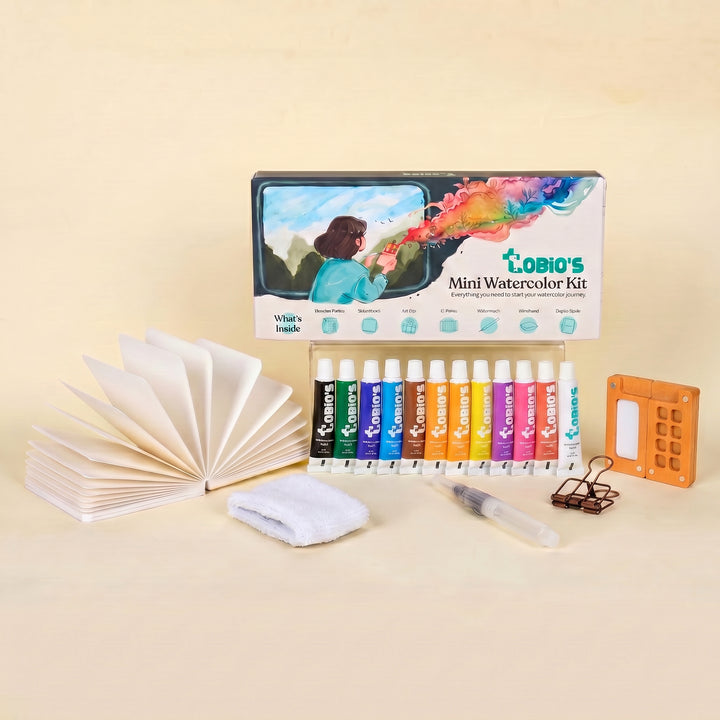
Ready to Paint?
This tutorial was designed for use with our Watercolor Kit.
Link to the link


