


Cityscape Watercolor Painting: Step-by-Step Tutorial


What You'll Need
- Watercolor Paper
- Pencil and eraser
- Two water cups
- Watercolors
- Round brush
Color Palette
Most beginners quit a cityscape watercolor painting because they try to paint every single window, door, and fire escape until the whole thing turns into a stiff, overworked mess. Good news: you don't need a master-level architectural drawing to capture the magic of a skyline.
While this is a tutorial for a stunning cityscape watercolor painting, we are leaving the rulers behind and focusing entirely on a Loose Sketchbook Style. This method is incredibly fast, very beginner-friendly, and relies on the natural flow of water to do the heavy lifting. We are capturing a vibe, not drafting a blueprint!
If you want more projects like this after you finish, you can browse our full library of step-by-step lessons on Watercolor Tutorials.
Materials & Your Simple Color Palette
If you’ve been told you need 36 paints, five brushes, and an elaborate stretching system, ignore that noise. For this expressive, tiny sketchbook approach, a minimal setup is your best friend.
The Essentials:
- Paper: 140 lb / 300 gsm cold press watercolor paper (essential for handling wet-on-wet washes without turning into a potato chip).
- Brushes: One small or medium round brush.
- Water & Cloth: A small water cup and a paper towel for dabbing.
The Palette:
Based directly on the loose painting in the example, we are using just three pigments to create the entire atmosphere. Keep these exact colors handy:
- Cerulean Blue: For the bright, airy sky and the gentle water reflections.
- Raw Sienna: A warm, earthy tone for the sunlit sides of the buildings.
- Payne's Gray: A deep, moody blue-gray for the structural shadows and the sharp horizon line.

Paint the Sky and Waterline
Lightly draw a single horizontal line across the middle of your page to separate the sky from the water. Wet the sky area with clean water, leaving a few dry patches for clouds. Drop in a light wash of Cerulean Blue at the top, letting it naturally fade as it travels down toward your horizon line.

Block in the Skyline
Wait for the sky to dry completely. Using a mix of Raw Sienna and a very watered-down Payne's Gray, paint the buildings as simple, vertical blocks.
Vary the heights, give one a pointed spire and make others flat-topped rectangles. Do not outline anything; just paint the solid shapes and leave tiny gaps of white paper to suggest sunlight hitting the concrete.

Pull Down the Reflections
While the buildings are still slightly damp, it's time to mirror them.
Drag your brush vertically down from the bottom of the buildings into the "water" half of the page. Use the exact same colors you used for the buildings above, but apply them with lighter, broken vertical strokes to mimic the movement of water.

Add Crisp Details and Contrast
Once the paper is completely dry, load your brush with a concentrated mix of Payne's Gray. Add a few sharp, defining marks: a crisp line across the horizon to ground the city, a dark shadow on the side of the tallest tower, and a few quick, dark vertical dashes in the water reflection.
Once your eye reads "buildings and water," put the brush down.
You're done!
The "Walk Away"
Now for the hardest part: resist the urge to fiddle. Don't try to "fix" messy puddles or smooth out blooms. The true charm of an expressive watercolor painting of rocks lies in those unpredictable, natural watermarks.
Drop your brush, step back, and let it dry completely!
Style Variations: Moody Rainy Street, Golden Hour Skyline, and Storybook City
Want to change the vibe of your cityscape watercolor painting?
Try these quick sketchbook adaptations:
The "Moody Rainy Street" (Dramatic & Heavy)
- Cool the palette: Swap your warm Siennas for deep, moody blues like Indigo or extra Payne’s Gray.
- Deepen the shadows: Paint the street reflections much darker, leaving only a tiny sliver of pale rim light on the very tops of the buildings or spires.
- Lost edges: Let the bottom of the buildings bleed entirely into a dark, heavy, horizontal wash to anchor them in wet asphalt and rolling fog.
The "Golden Hour Skyline" (The Warm, Gentle Phase)
- Lighten the palette: Stick to highly watered-down Yellow Ochre and the palest wash of Raw Sienna to create a sunset glow.
- Change the proportions: Soften the hard architectural edges so the buildings sit as warm, glowing silhouettes against a hazy sky.
- The "Fresh" Texture: Skip the heavy, crunchy Payne's Gray shadows. Keep the washes light and smooth for a fresh, sun-drenched evening look.
The "Storybook City" (Simplified for Cards & Patterns)
- Exaggerate shapes: Push the shape language into perfectly stacked, geometric blocks or distinct, stylized triangles for roofs and towers.
- Bring back the speckles: Lean into the illustrative vibe by flicking a few perfect, deliberate splatters of yellow paint over the dry buildings to suggest distant glowing windows or a starry night.
- Flat color: Skip the messy water reflections. Use flat, highly-pigmented, graphic washes of solid color.
Inspiration: Why This Style Works
This loose, expressive sketchbook approach to a cityscape watercolor painting is perfect for:
- Travel Journals and Urban Sketching:
Capture the cool skyline you spotted on a weekend trip without needing a ruler or an architecture degree. You don’t need to paint every single fire escape or windowpane; you just need that chunky, towering silhouette to bring the memory back. - Modern & Urban Decor:
Because city skylines are naturally dynamic and structural, a soft, loose study looks timeless in an office or cozy reading nook. Frame a trio of these (perhaps experimenting with different times of day or weather conditions) for instant, sophisticated wall art that doesn't feel like a mass-produced poster.
Frequently Asked Questions
What is the best paper for a quick cityscape watercolor painting?
Always use 140lb/300gsm cold press watercolor paper. Because this loose style uses heavy water for the sky and reflections, thinner paper will warp and ruin your beautiful, smooth washes.
How do I stop my cityscape watercolor painting from looking muddy?
Stop over-mixing and resist the urge to fiddle! Mud happens when you use too many pigments or brush over half-dry paper. Stick to our 3-color limited palette and let your layers dry completely before adding those crisp, dark shadows.
Do I need perfect drawing skills for this loose style?
Not at all! As long as your building shapes have relatively straight vertical lines, your scene will read perfectly to the viewer's eye. Remember, we are painting quick impressions, not grading an architectural exam.
Conclusion
A strong cityscape watercolor painting is mostly three things: simple perspective, controlled washes, and smart shadows. Keep your drawing loose, paint in layers that actually dry, and use details like windows and figures as symbols, not a life sentence.
When you’re ready for more practice with clear, beginner-friendly structure, jump into Tobio’s step-by-step watercolor tutorials or explore painting projects at Tobio’s Kits.
Mel, FounderLike these guides? Set Tobio's as a preferred source on Google and our pages will show up first when you search for watercolor questions.
Ready to Paint?
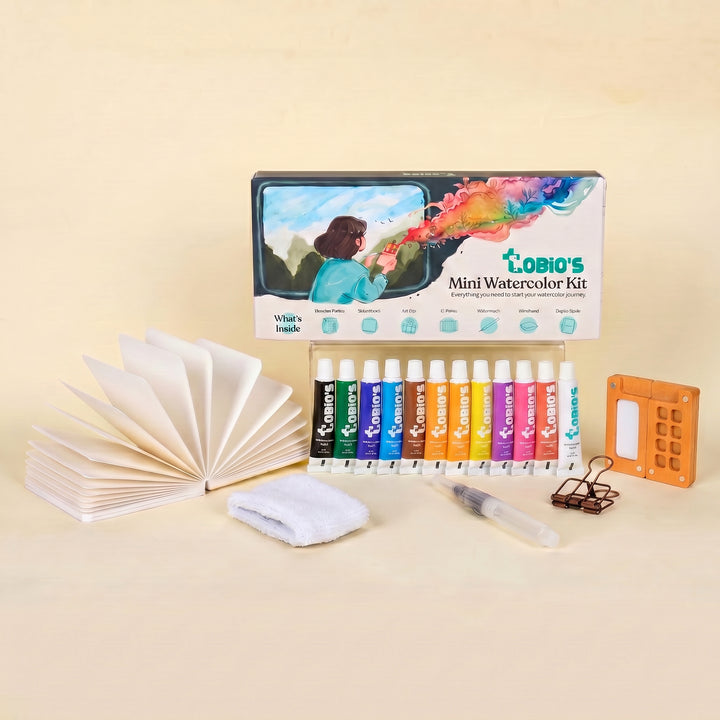
This tutorial was designed for use with our Watercolor Kit.
Link to the link


