
How to Paint a Crow: Step-by-Step Watercolor Tutorial


What You'll Need
- Watercolor paper
- Pencil and eraser
- Two water cups
- Paper towel or clean cloth
- Round brush
- Washi tape
Color Palette
If your crow watercolor painting keeps turning into a flat black blob, it is not you, it is the plan. Crows are basically a masterclass in value control: you are painting “black,” but what you really need is layers, edges, and sneaky color shifts that keep the bird looking alive.
In this tutorial, you will paint a crow with depth, readable feather groups, and a crisp silhouette, without overworking the paper or scrubbing it into fuzz.
The "Pocket Palette" Strategy
Looking at the study in the image, you don’t need a massive studio setup. This was painted using a simple travel kit. To get that moody, dimensional crow look without using flat black, we are going to mix our colors from standard pigments found in most travel sets.
The 3-Color Mix:
Instead of using straight black (which looks like a hole in the paper), we will mix a "Chrommatic Black" to get these specific grays:
- Ultramarine Blue: For the cool, glossy highlights on the feathers.
- Burnt Sienna (or a warm Earth Tone): To muddy up the blue and create warmth in the chest.
- Lamp Black (or Neutral Tint): Used sparingly just for the deepest accents (eye and beak).
The Paper:
Even for quick sketches, paper matters. Use 140 lb / 300 gsm cold-pressed paper. The texture grabs the pigment and allows for those lovely "rough" edges you see on the wing feathers.

The "Bean" Sketch
Forget anatomy class. If you squint at a crow, it is basically a leaning potato or a kidney bean shape.
- The Body: Sketch a loose oval leaning forward.
- The Head: Add a smaller circle tucked into the "shoulders" (crows don't have visible necks).
- The Beak: A sturdy, thick wedge.
- Tip: Keep your pencil lines loose. In this expressive style, visible pencil marks actually add to the charm.

The Tea-Strength Wash
We work from light to dark. If you go pitch black immediately, you lose the magic.
- Dilute your Ultramarine Blue and a touch of Lamp Black with lots of water until it looks like weak tea.
- Fill in the entire bird shape except for the beak.
- The trick: While it's still wet, blot the center of the wing with a paper towel or a thirsty brush to lift some color. This creates that soft, gray highlight you see in the center of the bird’s body in the photo.

Dropping in the Drama (Wet-on-Wet)
While the paper is still slightly damp (cool to the touch), it’s time to define the form.
- Mix a thicker, cream-consistency version of your Lamp Black and Ultramarine.
- Touch your brush to the areas that need shadow: under the belly, the back of the neck, and the tail feathers.
- Let the paint bloom naturally. Don’t overwork it! If it looks messy, let it be messy. That’s the style.

Dry Brush Texture
Wait for the bird to dry. Seriously. Go make a coffee. Once the paper is bone dry, we add the texture that makes it look like feathers.
- Load your small round brush with dark paint, but wipe the excess moisture off on a towel.
- Drag the brush quickly over the wing area. The texture of the 140lb paper will catch the paint, creating those jagged, scratchy marks that look exactly like ruffled feathers.
- Use this same dark mix to paint the beak and the eye. Leave a tiny speck of white paper for the eye glint, it brings the bird to life.
Feet and Grounding
In this study, we aren't painting a complex background or a branch. The bird is the star.
- Use a fine liner brush or the tip of your round brush to sketch simple, twig-like feet.
- Don't paint individual toes perfectly; just suggest the claws gripping the ground.
- Optional: Add a faint wash of gray under the feet to ground the bird so it doesn't look like it's hovering in the void.
Artist Note: If your crow looks a little scruffy, good. Crows are scavengers; they aren't supposed to look like they just came from a salon.
Common Mistakes & Quick Fixes
Mistake: The "Black Blob" Effect
Fix: If your crow looks like a flat black hole in the paper, you went too dark too fast. Remember: watercolors dry lighter, but black paint stains. Start with a "dirty water" wash (tea strength) and only use your thickest darks for the wing creases and underbelly.
Mistake: The "Crazy Cartoon" Eye
Fix: If the bird looks surprised or manic, you likely placed the eye in the dead center of the head. Crow eyes are small and sit slightly back from the beak. Also, if you accidentally painted over the white eye highlight, cheat! Use a dab of white gouache or a white gel pen to bring the life back.
Mistake: Painting Every Single Feather
Fix: Step away from the small brush. This is a loose study, not a biology textbook. Use a "dry brush" technique on the wing to suggest texture, and let the viewer's brain fill in the details.
Mistake: Floating Feet
Fix: If your crow looks like it is hovering, you forgot the shadow. You don’t need a detailed branch, but a quick swish of diluted gray under the claws grounds the bird and gives it weight.
If you’re also into printable art and want to explore Tobio’s world beyond tutorials, you can visit Tobio’s Kits to see what’s available.
Inspiration: Why This Style Works
This loose sketchbook approach is perfect for:
- Urban Nature Journaling: You don’t need a national park to find a subject. Crows are the ultimate "everywhere" bird. This quick style allows you to capture their intelligent, cheeky posture from a park bench or your kitchen window before they fly off. It turns a common sight into a personal field study.
- Vintage Naturalist Decor: There is something timeless about a simple bird study on textured paper. Pop this in a wooden frame (maybe grouped with a feather or a botanical sketch), and you have instant "Dark Academia" or cozy cabin art that looks organic and authentic.
- Beating "Black Paint" Anxiety: Beginners often avoid crows because they fear making a flat, muddy mess. This approach flips the script. By treating the bird as a collection of dark blues, warm browns, and deep grays, you learn that "black" is actually a whole spectrum of color, a massive level-up for your future paintings.
Frequently Asked Questions
How do you start a crow watercolor painting as a beginner?
Start with a simple silhouette sketch, then paint a very light first wash to map values. Build darker areas in layers, and suggest feather groups with directional strokes instead of painting every feather.
What materials do I need for a crow watercolor painting?
You need watercolor paper (ideally around 140 lb / 300 gsm), a couple round brushes, pencil/eraser, water containers, a palette, and paints that let you mix varied darks (a dark neutral plus a blue and a warm brown is a strong start).
How do you paint realistic black feathers in watercolor?
Avoid using one flat black. Layer transparent dark mixes that lean cool in some areas and warmer in others, reserve the deepest darks for overlaps and creases, and use selective crisp edges to define feather groups.
Conclusion
A strong crow watercolor painting isn’t about perfection, it’s about attitude where it counts: moody darks, expressive edges, and a silhouette that feels alive. Sketch loose, trust the water blooms, and stop before you overwork it. If you want to keep the momentum going with guided projects and less supply guesswork, head over to Tobio’s Kits and pick a kit that makes painting feel like a break, not a battle.
Mel, Founder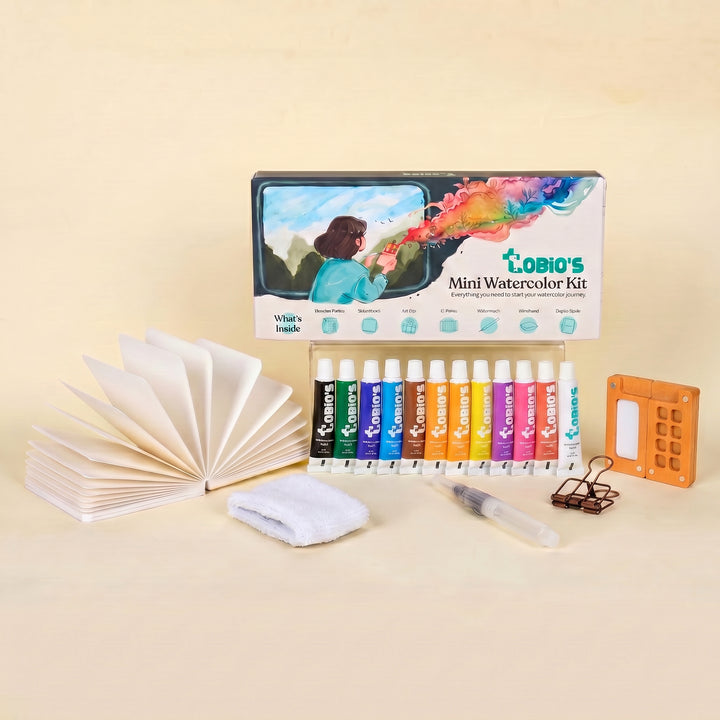
Ready to Paint?
This tutorial was designed for use with our Watercolor Kit.
Link to the link


