


Eagle Watercolor Painting: Step-by-Step Tutorial


What You'll Need
- Watercolor paper
- Pencil and eraser
- Two water cups
- Paper towel or clean cloth
- Round brush
- Washi tape
Color Palette
If you have ever tried an eagle watercolor painting and stopped because you didn't want to paint 4,000 individual feathers, this tutorial is for you.
We are forgetting about anatomical diagrams and "museum-quality" perfection today. Instead, we are focusing on a loose sketchbook style. This approach is about capturing the spirit of the bird, the heavy brow, the hooked beak, the perched stance, without worrying if every quill is in the right place. It’s fast, it’s messy, and it’s perfect for a 20-minute coffee break session.
If you want more projects like this after you finish, you can browse our full library of step-by-step lessons on Watercolor Tutorials.
The Field Kit Color Palette
Looking at the travel palette clipped to the sketchbook in the image, we don't need a massive studio setup. We are going to isolate just four key pigments to build this bird.
- Cadmium Yellow: For that punchy, iconic beak and the talons.
- Burnt Umber: The workhorse for the body feathers.
- Ultramarine Blue: Essential for mixing with the brown to create deep, dark shadows (never use straight black!) and for the sky.
- Cerulean Blue: For the soft, airy background wash.
Materials You Actually Need
- Paper: A small sketchbook (approx 5x5 or 5x7). The paper matters, aim for 140 lb / 300 gsm cold press so the water doesn't buckle the page.
- Brushes: A single Round Brush (Size 6) can do 90% of this painting. Maybe a tiny detail brush for the eye if you’re feeling fancy.
- Pencil: HB for a very light sketch.

The "Wonky" Sketch
Don't trace. Look at the reference and break it down into three shapes:
- A white oval for the head.
- A large, slanted tear-drop shape for the wing/body.
- A hook for the beak.
Tip: Sketch the branch now so your bird has something to stand on. Keep your pencil lines loose, we actually want them to peek through the paint later.

The Sky (Negative Painting)
We want the white head of the eagle to pop, so we need a background.
Take your Cerulean Blue (diluted with plenty of water) and paint around the eagle’s head. Let the edges be rough and uneven. It shouldn't look like a solid wall of blue; let it fade out into the paper. This defines the white head without using white paint.

The Golden Accents
While the sky dries, use pure Cadmium Yellow for the beak and the feet.
Pro-move: While the yellow is still damp, touch a tiny bit of Burnt Umber to the bottom of the beak and the toes. The colors will bleed slightly, creating an instant 3D shadow effect.

The Feathers (Texture, Not Tedium)
Here is the trick to the loose style seen in the photo.
- Mix Burnt Umber with a touch of Ultramarine Blue to get a rich, dark coffee color.
- Start at the shoulder and pull your brush down towards the tail.
- Leave gaps! Don't fill in the whole body solid brown. Let the white paper show through in little speckles, these look like highlighted feathers.
- For the wing texture, wait until the first layer is damp (not soaking), then use a drier brush to make short, dashed marks for the flight feathers.
The Eye and The Branch
Finish with the fierce details.
Dot the eye with yellow, then use your darkest mix to add the pupil and the brow ridge, that glare is crucial.
Swipe a watery gray-brown for the branch, letting it touch the talons so the bird feels heavy.
Stop.
Put the brush down.
Overworking is the enemy of a wild bird.
Troubleshooting: Fix Common Eagle Painting Problems
My colors look muddy
- Cause: Overmixing complements or painting into semi-dry paper.
- Fix: Let layers dry fully before glazing. Mix with fewer pigments. Use cleaner water.
My feathers look like noodles
- Cause: Painting individual feather lines everywhere.
- Fix: Paint feather groups first, then add texture only where you want attention.
The eye looks lifeless
- Cause: No highlight or not enough value range.
- Fix: Darken the pupil and upper iris. Preserve or add a tiny highlight. Add a soft eyelid shadow.
The beak looks flat
- Cause: One-value wash with no curved shading.
- Fix: Glaze warm shadows under the ridge and soften the edge so it rolls round.
Inspiration: Why This Style Works
This loose, sketchbook approach is perfect for:
- Hiking Journals: Capture the thrill of spotting a raptor on the trail without needing the bird to freeze in mid-air for you. It’s about recording the memory of the sighting, not creating an ornithology report.
- Rustic Home Accents: Pop this study into a floating frame or lean it on a bookshelf. It brings a touch of "wild vibes" to a home office or den that looks curated and artsy, rather than store-bought.
- Beating "Detail" Paralysis: An eagle watercolor painting often scares beginners because of the complex feathers. But in this style, an eagle is just a teardrop shape with a grumpy eyebrow. It is the perfect way to practice bold values without getting bogged down in anatomy.
Frequently Asked Questions
How do I start an eagle watercolor painting if I’m a beginner?
Start with a simple outline and paint in big shapes first: background wash, light head shadows, mid-tone feather groups, then small details. Focus on values and keep the sharpest detail for the eye and beak.
What supplies do I need for an eagle watercolor painting?
You’ll want cold-press watercolor paper (ideally 140 lb / 300 gsm), a medium round brush plus a small detail brush, and a basic palette with ultramarine, burnt sienna, a dark (Payne’s gray), and a warm yellow for the beak.
Is there an easy way for kids to paint an eagle in watercolor?
Yes. Choose a simplified eagle head or silhouette and use one or two background washes. Keep feather details minimal and focus on bold shapes and a strong beak and eye area.
Conclusion
The secret to expressive watercolor paintings of eagles isn’t precision, it’s knowing when to put the brush down. A loose sketch breathes because of the imperfections, not in spite of them. Embrace the blooms, leave your wonky pencil lines visible, and trust that a splash of Burnt Umber looks more alive than a perfectly painted feather.
If you want to keep the momentum going with guided projects and less supply guesswork, head over to Tobio’s Kits and pick a kit that makes painting feel like a break, not a battle.
Mel, FounderLike these guides? Set Tobio's as a preferred source on Google and our pages will show up first when you search for watercolor questions.
Ready to Paint?
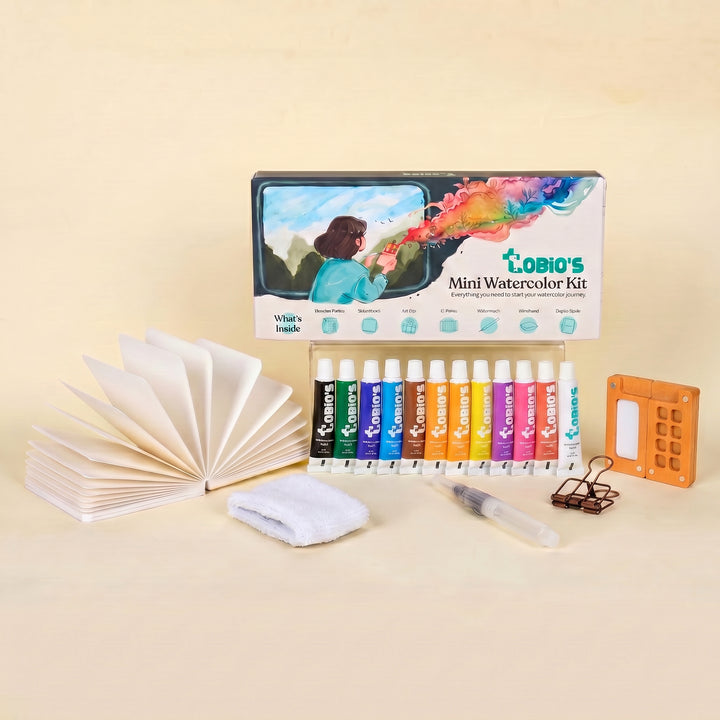
This tutorial was designed for use with our Watercolor Kit.
Link to the link


