


Floral Painting Watercolor: Step-by-Step Tutorial


What You'll Need
- Paper
- Brushes
- Paint colors
- Palette
- Water cup
- Pencil
Color Palette
Most beginners overthink floral painting watercolor. They try to paint every individual petal, outline every leaf, and by the end, the flowers look stiff and plastic.
Today, we are doing a loose sketchbook study of a tulip bouquet. This method is fast, vibrant, and relies on the "wet-on-wet" technique to create those beautiful, unpredictable color bleeds. We aren't painting botanical diagrams; we are painting the feeling of spring. Put away your tiny detail brushes, we want big, confident shapes.
The Setup (No Fancy Gear Required)
- Paper: 140lb/300gsm Cold Press paper. (You need this texture to hold the wet washes without buckling).
- Brush: A single Size 8 or 10 Round Brush.
- Paints: See our "Spring Garden" palette below.
- Extras: Two water cups (keep your yellows clean!) and a paper towel.
The Color Palette
Based on the sketchbook study above, we are using a full spectrum of cheery, warm colors. The key here is allowing them to mix on the paper to create new shades (like orange).
- Cadmium Red: For the bold, punchy red tulips.
- Cadmium Yellow: For the bright yellow blooms and mixing oranges.
- Alizarin Crimson (or Rose): For the cooler pink/purple tones.
- Dioxazine Purple: For the deep violet tulips.
- Sap Green: A fresh, natural green for the stems and leaves.
Step-by-Step: Your Expressive Floral Painting Watercolor
The trick to tulips is that they are essentially just "cups." Don't worry about individual petals yet. Focus on the overall cup shape of the flower head. If you start obsessing over every little petal edge right now, you’ll lose the flow and end up with a stiff diagram instead of a painting. Think of each flower as a simple wine glass or egg shape sitting on a stem. We will carve out the details later with negative space and shadow, but for now, we just want to get those big, juicy shapes down on the paper.

The "Ghost" Sketch
Tulips have simple shapes. If you need a guide, use a pencil lightly.
- Sketch rough "U" shapes for the flower heads.
- Draw loose, sweeping lines for the stems.
- Artist Tip: Don't press hard! If your pencil lines are too dark, they will show through the transparent paint and ruin the soft look.

The Variegated Wash (The Flowers)
We want these tulips to look organic, not flat.
- Load your brush with Cadmium Red and paint a loose "U" shape.
- While the paint is still wet, dip the tip of your brush into Cadmium Yellow and touch it to the top edge of the red tulip. Watch the orange create itself!
- Repeat this for the other flowers. Paint a Purple tulip, then a Yellow one.
- Crucial: Let the flowers touch slightly! If a red tulip bleeds a little into a yellow one, let it happen. That connection makes the bouquet look cohesive.

The Greenery (Negative Space)
Don't paint the stems like stiff wires.
- Load your brush with Sap Green.
- Tuck the leaves between the flower heads. Use the green paint to carve out the shapes of the petals (this is called "cutting in").
- Paint the stems with quick, downward strokes. Vary the pressure, press down for thick leaves, lift up for thin stems.

The Details (Wet-on-Dry)
Wait for the painting to dry completely. (Go make a coffee).
- Once the paper is bone dry, take your brush with a slightly thicker mix of your colors.
- Add a few defining strokes to separate the petals. You don't need to outline the whole thing, just a C-curve here and there to suggest overlapping petals.
- Add a second layer of Sap Green to darken the shadows where the leaves overlap stems.
Troubleshooting: Fix Mud, Blooms, and “Oops” Moments
Watercolor is spicy. Here’s how to handle the usual drama without rage-quitting.
Problem: Muddy petals
- Cause: too many layers while still wet, or mixing complements into your pink
- Fix: let it dry fully, then glaze a clean, watery pink over the area to unify it
- Prevention: limit your palette and let layers dry between passes
Problem: Hard edges everywhere
- Cause: painting too dry on dry paper
- Fix: soften edges with a clean damp brush (not soaking)
- Prevention: work with slightly more water in early layers
Frequently Asked Questions
Why did my red tulip and green stem turn into a brown smudge?
Welcome to color theory! Red and Green are opposites (complementary colors), so when they mix, they create brown. If you want a crisp separation between the flower and the stem, you must wait for the red flower head to dry completely before painting the green stem underneath. If you want a loose, connected look, touch them barely once and let them bleed, but don't scrub them together.
How do I make the petals look distinct without outlining them?
We use a technique called "Negative Painting." Instead of painting a line around the petal, you paint the green leaf behind it. The dark green paint creates the edge of the light flower. It feels like a magic trick: you are carving the flower shape out of the background rather than drawing it.
My tulips look like flat red lollipops. How do I give them volume?
You skipped Step 2! If you paint a tulip solid red, it will look flat. The volume comes from the "Variegated Wash", dropping a little yellow or orange into the wet red paint creates a natural highlight and shadow. The watercolor creates the 3D form for you; you just have to feed it different colors while it's wet.
Can I use a pen to outline the flowers if I messed up the edges?
You can, but for this specific "loose sketchbook" style, try to resist. Heavy black outlines tend to flatten the image and make it look like a cartoon. If your edges are messy, just grab your brush with some thicker paint and redefine the edge with a confident stroke of color, not ink.
Conclusion
Watercolor florals don’t require perfect drawing skills. They require three things: a simple palette, repeatable brushstrokes, and the patience to let layers dry. Use the steps above to build petals lightly, add depth with drop-ins, and finish with restrained contrast. That’s the core of clean, confident floral painting watercolor.
If you want to keep the momentum going, pick your next project and paint along with a guided setup from Tobio’s Kits. Less second-guessing, more actually painting.
Mel, FounderLike these guides? Set Tobio's as a preferred source on Google and our pages will show up first when you search for watercolor questions.
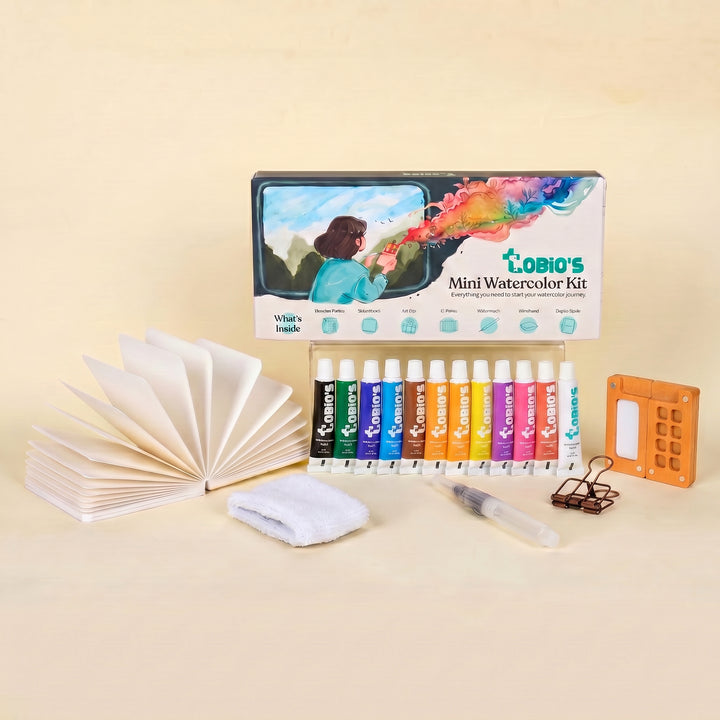
Ready to Paint?
This tutorial was designed for use with our Watercolor Kit.
Shop the Kit


