Giraffe Watercolor Painting: Step-by-Step Tutorial


What You'll Need
- Watercolor paper
- Watercolor paints:
- Brushes
- Pencil + eraser
- Two cups of water
- Paper towel
Color Palette
If you’ve ever looked at a giraffe and thought, “Nope, too many legs, too many spots, too much everything,” you’re in the right place. This tutorial is not about scientific accuracy; it’s about capturing the playful spirit of the world’s tallest animal using a fast, loose, and expressive sketchbook style.
While this is a guide for a giraffe watercolor painting, we are focusing on a beginner-friendly approach that prioritizes joy over perfection. In about 15 minutes, you can have a charming, character-filled giraffe on your paper without the stress of complex layering or professional tracing.
The Sketchbook Color Palette
To match the clean, vibrant look of the study in image_52.png, we only need three specific pigments and a patch of grounding color. This limited palette keeps the painting fresh and prevents mud.
- Raw Sienna (or Yellow Ochre): For the warm, luminous base wash of the body.
- Burnt Sienna: This rich brown is perfect for those iconic, irregular spots.
- Burnt Umber: A darker brown to add dimension to the mane, hooves, and eye.
Step-by-Step: How to Paint a Loose Giraffe Watercolor Painting
Watercolor rewards a relaxed hand and patience for drying time. The entire process relies on confident, singular washes and well-placed details. Try not to overthink the placement of every single stroke. Embrace the unpredictability of the medium, letting the water do most of the heavy lifting as you build your giraffe's character. If you're looking for more step-by-step guidance and similar projects to practice your loose style, explore our full library of watercolor tutorials.

Gestural Sketch
Keep the initial drawing borderline invisible. Avoid heavy erasing, as it can damage the paper surface.
- Stack simple ovals for the head and muzzle, and use two gentle, ribbon-like curves for the long neck. Remember: if the neck looks like a pool noodle, you're doing it right.

Build the Form on Dry Paper & Expression and Selective Contrast
The secret to this dimensional, not flat look, is working wet-on-dry for the subsequent layers.
- Mix a slightly stronger brown wash (milk consistency) using Burnt Sienna. Notice in image how the head and neck have defined color blocks. With confident, "artist-to-artist" sweeps, block this warm brown over the head (around the facial heart-shape) and down the two main neck wings.
- Load the brush densely and place the mane along the back of the neck with short, decisive strokes. Stop touching the area once the pigment is down to let it bloom naturally.
- Eyes: Load your smaller brush with dense Burnt Umber or a near-black mix. Paint the distinct almond eye, but ensure you leave a tiny circle of dry, white paper for that life-giving sparkle. That single highlight is what makes your friendly creature pop off the page.
- Focal Details: Define the small beak triangle and add high-impact shadows selectively. Confidently place irregular feather marks—suggest feathers, do not individually name them. Stop early.

Spots, Spontaneous Blending
Depth is Created by prioritizing value shifts, light on top, darker underneath.
- Mix your mid-brown Burnt Sienna for the spots. Avoid perfect circles; giraffe patches are wonky and organic. While the previous wash is damp (glistening sheen, not puddling), load your brush densely and carefully drop this deep cool mix into the shadow zones: under the jaw and along the underside. The color should merge spontaneously with the damp layer to create a soft, dimensional transition.
Troubleshooting: Fix Common Watercolor Oops
My spots bled into the base
Your base wash was still damp. Let the base layer fully dry next time. For now, blot gently with a paper towel, let it dry, then repaint the spots on top.
My giraffe looks flat
Add a second layer of shadows on only one side of the neck and under the belly. A little contrast goes a long way in watercolor.
I made the neck too thick or too thin
To adjust thickness, use a light background wash to “carve” the silhouette. To slim it visually, add a narrow shadow line along one edge of the neck.
My colors look muddy
Rinse your brush more often, use cleaner water, and avoid overworking the same area while it’s damp. Mud usually comes from too many mixed layers and too much scrubbing.
Frequently Asked Questions
Can a complete beginner successfully do a giraffe watercolor painting?
Yes, absolutely! This giraffe watercolor painting tutorial is designed specifically for beginners. By breaking the animal down into simple shapes and using a forgiving, loose sketchbook style, anyone can create a charming giraffe without needing prior art experience or natural talent.
How do I paint watercolor giraffe spots without making a mess?
The easiest way to paint giraffe spots is to use a mid-brown pigment, like Burnt Sienna, and apply it while your base layer is still slightly damp (glistening, not puddling). Paint irregular, wonky shapes rather than perfect circles, and let the paint merge spontaneously with the damp layer to create soft, dimensional edges.
Does my watercolor giraffe need to look perfectly realistic?
Not at all! This expressive study prioritizes joy over perfection. Instead of stressing about scientific accuracy or microscopic details, the goal is to capture the playful spirit of the animal using fast, confident strokes and clean, transparent washes.
Where can I find beginner-friendly watercolor kits for projects like this?
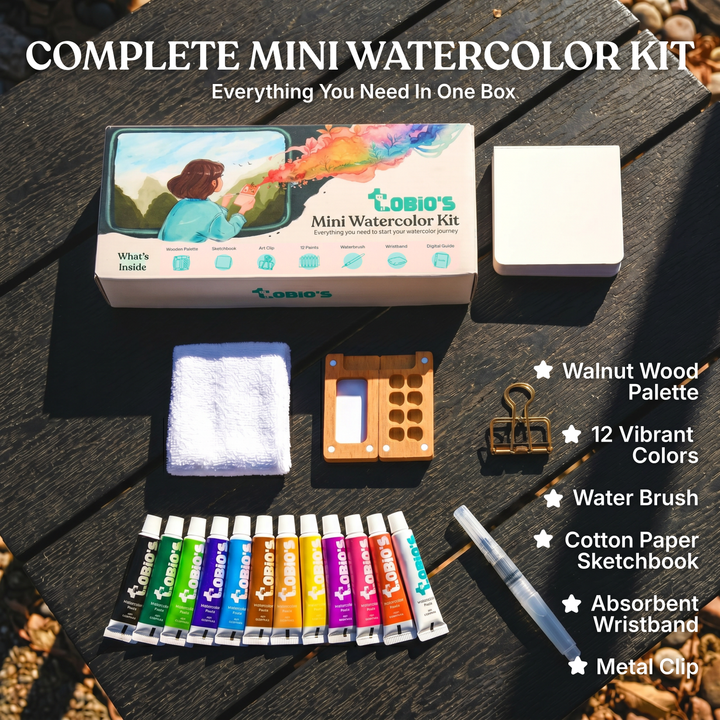
If you want to skip the supply hunt and start painting immediately, you can find curated, low-pressure setups at Tobio’s Kits. They offer beginner-friendly kits designed for step-by-step learning and relaxing, screen-free creativity.
Conclusion
A giraffe looks complicated until you break it down: a simple sketch, a light base wash, a few soft shadows, then spots with personality. This giraffe watercolor painting is less about perfect realism and more about enjoying the process and ending with something that makes you smile.
If you want more beginner-friendly projects you can actually finish, explore more guided watercolor tutorials from Tobio’s Kits and keep the momentum going.
Mel, FounderLike these guides? Set Tobio's as a preferred source on Google and our pages will show up first when you search for watercolor questions.
Ready to paint along?
Everything you need to paint anywhere and feel inspired doing it.
- Ultra compact
- Express yourself creatively
- For total beginners