Hydrangea Watercolor Painting: Step-by-Step Tutorial


What You'll Need
- Paper
- Brushes
- Paint colors
- Palette
- Water cup
- Pencil
Color Palette
Hydrangeas are notorious for being "chaotic little liars." They look like hundreds of distinct petals, but if you try to paint every single one, you end up with a stiff, overworked cabbage.
Today, we are doing a loose sketchbook study. Look at the image above. We aren't painting a botanical diagram; we are painting a soft, watery explosion of blue and green. This hydrangea watercolor painting technique relies on water, timing, and the courage to let the colors bleed where they want to.
The Supplies (Keep it Simple)
- Paper: 140lb/300gsm Cold Press paper. (You need the texture to handle the heavy water load).
- Brush: A Size 8 Round Brush (flexible enough for petals and leaves).
- Paints: See our "Cool & Calm" palette below.
The Color Palette
Based on the sketchbook study above, we are using a cool, analogous palette to keep the flower looking fresh and cohesive.
- Ultramarine Blue: The base color for the fluffy flower head.
- Dioxazine Purple (or a Violet mix): For the shadowed areas and petal variety.
- Sap Green: For the large, framing leaves.
- Payne's Gray: To deepen the darkest crevices between petals.
Step-by-Step: Your Expressive Hydrangea Watercolor Painting
The secret to this painting is Negative Space. We aren't drawing outlines; we are using darker puddles of paint to carve out the shapes of lighter petals. It feels a bit like a magic trick, one minute you have a shapeless, colorful blob, and the next, you have a distinct bloom just by painting the shadows behind the petals. Don't try to force it to look perfect immediately, we are sculpting the flower out of the paint, not drawing it.

The "Blob" Map (Wet-on-Dry)
Dip your brush in clean water and pick up a watery mix of Ultramarine Blue.
Don't paint a circle! Dab your brush around in a rough, circular cluster shape. Leave plenty of white paper gaps between your dabs.
Visual Check: It should look like a disconnected cloud of blue spots, not a solid balloon.

The Color Drop & The Framing Leaves
- While the blue marks are still damp, load your brush with thicker Dioxazine Purple.
- Touch the tip of the brush into the wet blue areas. Watch the purple explode and swirl into the blue.
- Artist Tip: Don't mix it! Let the water do the blending for you. This creates that natural, variegated look of real hydrangea petals.
- Rinse your brush and pick up Sap Green.
- While the flower edges are still slightly damp, paint three large, jagged leaf shapes around the bottom and right side.
- Let the green touch the blue flower in one or two spots. The colors will bleed together, creating a beautiful "lost edge" that makes the painting feel loose and organic.
- Wait for the first layers to be bone dry.
- Mix a darker, thicker puddle of Blue + Purple.
- Paint small, dark triangular shapes between the light blue blobs you painted in Step 1.
- By painting the dark "holes" or shadows, the light shapes instantly start to look like petals popping forward. You don't need to paint the petals, you just need to paint the shadows behind them.
Troubleshooting: Fix Blooms, Muddy Color, and “Blob Syndrome”
“It looks like a blob”
- Add value variety: deepen shadows in a few pockets
- Carve out 5 to 10 petals with negative painting
- Sharpen only a couple petals at the focal point
“My colors turned muddy”
- Let layers dry before glazing more color
- Rinse your brush more often than you think you need to
- Mix fewer pigments together at once
“I got cauliflower blooms where I didn’t want them”
- That usually happens when wet paint meets a drying wash
- Either commit to wet-on-wet (very wet) or wait until it’s dry (very dry)
- In a hydrangea, some blooms can look like texture, so you may be able to keep them
“My petals don’t look like hydrangeas”
They don’t have to, individually. Hydrangea reads as hydrangea when:
- Petals cluster tightly
- Edges vary between crisp and soft
- Shadows separate groups
Frequently Asked Questions
How do I stop my hydrangea watercolor painting from turning into mud?
Mud happens when you mix too many colors or keep scrubbing wet paint. Put the color down, let it bloom, and leave it alone. The fresh look comes from transparent layers, not over-mixing.
Why does my flower look flat?
You are likely missing the "Negative Painting" step (Step 2). Without those dark little shadow shapes tucked between the petals, the flower is just a big blue silhouette. The contrast is what creates the volume.
Can I use pink instead?
Absolutely. Hydrangeas change color based on soil acidity! Swap the Ultramarine Blue for Permanent Rose or Alizarin Crimson, but keep the technique exactly the same.
Do I need to sketch it first?
For this loose style? No. A pencil line often shows through and ruins the softness. Trust your brush to make the shapes. If you are nervous, just mark the top, bottom, left, and right boundaries with four tiny dots so you don't paint off the page.
Conclusion
A convincing hydrangea watercolor painting is really a lesson in restraint: big shape first, light wash, clustered petals, then selective shadows to separate groups. Focus on values and edges, and your brain will happily fill in the “hundreds of petals” part.
If you want more step-by-step practice beyond this one bloom, head to Tobio’s watercolor tutorials and pick a project that matches your vibe. Then come back and paint hydrangeas again, because the second one is always better (annoying, but true).
Mel, FounderLike these guides? Set Tobio's as a preferred source on Google and our pages will show up first when you search for watercolor questions.
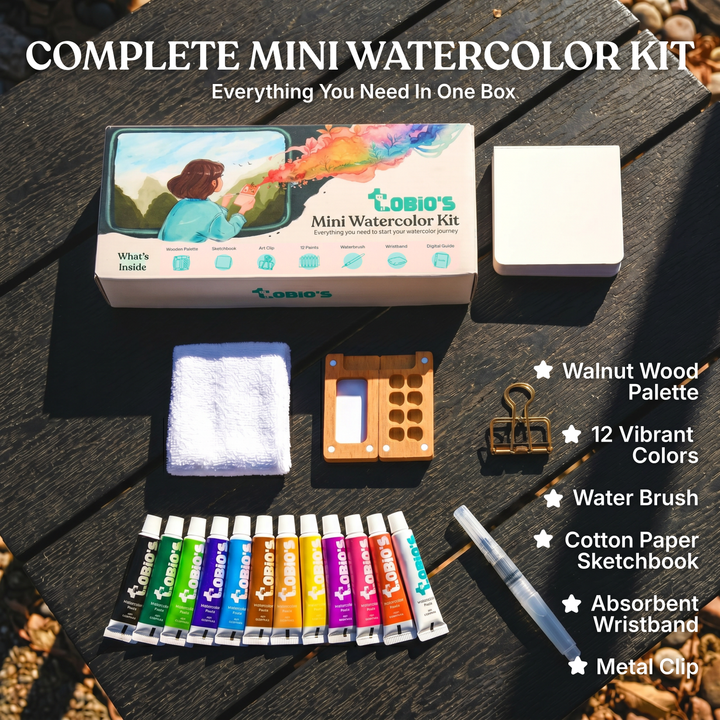
Ready to paint along?
Everything you need to paint anywhere and feel inspired doing it.
- Ultra compact
- Express yourself creatively
- For total beginners