


Jesus Watercolor Painting: Step-by-Step Tutorial


What You'll Need
- Paper
- Brushes
- Paint colors
- Palette
- Water cup
- Pencil
Color Palette
Let's be honest: Painting a portrait is scary. Painting a portrait of Jesus feels like there is extra divine pressure to get it right.
But we are not trying to be Michelangelo today. We aren't painting the Sistine Chapel ceiling.
We are doing a loose, expressive sketchbook study. This jesus watercolor painting is about capturing a gentle expression and a soft vibe, not about counting eyelashes or blending perfect skin tones. This method is fast (under 30 minutes), leaves the pencil lines visible for character, and embraces the water stains.
The Supplies (Keep it Simple)
- Paper: 140lb/300gsm Cold Press paper. (The texture helps the washes look organic).
- Brush: A Size 6 or 8 Round Brush.
- Paints: See the palette below.
- Extras: Water, paper towel, and a pencil (don't erase your lines!).
The Color Palette
Based on the sketchbook study above, we are using a classic, earthy palette. We want the blue of the robe to feel peaceful against the warm earth tones of the hair.
- Burnt Umber: For the hair, beard, and facial features.
- Ultramarine Blue: For the robe and the cool background wash.
- Yellow Ochre: For the soft, glowing halo effect behind the head.
- Burnt Sienna (heavily diluted): For the skin tone.
Step-by-Step: Your Expressive Jesus Watercolor Painting
The charm of this specific style is the visible sketch. We aren't hiding our pencil lines; they provide the structure so the paint can be loose and messy. Think of the pencil as the skeleton and the paint as the spirit. If you scrub away the lines to make it "perfect," you lose the raw, human quality that makes a sketchbook study feel special.

The "Line & Wash" Sketch
Grab your pencil. We want a sketch that looks hand-drawn.
- Draw a simple oval for the face.
- Add the hair parting down the middle and loose waves falling to the shoulders.
- The Features: Keep them simple. Two arches for eyebrows, simple lines for eyes (no pupils needed yet), and a "V" shape for the beard.
- Artist Tip: Don't erase your mistakes. In this style, extra lines just add movement.

The Skin & Halo (The Warmth)
Load your brush with very watery Burnt Sienna (or a mix of Orange and White if using gouache/opaque).
- Wash over the face and neck.
- Crucial Step: While the paper is still dry around the head, take watery Yellow Ochre and paint a loose, messy circle around the hair. Let it bleed outward. This suggests a holy glow without looking like a gold dinner plate.

The Robe (The Cool Balance)
Now for the contrast.
- Mix a juicy puddle of Ultramarine Blue.
- Paint the robe with broad, swooping strokes.
- Imagine a sash coming over one shoulder. Leave a few white gaps in the blue paint to look like folds in the fabric.

The Hair & Beard (The Frame)
Once the skin is damp (not soaking):
- Load Burnt Umber.
- Paint the hair in big clumps. Don't paint individual strands.
- Fill in the beard, leaving a tiny gap of skin around the mouth to define the mustache.
- Let the brown paint touch the wet yellow halo slightly; the bleed makes it look soft and ethereal.
The Expression (Defining the Face)
Wait for the face to be dry.
- Use a smaller brush with thick Burnt Umber.
- Darken the eyebrows and the shadow under the nose.
- Add the eyes. In this loose style, you don't need whites of the eyes. Just simple dark shapes often convey more peace than hyper-realistic eyes.
- Add a light wash of blue in the background if you want to frame the halo.
Common Mistakes (and How to Fix Them Fast)
Mistake 1: Muddy skin tones
Why it happens: too many layers while the paper is still damp, or mixing too many pigments together.
Fix: let it dry completely, then glaze a clean warm wash (Yellow Ochre + lots of water). If it’s truly overworked, lift gently with a damp clean brush and paper towel.
Mistake 2: Harsh outlines around features
Why it happens: drawing too dark or painting lines instead of shadows.
Fix: soften edges with clean water, and restate forms using value shapes. Paint the shadow under the nose, not the outline of the nose.
Mistake 3: “Flat” face
Why it happens: not enough value difference.
Fix: pick 3 small areas to deepen: under brow, under nose, under chin. That’s usually enough to make the portrait read.
Background Ideas That Keep the Focus on the Face
A background should support the portrait, not compete with it. Here are a few options that work well in a watercolor painting of Jesus without overcomplicating things:
- Soft glow: wet the background area and drop in a pale Yellow Ochre wash behind the head
- Simple sky wash: very light Ultramarine with lots of water, graded from top to bottom
- Muted vignette: Payne’s Gray heavily diluted, kept lighter near the face
Frequently Asked Questions
How do I paint the eyes without making them look intense or creepy?
The secret is simplification. In a loose jesus watercolor painting, you don't need to paint pupils, irises, and eyelashes. A simple dark arch or a soft shadow shape often reads as "closed" or "downcast" eyes, which looks much more peaceful than trying to paint a staring gaze.
Should I erase the pencil lines before I paint?
No! For this specific "sketchbook study" style, the visible pencil lines are part of the art. They act as the "skeleton" of the portrait. If you erase them, the loose watercolor washes might lose their structure and just look like messy blobs.
My halo looks like a yellow frisbee. How do I fix it?
You probably painted a hard edge. To get a glowing effect, the paint needs to be wet. Paint clear water around the head first, then drop in your Yellow Ochre. Let it bleed and fade out into the white paper. If the edge is too hard, scrub it gently with a damp brush to soften it.
Why does the skin tone look orange?
You might have used the Burnt Sienna too thick. This color is very strong! You need to dilute it until it is the consistency of weak tea. It's always better to start too pale and add a second layer than to start with a sunburn.
Conclusion
A strong Jesus watercolor painting isn’t about obsessive detail. It’s about clean values, gentle glazing, and edge control, especially around the eyes and mouth. Keep your first wash light, let layers dry, and build contrast only where it matters.
If you want to level up faster, work through a few foundational exercises in Tobio’s Kits’ watercolor tutorials section, then come back and repaint this portrait with a new reference. Repetition is the cheat code.
Mel, FounderLike these guides? Set Tobio's as a preferred source on Google and our pages will show up first when you search for watercolor questions.
Ready to Paint?
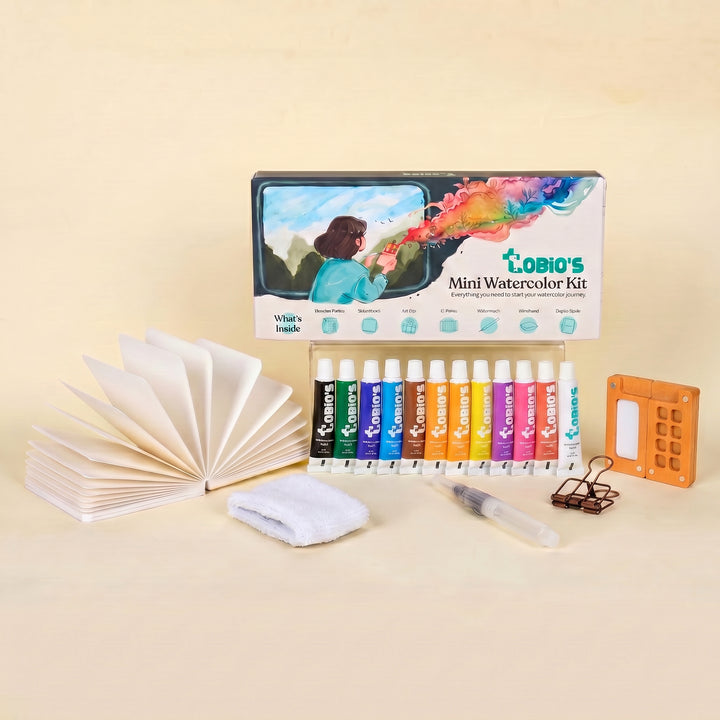
This tutorial was designed for use with our Watercolor Kit.
Shop the Kit


