


Lotus Flower Watercolor Painting: Step-by-Step Tutorial


What You'll Need
- Paper
- Brushes
- Paint colors
- Palette
- Water cup
- Pencil
Color Palette
If you have ever tried to paint a lotus and ended up with a stiff, over-engineered botanical diagram, take a deep breath.
While this is a tutorial for a lotus flower watercolor painting, we are completely ditching perfectionism today. We are focusing on a "Loose Sketchbook Style" that is fast, expressive, and incredibly beginner-friendly. This approach is all about capturing the tranquil energy of the flower using juicy brushstrokes and letting the water do the blending for you. No professional tracing or tedious layering required!
The Supplies (Keep it Simple)
- Paper: 140lb / 300gsm Cold Press watercolor paper. (You need that thickness so the paper doesn't buckle when we get it wet!).
- Brush: A Size 8 Round Brush (perfect for those wide, sweeping petals).
- Paints: See our "Tranquil Pond" palette below.
The Color Palette
Based exactly on our sketchbook study above, we are using a cool, harmonious palette that feels incredibly soothing.
- Quinacridone Rose (or a cool Pink): For the bright, delicate base of the petals.
- Dioxazine Purple: Dropped into the wet pink to create those beautiful, moody shadows.
- Sap Green: Used for the distinctive center pod and the broad lily pad beneath the flower.
- Burnt Umber (or a dark neutral): Just a tiny dab for the seeds in the center pod.
Step-by-Step: Your Expressive Lotus Flower Watercolor Painting
The trick to this loose style is working quickly and not overworking your brushstrokes. Put the paint down and leave it alone! If you keep poking and scrubbing at the wet paper, you will lose the magic of those soft, spontaneous water bleeds that make the lotus look so delicate and alive. You have to trust that the water knows what it is doing. We want to capture the feeling of the flower resting peacefully on a pond, rather than rigidly mapping out every single botanical detail. If you find yourself struggling to loosen up, or if you are looking for more guided projects to help you build confidence with these wet-in-wet techniques, check out our full library of watercolor tutorials. Take a deep breath, embrace the beautiful unpredictability of the medium, and let's dive in.

The Seed Pod Anchor
- Start in the very middle of your page.
- Mix a pale Sap Green and paint a small, flat oval.
- This is the lotus's iconic seed pod.
- While it's still damp, use the very tip of your brush to tap in a few tiny dots of Burnt Umber for the seeds.

The Swooping Petals & The Moody Purple Bleeds
- Load your brush with watery Quinacridone Rose.
- Paint the petals radiating outward and upward from the green center.
- Use the belly of your brush to make the petals wide at the bottom, lifting to a soft point at the top.
- Leave tiny slivers of dry, white paper between the petals so they don't turn into a single pink blob!
- While the pink petals are still wet, pick up a little Dioxazine Purple.
- Touch it gently to the base and outer edges of a few petals.
- Let the purple bleed naturally into the pink.
- This creates instant, effortless depth without any fussy blending on your palette.

The Lily Pad Base & The Watery Reflection
- Rinse your brush and go back to your Sap Green.
- Paint a wide, horizontal sweep of green right underneath the flower to represent the flat lily pad.
- Let the top edge of the green lightly touch the bottom of the pink petals so the colors just barely mingle.
- To make this really feel like a quick, expressive study, drag a very watery mix of pink and green down from the bottom of the lily pad.
- Don't overthink it—just a few messy, downward strokes to suggest the flower reflecting in the pond water.
Troubleshooting: Fix Blooms, Mud, and Weird Petals
Blooms (aka cauliflower edges)
Why it happens: You added wetter paint to an area that was half-dry.
- Prevent it: let layers dry fully before glazing.
- Fix it fast: while still damp, gently smooth with a clean, slightly damp brush.
- Fix it later: once dry, glaze a light, even wash over the area to unify it.
Muddy petals
Why it happens: too many pigments mixed together, or scrubbing the paper.
- Limit mixes to 2 to 3 colors.
- Glaze in layers instead of reworking the same wet area.
- If it’s already muddy, let it dry, then add a clean glaze to reintroduce clarity.
Harsh edges or lost highlights
- To soften an edge: run a clean damp brush along it and pull inward.
- To lift a highlight: blot the damp area with tissue.
- If everything is dry: use a very light glaze over the petal, leaving the tip untouched so it reads lighter.
Easy Variations to Make It Yours
- Line and wash: outline with a waterproof fineliner, then add transparent washes.
- Monochrome lotus: use one color + water to practice values (this is secretly a skill booster).
- Add a bud: paint a small pointed oval off to the side for a simple companion shape.
- Keep it loose: paint fewer petals, suggest the rest with soft shapes, and stop early on purpose.
Frequently Asked Questions
Why did my beautiful pink and purple petals turn into a muddy mess?
Because you couldn't resist the urge to keep brushing! When you drop that moody Dioxazine Purple into the wet Quinacridone Rose, you have to let the water do the mixing. If you scrub the paper with your brush bristles, the colors will over-blend and lose their vibrant, translucent glow. Drop the color in, step back, and let it dry.
My petals all bled into one giant pink blob. How do I keep them separate without tracing?
The secret is mastering your negative space. You have to intentionally leave tiny slivers of dry, unpainted white paper between your swooping brushstrokes. Because watercolor only flows where the paper is wet, those dry gaps act as invisible fences. They keep your petals distinct and luminous without needing any harsh pencil outlines.
The green from my lily pad shot straight up into the flower! How do I stop that?
This happens when both areas are carrying too much water. You want the top edge of the green pad to just barely kiss the bottom of the pink petals to create a soft connection. If your flower is still a dripping puddle when you add the green, the colors will rush together and make brown. Wait until the pink is just damp (cool to the touch, but not shiny) before painting the lily pad base.
Do I need to draw a detailed sketch before I start my lotus flower watercolor painting?
Absolutely not! For this 15-minute expressive style, tracing every single petal usually leads to a stiff, "coloring book" style of painting. Trust your large round brush to make those wide, organic teardrop shapes for you. Remember, we are painting the feeling of a lotus resting on a pond, not an accurate botanical diagram!
Conclusion
A lotus looks complex, but it’s really a smart stack of simple petal shapes plus patient layering. Whether you go for the quick loose version or the more detailed approach, keep your tips light, your shadows intentional, and your hands off the paper while it dries.
When you’re ready for your next paint session, head to Tobio’s watercolor tutorials for more guided practice, or explore creative projects at Tobio’s Kits to keep your momentum going.
Mel, FounderLike these guides? Set Tobio's as a preferred source on Google and our pages will show up first when you search for watercolor questions.
Ready to Paint?
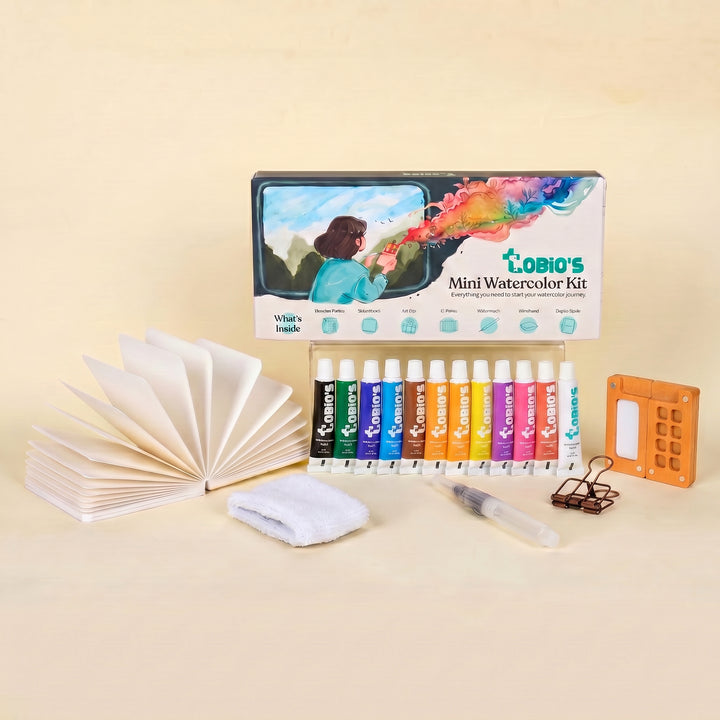
This tutorial was designed for use with our Watercolor Kit.
Shop the Kit


