


Moon Watercolor Painting: Step-by-Step Tutorial


What You'll Need
- Watercolor Paper
- Pencil and eraser
- Two water cups
- Watercolors
- Round brush
Color Palette
You want a moon watercolor painting that looks moody, artistic, and spontaneous, not like a geometry diagram. The image above isn't about scientific accuracy; it’s about capturing a vibe. This is a "loose sketchbook study," which means we embrace water blooms, uneven edges, and speed.
Good news: You don’t need a degree in astronomy or fancy masking fluid. You just need a sketchbook, three colors, and the willingness to let the water do the heavy lifting.
If you want more projects like this after you finish, you can browse our full library of step-by-step lessons on Watercolor Tutorials.
The "Sketchbook" Color Palette
We are using the exact "Midnight Trio" shown in the palette above. Limiting yourself to three paints makes color mixing foolproof.
- Prussian Blue (Sky Base): Your main sky color.
- Deep Blue (Sky Texture): A darker, inkier blue for depth and contrast.
- Lemon Yellow (Moon Light): A cool, pale yellow for the glow.
- White Paint (Stars): Opaque white (gouache or watercolor) for the final details.

The "Ish" Sketch
Draw a square frame freehand (or don't, ragged edges look cool).
Inside, lightly sketch a crescent moon.
Do not use a compass. A hand-drawn crescent has more character. Keep your pencil lines light, we want the paint to do the talking.

The Moon Glow
Wet your brush and pick up a watery mix of Lemon Yellow. Paint the crescent shape.
- Add Texture: While the yellow is still wet, rinse your brush and pick up the tiniest speck of Deep Blue. Touch it to the inner curve (the "belly" of the moon). It will blend with the yellow to create a soft, greenish-grey shadow. This is instant crater texture without needing a "grey" paint.

The Sky Base (Negative Painting)
Load your brush with Prussian Blue. Start painting around your dry yellow moon. Carve out that crescent shape with the tip of your brush.
- Loose Edges: Don't try to make the outer edges of the square perfect. Let the brush skip a little on the paper grain.

Depth & Stars
While the Prussian Blue sky is still wet, drop in globs of Deep Blue into the corners for drama. If you want that cloud-like texture, splash a drop of clean water into the wet paint to create "blooms."
Wait.
This is crucial. Let the sky dry completely until the paper feels room temperature.
Once bone-dry, load a small brush with thick White Paint. Gently tap the brush handle to splatter tiny stars, or use the tip to manually place a few specific bright spots. Cluster a few together and leave other areas empty, randomness looks more realistic than a grid.
The "Walk Away"
This is the hardest part. You will want to fiddle. You will want to smooth out that jagged crater shadow or straighten the wonky tip of the crescent.
Don't.
The absolute charm of an expressive moon watercolor painting lies in those organic shapes and the "accidental" textures that make it look real. The magic happens when you aren't touching it. Drop your brush, step back, and let it dry.
Style Variations: Midnight Storm, Day Moon, and Storybook Crescent
Want to change the vibe of your moon watercolor painting? Try these quick sketchbook adaptations:
The "Midnight Storm" (Dramatic & Moody)
- Deepen the palette: Ignore the Lemon Yellow almost entirely. Use a heavy load of Deep Blue and Prussian Blue for a near-black sky.
- The "Sliver" look: Paint the moon as a razor-thin crescent, leaving the rest of the circle as a dark, shadowy void.
- Lost edges: Let the clouds (the blue wash) invade the edge of the moon. Don’t paint a barrier; let the storm swallow the light a little.
The "Day Moon" (The Ghostly Phase)
- Lighten the palette: Drown your Prussian Blue in water until it’s a barely-there powder blue. Use the faintest whisper of Lemon Yellow (or just leave the paper white).
- Soft focus: Pre-wet the whole paper first. Paint the moon while the sky is damp so the edges blur and fuzz out.
- The "Atmosphere": Skip the stars. A day moon fights the sun, so it shouldn't have high contrast or sharp sparkles.
The "Storybook Crescent" (Simplified for Cards & Patterns)
- Exaggerate shapes: Push the shape language. Make the crescent tips extra pointy and the curve dramatic.
- Clean lines: Unlike our loose study, keep the water controlled. Paint the Lemon Yellow moon with a sharp, dry edge against a flat, graphic Prussian Blue sky.
- Flat color: Skip the blooms and texture. Use flat, highly-pigmented washes of solid color for a sticker-like illustration style.
Inspiration: Why This Style Works
This loose, expressive sketchbook approach to a moon watercolor painting is perfect for:
- Night Sky Journals & Dream Diaries: Capture the phase you saw outside your window without needing a telescope or a degree in astronomy. You don’t need to map every crater; you just need that glowing, crooked silhouette to bring the feeling of the night back.
- Celestial & Boho Decor: Because the moon is naturally moody and organic, a soft, loose study looks timeless in a bedroom or quiet study. Frame a vertical trio of these (perhaps a waxing, full, and waning phase) for instant, galaxy-inspired wall art that doesn't feel "store-bought."
Frequently Asked Questions
Why is the edge of my moon turning green?
You rushed the sky! If the Lemon Yellow isn't bone-dry before you add the Prussian Blue, the layers mix. Wait until the paper feels room temperature to the touch before painting the background.
Do I need grey paint for the craters?
Nope. Just touch a tiny speck of Deep Blue into the wet Lemon Yellow moon. It blends into a perfect, moody greenish-grey shadow automatically.
How do I fix the "cauliflower" water marks in the sky?
You don’t. In a strict botanical study, they might be mistakes. In this expressive moon watercolor painting, those blooms look like cosmic clouds and atmosphere. Leave them alone!
Conclusion
A strong moon comes down to three things: light values, dry-time patience, and simple layers. Start with the Simple Moon, then level up with glazing and dry brush texture. Once you’ve got one moon you like, you’re basically five minutes away from a full page of moons in different moods.
Want the easiest path from “blank paper panic” to “I actually made this”? Pick a project and keep painting with Tobio’s Kits.
Mel, FounderLike these guides? Set Tobio's as a preferred source on Google and our pages will show up first when you search for watercolor questions.
Ready to Paint?
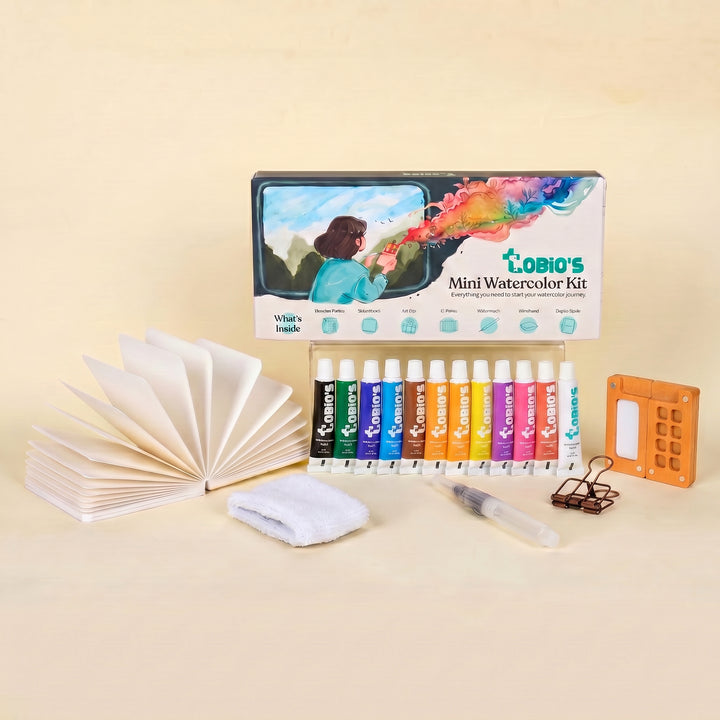
This tutorial was designed for use with our Watercolor Kit.
Link to the link


