Mushroom Watercolor Painting: Step-by-Step Tutorial


What You'll Need
- Watercolor Paper
- Pencil and eraser
- Two water cups
- Watercolors
- Round brush
Color Palette
If your past attempts at painting nature felt too stiff, overworked, or required an hour of taping down edges and mixing the "perfect" shades, welcome to the antidote. Today, we are ditching the rigid studio rules for a loose, expressive sketchbook style.
While this is a tutorial for a mushroom watercolor painting, we are focusing entirely on the vibe. Look at the reference image: it’s unpretentious, quick, and perfectly imperfect. It doesn’t scream "I spent 4 hours on this." It says, "I was drinking coffee, saw a cool mushroom, and threw down some paint."
If you want more projects like this after you finish, you can browse our full library of step-by-step lessons on Watercolor Tutorials.
The Expressive Color Palette
Forget the classic bright red toadstool with perfect white spots. We are painting a realistic, earthy bolete-style mushroom. Based on our quick sketchbook study, here are the 4 specific pigments you’ll need:
- Burnt Sienna: A warm, rusty brown for the lighter parts of the cap.
- Raw Umber: A deep, cool brown to drop into the wet cap for instant, moody shadows.
- Yellow Ochre: Thinned out with a lot of water to create the pale, creamy beige of the chunky stem.
- Sap Green: A natural, mossy green for the loose, splashy ground at the base.
The Bare-Bones Supplies
- Watercolor Paper: A small sketchbook (like the square one pictured) loaded with 140lb / 300gsm paper. Do not tape it down. Let it buckle a little, it adds character.
- Brushes: One medium round brush. That's it. You don't need a tiny detail brush because we aren't doing details.

The Wobbly Sketch
Using a light pencil, quickly draw the mushroom. Make a soft, slightly lopsided dome for the cap. Underneath, add a thick, chunky stem that flares out at the bottom. No rulers, no perfect symmetry. If it looks a little squishy, you’re doing it right.

The Wet-in-Wet Cap
Load your brush with a watery wash of Burnt Sienna and sweep it across the cap. Leave a tiny sliver of dry, white paper showing near the top for a natural highlight. While that brown is still wet and shiny, pick up some Raw Umber and dab it into the bottom edges and the top right of the cap. Watch the dark brown bleed naturally into the lighter brown.
Now, step away.
Let it dry completely without fiddling.

The Earthy, Chunky Stem
Rinse your brush. Mix Yellow Ochre with plenty of water until it’s just a pale, dirty beige. Wash this quickly down the stem. To give it volume, drop a tiny hint of your leftover Raw Umber along the right side of the stem right under the cap. The wet paper will blend the shadow perfectly.

The Splashy Forest Floor
We are not painting individual blades of grass.
Load your brush with a juicy mix of Sap Green and maybe a dirty drop of whatever brown is left on your palette.
Swipe it horizontally across the base of the mushroom stem.
Let the edges feather out randomly.
It creates an instant, messy, beautiful grounding effect that anchors the mushroom to the page.
The "Walk Away"
This is the hardest part of the entire process. You will want to fiddle. You will want to smooth out that one cauliflower bloom on the cap or "fix" the messy puddle at the base.
Don't.
The absolute charm of an expressive mushroom watercolor painting lies in those unpredictable drying lines, the rough watermarks, and the natural bleeds of the earthy pigments.
The magic happens when you aren't touching it. Drop your brush, step back, and let it dry completely.
Style Variations: Deep Woods, Spring Button, and Storybook Spore
Want to change the vibe of your mushroom watercolor painting? Try these quick sketchbook adaptations:
The "Deep Woods" (Dramatic & Moody)
- Cool the palette: Swap your warm Siennas for deep, moody blues like Indigo or Payne’s Gray mixed with your brown.
- Deepen the shadows: Paint the underside of the cap much darker, leaving only a tiny sliver of rim light on the very top.
- Lost edges: Let the bottom of the stem bleed entirely into a dark, heavy ground wash to anchor it in wet moss.
The "Spring Button" (The Cute, Stubby Phase)
- Lighten the palette: Stick to highly watered-down Yellow Ochre and the palest wash of Burnt Sienna.
- Change the proportions: Shrink the cap so it tightly hugs a short, extra-fat, bulbous stem.
- The "Fresh" Texture: Skip the heavy wet-in-wet shadows. Keep the washes light and smooth for a fresh, unaged look.
The "Storybook Spore" (Simplified for Cards & Patterns)
- Exaggerate shapes: Push the shape language into a perfect semi-circle cap and a distinct, symmetrical stem.
- Bring back the spots: Lean into the fairytale toadstool vibe by painting around perfect little white paper circles on the cap.
- Flat color: Skip the messy watermarks. Use flat, highly-pigmented, graphic washes of solid color.
Inspiration: Why This Style Works
This loose, expressive sketchbook approach to a mushroom watercolor painting is perfect for:
- Nature Journals and Foraging Logs: Capture the cool fungi you spotted on a woodland hike without needing a macro lens or a botanical degree. You don’t need to paint every single gill under the cap; you just need that chunky, earthy silhouette to bring the memory back.
- Cottagecore & Woodland Decor: Because mushrooms are naturally earthy and organic, a soft, loose study looks timeless in a kitchen or cozy reading nook. Frame a trio of these (perhaps adding a fern or a pinecone) for instant, nature-inspired wall art that doesn't feel "store-bought."
Frequently Asked Questions
Why does my mushroom cap look muddy?
You probably didn't walk away! Muddy watercolor happens when you poke at half-dry puddles. Let the water blend naturally, those unpredictable, wild blooms are exactly what give an expressive mushroom watercolor painting its charm.
Do I have to use these exact brown paints?
Not at all. If you want a classic fairy-tale toadstool instead of an earthy bolete, just swap the browns for a juicy bright red. The wet-in-wet technique matters much more than the exact pigment names.
Can I add an ink outline later?
Yes, but it shifts the vibe from a soft, loose study to a graphic "line and wash" illustration. If you go for it, make sure the paper is 100% bone-dry first, or your pen lines will feather and bleed.
Conclusion
A solid mushroom watercolor painting is really just a few wins stacked together: a clean sketch, one smooth cap wash, a pale stem, and patient shadows added only after everything dries. Keep your layers light, let the paper do the blending, and stop before you “fix” it into the ground.
Want your next painting session to feel less like guesswork and more like progress? Explore Tobio’s watercolor tutorials for more step-by-step projects, and grab your supplies from Tobio’s Kits so you can get straight to painting.
Mel, FounderLike these guides? Set Tobio's as a preferred source on Google and our pages will show up first when you search for watercolor questions.
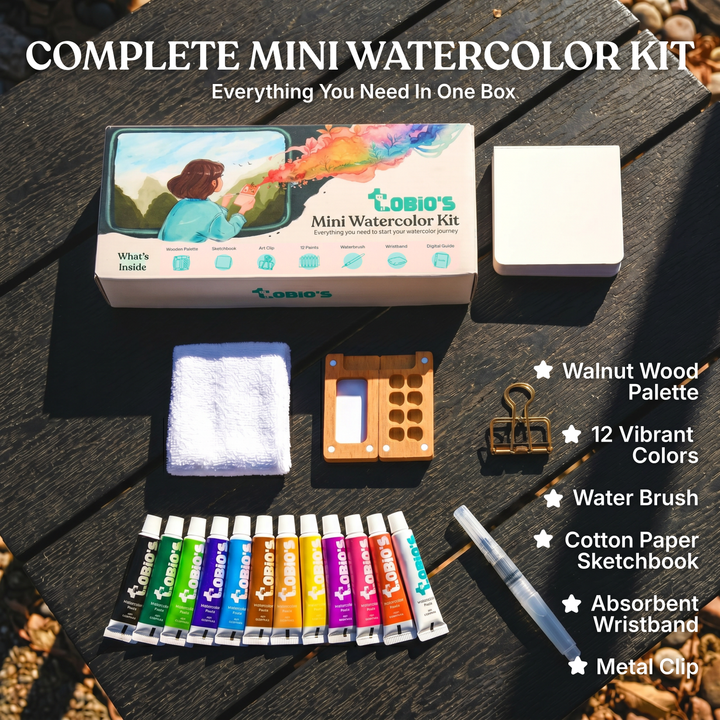
Ready to paint along?
Everything you need to paint anywhere and feel inspired doing it.
- Ultra compact
- Express yourself creatively
- For total beginners