Orchid Watercolor Painting: Step-by-Step Tutorial


What You'll Need
- Paper
- Brushes
- Paint colors
- Palette
- Water cup
- Pencil
Color Palette
Orchids have a reputation for being fussy, complicated flowers to paint. If you try to capture every single vein and perfectly symmetrical petal, you will probably end up frustrated.
But what if we just paint the feeling of an orchid?
In this 15-minute sketchbook study, we are tackling an orchid watercolor painting using a loose, expressive style. We are going to let the water do the heavy lifting, creating soft, dreamy gradients that look complex but are actually incredibly simple to execute.
The Supplies (Keep it Simple)
- Paper: 140lb/300gsm Cold Press paper. (You need paper that stays wet long enough for the colors to mingle).
- Brush: A Size 8 Round Brush (for the big petals) and a Size 2 Round Brush (for the tiny center details).
- Paints: See our "Dusty Amethyst" palette below.
The Color Palette
Based on our sketchbook study, we are using a muted, vintage-inspired palette that feels elegant and soft.
- Dioxazine Purple: Diluted heavily for the cool purple areas.
- Quinacridone Rose (or a cool pink): For the warm, rosy tones.
- Sap Green: Muted slightly for the stem and subtle shadows.
- Burnt Umber: For the dark, velvety center of the flower.
Step-by-Step: Your Expressive Orchid Watercolor Painting
The trick to this painting is "Wet-in-Wet" blending. We want the pinks, purples, and greens to melt into each other directly on the paper, rather than mixing a flat color on our palette. This technique gives the orchid petals that soft, translucent glow that makes them look delicate and alive. If you over-mix your colors before they hit the page, the flower can easily look flat, heavy, or overworked. Instead, just drop the watery pigments in and let the water create those beautiful, unpredictable gradients for you! If you want to dive deeper into techniques like this and find more guided, stress-free projects, check out our full library of watercolor tutorials.

The Light Pencil Sketch
- Start with a dry piece of watercolor paper. Before picking up your brush, use a pencil to lightly sketch the outline of the orchid.
- Break the flower down into simple shapes: three outer sepals (forming a loose triangle), two large, rounded inner petals (like wings), and the small, complex "lip" in the very center.
- Artist Tip: Keep your pencil lines extremely faint! Watercolor is transparent, so dark, heavy graphite will show right through your delicate pink and purple washes.

The First "Wet-in-Wet" Wash
- Now it's time for paint. Wet your brush with clean water and dampen the top petal shape.
- Drop in a watery mix of Dioxazine Purple.
- The Magic: While the top petal is still wet, rinse your brush, pick up a tiny bit of watery Sap Green, and touch it to the outer edge of the purple petal. Let them bleed together to create a natural, muted shadow.
- Repeat this process for the other sepals and petals, dropping in pale Quinacridone Rose for the warmer areas.

The "Lip/Center" & The Dark Accents
- This is where the orchid gets its structure.
- Wait until the large petals are damp, but not puddly.
- Mix a slightly thicker, darker puddle of Quinacridone Rose + Dioxazine Purple.
- Paint the small, complex center shape (it often looks like a tiny bell or a little person).
- Because the paper underneath is slightly damp, the edges of this center shape will blur out beautifully into the larger petals.
- Switch to your small Size 2 brush.
- Wait until the flower is 90% dry.
- Pick up a thick, creamy mix of Burnt Umber (or a very dark purple).
- Paint a few sharp, tiny lines and dots right in the very center of the "lip". This high contrast makes the rest of the flower look incredibly soft and delicate by comparison.
Common mistakes (and quick fixes)
- Muddy petals: You overmixed or kept painting while wet. Fix by letting layers dry fully and using cleaner water.
- Everything has the same edge: If all edges are blurry, the bloom looks tired. Add crisp overlaps in a final dry layer.
- Too dark too soon: Orchids need transparency. Start lighter than you think and build slowly.
- Over-detailing the center: A few well-placed accents beat a scribbly mess. Step back and simplify.
- Outline showing through: Lighten your sketch with a kneaded eraser before painting.
Make it gift-worthy: finish, scan, and format
Orchids naturally look “premium” when presented cleanly. If you want your piece to feel like a card or mini print (not just practice paper), do this:
- Clean edges: Trim the sheet or tape borders before painting for a crisp frame.
- Let it dry overnight: Watercolor lies. It looks dry until it isn’t.
- Scan or photograph in even light: Straight-on, no shadows, no yellow lamp lighting.
- Crop with intention: Give the flower breathing room, like a designed stationery front.
Frequently Asked Questions
Why did my beautiful pink and green orchid turn into a muddy gray puddle?
It’s a classic watercolor trap! Pink/purple and green are opposites on the color wheel. If you put them on the paper wet and then aggressively brush them together, they will mix into gray or brown mud. The secret to those soft transitions is dropping the color in and leaving it alone. Let the water do the blending, not your brush.
My center "lip" looks like a harsh sticker pasted on top. How do I fix that?
You waited too long to paint it. For the center to look integrated and soft, the large background petals need to be slightly damp (cool to the touch, but not shiny) when you add the darker lip color. That dampness allows the edges of the lip to gently fuzz out into the petals. If the paper is bone dry, you get a sharp, stiff line.
Do I need to trace a photo to get the orchid shape right?
Not for this 15-minute sketchbook study! Tracing complex botanical diagrams usually makes you tighten up and paint like you're filling in a coloring book. Stick to the basic shapes: a triangle for the outer sepals, and two large ovals for the "wings." The looseness is the whole point of this exercise.
I have a hard time leaving white space. Any tips?
It takes practice to unlearn the urge to "color everything in." Try holding your brush further back on the handle. This naturally makes your strokes looser and less precise, making it easier to leave those tiny, unpainted gaps of white paper that give the flower its luminous quality.
Conclusion
A successful orchid is not about fancy tricks. It’s about light first, layers second, and details last. Keep your washes transparent, respect drying time, and use edge control to show overlaps and curvature. Do that, and your orchid watercolor painting stops being “a flower attempt” and starts looking like something you’d actually frame or gift.
When you’re ready to keep improving, head to Watercolor Tutorials for more practice, and use the clean, gift-ready aesthetic of Tobio’s Kits as your benchmark for finishing strong.
Mel, FounderLike these guides? Set Tobio's as a preferred source on Google and our pages will show up first when you search for watercolor questions.
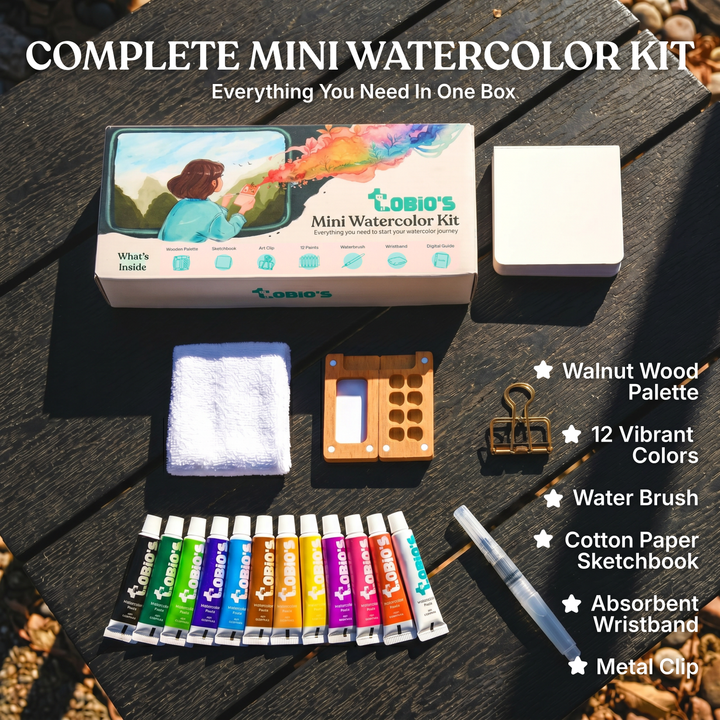
Ready to paint along?
Everything you need to paint anywhere and feel inspired doing it.
- Ultra compact
- Express yourself creatively
- For total beginners