Peacock Watercolor Painting: Step-by-Step Tutorial


What You'll Need
- Paper
- Brushes
- Paint colors
- Palette
- Water cup
- Pencil
Color Palette
You want a bold, luminous peacock watercolor painting, but every time you try, the feathers go fuzzy, the colors turn swampy, and the whole thing starts looking like a confused turkey.
The good news? You do not need to paint a thousand individual feather barbs. In this "Loose Sketchbook Study," we are ditching the perfectionism. We are focusing on a fast, beginner-friendly approach that captures the regal attitude of the bird using simple shapes and wet-in-wet magic. We will let the water do the heavy lifting to create those shimmering transitions between blue and green.
The Supplies (Keep it Simple)
- Paper: 140lb / 300gsm Cold Press watercolor paper. (You need texture to hold the water for those juicy washes).
- Brush: A Medium Round Brush (Size 8 or 10) with a good point.
- Paints: See our "Royal Plume" palette below.
The Color Palette
Based on our expressive study, we are using a deep, jewel-toned palette.
- Prussian Blue (or Indigo): For the intense, deep blue of the neck and chest.
- Viridian Green: For the shimmering wing and tail feathers.
- Payne's Gray: For the beak and the deepest shadows in the tail.
Step-by-Step: Your Expressive Peacock Watercolor Painting
The trick to this painting is confidence. We are painting a silhouette, not a diagram. Instead of obsessing over every single feather barb, we want to capture the proud, regal posture of the bird with one fluid "S" curve. Let your deep blues and shimmering greens flow together on the paper; if you try to control every edge, you will lose that magical, iridescent glow that makes peacocks so spectacular. Take a deep breath, load your brush with plenty of water, and let the painting feel a little wild, just like the bird itself.

The Regal S-Curve
- Load your brush with a rich, creamy mix of Prussian Blue.
- Start at the top with a small oval for the head.
- Pull the brush down in a graceful "S" shape to form the neck and the puff of the chest.
- Artist Tip: Don't lift your brush! Let this be one fluid, confident shape.

The Wet-in-Wet Wing
- While the blue neck is still damp (not dripping, just shiny), rinse your brush and pick up Viridian Green.
- Paint the folded wing shape right next to the blue chest.
- The Magic: Let the green touch the damp blue. Watch them bleed together naturally on the paper to create that iridescent peacock teal color. Do not over-mix them, or you will lose the glow!

The Trailing Train
- Peacocks don't always fan their tails! For this study, we are painting the train trailing elegantly behind him.
- Mix a watery puddle of Viridian Green with a touch of Prussian Blue.
- Drag your brush from the back of the wing down towards the bottom right corner of the page.
- Use loose, broken strokes to suggest layers of feathers rather than a solid block of color.
- While wet, drop in tiny dabs of pure Blue or Indigo to suggest the "eyes" of the feathers without actually drawing them.

The Details
- Wait for the head to dry slightly (so it doesn't bleed).
- Using the very tip of your brush and thick Prussian Blue, paint the tiny crest (the crown) on top of the head. It's just a few tiny lines with dots on top.
- Add the beak with a quick dash of gray or diluted brown.
- Paint two simple, thin legs with Payne's Gray. Notice how the back leg bends slightly forward.
Finish Strong: Background, Contrast, and Final Touches
This is where you turn “nice practice” into “hang it up.”
Option A: No background (clean and modern)
- Deepen only the darkest shadows on the peacock body and a few tail areas.
- Sharpen a few feather edges with crisp dark strokes.
Option B: Soft background wash (makes colors pop)
- Lightly wet the background area (avoid flooding near details).
- Add a pale, neutral wash so the peacock stays the star.
Final checks
- Contrast: Do you have a few true darks? Add them sparingly.
- Edges: Mix soft and sharp edges for realism.
- Highlights: Lift tiny areas with a damp brush if needed (be gentle).
If you want more structured practice with layering, glazing, and detail control, browse tobio's kits and use their guided approach to build the same core skills that transfer perfectly to peacocks.
Frequently Asked Questions
Why did my bright peacock blue and green turn into a muddy swamp?
You probably over-mixed them on the paper! The secret to that shimmering "peacock teal" is letting the colors mix themselves. When you paint the Viridian Green wing next to the damp Prussian Blue body, just let them touch and walk away. If you keep scrubbing the area with your brush, you will kill the transparency and get mud.
My peacock looks like a stiff turkey. How do I fix the posture?
It is all about the "S" curve! Peacocks are confident birds that lead with their chests. Make sure you paint a deep, curving "S" shape for the neck and chest, rather than a straight vertical line. That single curve gives the bird its entire regal attitude.
How do I paint the "eye" feathers without drawing a hundred tiny circles?
In this loose 20-minute study, we are only suggesting the eyes, not drawing them perfectly. While your green tail wash is still wet, just drop in small, concentrated blobs of dark blue. The wet paper will soften the edges for you, creating that soft, iridescent look without any tedious detailing.
Do I need to wait for layers to dry?
Only for the details! You want the body and tail to be wet-in-wet so the colors flow. But and this is crucial, you must wait for the head to be completely dry before you paint the tiny crest on top. If you paint the crest while the head is wet, it will bleed into a fuzzy helmet.
Conclusion
Remember, a stunning peacock watercolor painting relies on confidence, not perfection. The magic happens when you trust the wet-in-wet technique, letting your Prussian Blue and Viridian Green mingle on the paper without interference creates that natural, iridescent shimmer. Focus on the fluid "S" curve of the neck and simply suggest the tail feathers with loose, watery strokes rather than rigid details. If you are ready to upgrade your sketchbook practice with professional-grade paper and pigments that make these blends effortless, explore our curated collections at Tobio's Kits.
Mel, FounderLike these guides? Set Tobio's as a preferred source on Google and our pages will show up first when you search for watercolor questions.
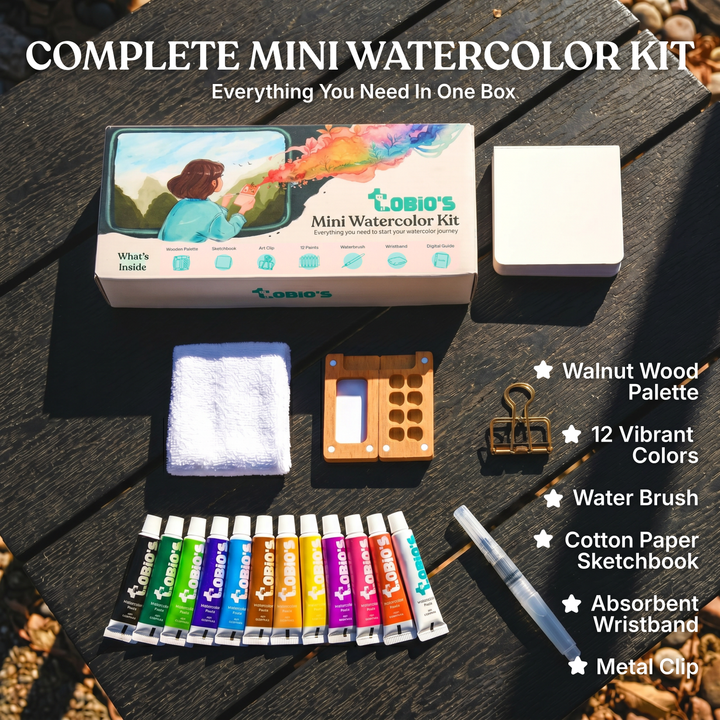
Ready to paint along?
Everything you need to paint anywhere and feel inspired doing it.
- Ultra compact
- Express yourself creatively
- For total beginners