


Watercolor Paintings of Peonies: Step-by-Step Tutorial


What You'll Need
- Paper
- Brushes
- Paint colors
- Palette
- Water cup
- Pencil
Color Palette
Orchids have a reputation for being fussy, complicated flowers to paint. If you try to capture every single vein and perfectly symmetrical petal, you will probably end up frustrated.
But what if we just paint the feeling of an orchid?
In this 15-minute sketchbook study, we are tackling an orchid watercolor painting using a loose, expressive style. We are going to let the water do the heavy lifting, creating soft, dreamy gradients that look complex but are actually incredibly simple to execute.
The Supplies (Keep it Simple)
- Paper: 140lb/300gsm Cold Press watercolor paper. (Do not skip this, thin paper will warp and ruin your beautiful, watery blends!)
- Brush: A large round brush (Size 8 or 10) that holds plenty of water.
- Paints: See our "Spring Garden" palette below.
The Color Palette
Based on our sketchbook study, we are using a fresh, romantic palette that feels light and airy.
- Quinacridone Rose (or Carmine): Used thickly for those rich, deep pink flower centers.
- Shell Pink (or highly diluted Rose): For the soft, fluffy outer edges of the blooms.
- Sap Green: For the bright, spring-like leaves.
- Burnt Sienna: Just a tiny dab mixed into the green to make it look earthy and natural, rather than like neon plastic.
Step-by-Step: Your Expressive Watercolor Paintings of Peonies
The secret to this loose style is working quickly and trusting the water. You want your colors to mingle on the page, not just on your palette. If you try to micromanage every single drop of paint, you will end up with a stiff, overworked flower that loses all its fresh, spring energy. Instead, let the water be your co-creator. We are going to build these blooms from the inside out, starting with a bold, dark center and exhaling into soft, airy outer petals. Take a deep breath, load up your brush, and embrace the beautiful unpredictability of the medium.

The Deep, Messy Centers
- Load your brush with a juicy, concentrated mix of Quinacridone Rose.
- Make a few tight, broken, jagged strokes in the center of your page.
- Crucial Rule: Leave tiny slivers of dry, white paper between your strokes! That white space is the secret to making the flower look luminous instead of like a heavy pink blob.

The Fluffy Outer Petals
- Rinse your brush in clean water, tap it lightly on a paper towel, and pick up a very pale, watery pink.
- Paint larger, sweeping, rounded strokes around your dark center.
- Let the wet, pale petals touch the dark center strokes. Watch the dark pink bleed beautifully and naturally out into the lighter petals.

The Supporting Blooms
- Peonies look best when they have friends! Add a second large bloom tucked slightly behind the first, and a smaller, tighter bud dropping down to the bottom right.
- Varying the sizes and directions of the flowers keeps the composition feeling organic and wild.

The Leafy Green Frame
- Mix your Sap Green with a tiny touch of Burnt Sienna.
- While the pink flowers are still slightly damp, press the belly of your brush down and lift quickly to create simple, one-stroke leaves framing the blooms.
- Let the base of the green leaves lightly touch the pink petals for a gorgeous, wet-in-wet bleed that connects the bouquet together.
Troubleshooting: water control, blooms, muddy color
Most peony problems are not talent problems. They are water problems. Here is the quick fix list.
Problem: Paint runs everywhere
Cause: Too much water on the paper or brush.
Fix: Blot your brush, then lift excess water with a clean, damp brush or paper towel. Let areas dry before adding detail.
Problem: Random blooms or cauliflower edges
Cause: Dropping wet paint into paper that is drying unevenly.
Fix: Either stay fully wet (commit to wet-on-wet) or wait until fully dry (commit to wet-on-dry). The mushy in-between is where chaos lives.
Problem: Muddy petals
Cause: Overmixing or layering before the previous wash is dry.
Fix: Simplify mixes, rinse often, and let each layer dry. If it is shiny, it is still wet.
Problem: The peony looks flat
Cause: Not enough value range.
Fix: Add a few darker shadow pink accents in the center and under overlaps. Keep highlights as white paper or very pale washes.
Want more guided practice beyond peonies? The watercolor tutorials page is a good place to pick your next skill to level up.
Frequently Asked Questions
Why do my watercolor paintings of peonies look like one giant pink blob?
The most common culprit is losing your white space! When we paint fast and loose, it is tempting to color in the whole flower. You have to actively leave tiny dry gaps of unpainted paper between your brushstrokes, especially around that dark center. Those white slivers act as your highlights and magically separate the petals for you without any drawing required.
My pink petals and green leaves bled together and made a muddy brown mess. How do I fix this?
Pink and green are complementary colors, which means they naturally neutralize each other into brown when mixed heavily. The trick to a beautiful, clean bleed is to let the very tip of your green leaf stroke just barely touch the damp pink petal edge. Once they touch, stop moving your brush! Let the water pull the pigment naturally. If you scrub the two colors together with your bristles, you will get mud.
Do I need to sketch the peony first?
Not for this 15-minute sketchbook style! Tracing a complex floral outline usually makes us stiffen up and try to "color inside the lines." Trust your large round brush to create those broad, fluffy petal shapes naturally. The looseness is the whole point of this exercise.
How do I know when to stop painting?
Stop before you think you are finished. The beauty of loose watercolor paintings of peonies is in their effortless, slightly unfinished look. Once you have a dark center, a few sweeping outer petals, and some framing leaves to ground the composition, put the brush down and step back. Overworking the damp paper will instantly kill the fresh, airy vibe.
Conclusion
Peonies are dramatic, but painting them does not have to be. Start with the loose version to learn the rhythm of petals, then move into the detailed version to master glazing and contrast. With a small palette, a few drills, and better water timing, your watercolor paintings of peonies will start looking like flowers instead of “optimistic pink clouds.”
If you want your next practice piece lined up, head to our watercolor tutorials, or explore more art inspiration and supplies at Tobio's Kits.
Mel, FounderLike these guides? Set Tobio's as a preferred source on Google and our pages will show up first when you search for watercolor questions.
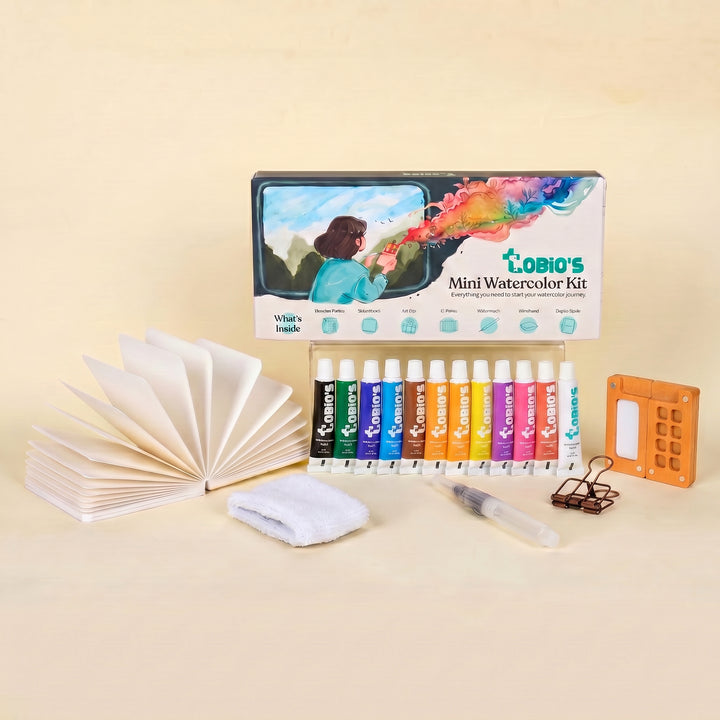
Ready to Paint?
This tutorial was designed for use with our Watercolor Kit.
Shop the Kit


