Snowman Watercolor Paintings: Step-by-Step Tutorial


What You'll Need
- Paper
- Brushes
- Paint colors
- Palette
- Water cup
- Pencil
Color Palette
Let’s be honest: trying to paint a "perfect" winter scene often leads to overworking the paper until it looks like grey slush. But a loose, wet-on-wet snowman watercolor painting? That is where the fun is.
Today, we are doing a quick sketchbook study. Look at the image above. It isn't a complex scene with scarfs, top hats, or blizzards. It is a simple, charming character built from two wet blobs and a few confident dots. We are ditching the accessories to focus entirely on water control and the "less is more" philosophy.
The Supplies (Keep it Simple)
- Paper: 140lb/300gsm Cold Press paper. (We need texture to make the snow look fluffy).
- Brush: A Size 8 Round Brush (for the body) and a Size 4 or smaller (for the face).
- Paints: See our "Snowy Minimalist" palette below.
- Water: Two jars (one for clean water, one for rinsing).
The Color Palette
Based on the sketchbook study above, we are stripping this down to just three essential pigments.
- Payne's Gray (or Indigo): This is the secret to painting snow. Pure white paper looks flat; this cool, blue-grey creates the shadow and form.
- Cadmium Orange: For the bright pop of the carrot nose.
- Lamp Black (or thick Sepia): For the high-contrast coal eyes and buttons.
Step-by-Step: Your Expressive Snowman Watercolor Painting
The trick here is to be brave with your water. We want the body to feel organic and slushy, not like two stiff circles drawn with a compass. Real snowballs are never perfect spheres; they are lumpy, bumpy, and hand-packed. So, let your brush wobble a bit. If the paint pools unevenly at the bottom, let it sit there. That natural settling creates the weight and shadow of the snow for you, so put down the paintbrush and let gravity do the shading.

The "Wobbly" Wash
- Dilute your Payne's Gray with a lot of water until it is a pale, ghostly tea consistency.
- Paint two stacked circles. Make the bottom one larger and the top one slightly smaller.
- Artist Tip: Do not make them perfect circles! Let the edges be lumpy. Let the two circles touch and bleed into each other wet-on-wet. This connection makes the snowman look solid rather than like two floating balls.

The Texture Drop
While the grey wash is still wet, pick up a slightly thicker mix of Payne's Gray.
Touch the tip of your brush to the shadowed sides (usually the bottom or right side).
Watch the paint bloom. This creates that soft, rounded 3D effect without you having to "shade" anything manually.

The Carrot Nose & The Coal Details
- Wait for the face area to be damp-dry (cool to the touch but no longer shiny). If it's too wet, the nose will explode into a fuzzy orange blob.
- Use your small brush and creamy Cadmium Orange.
- Paint a quick, triangular wedge pointing sideways. Let it be loose.
- Now, load your small brush with thick Lamp Black (ink consistency).
- Dot in the eyes. Notice in the image how they are slightly uneven? That gives him expression.
- Dot the smile (4-5 small dots).
- Add the three buttons down the chest.
- The Contrast: The reason this simple painting pops is the contrast between the watery, pale body and the sharp, dark buttons.
- Let it air dry.
- Once dry, you can see how the watercolor pigment settled into the paper's texture, giving it a natural "snowy" grain. No white paint required.
Troubleshooting: Fix Common Watercolor Problems
My snowman looks flat
Strengthen shadows in two places: under the head and under the scarf. Then deepen the cast shadow on the ground slightly.
My paint is bleeding everywhere
The paper is too wet. Blot gently with a paper towel and let the layer dry. For crisp eyes/buttons, the area underneath must be fully dry.
I lost the white highlights
Try one of these fixes:
- Lift paint: Dampen a clean brush, gently scrub the highlight area, then blot.
- Add white: Use a white gel pen or white gouache for small highlight pops.
My snowman is too blue or too gray
For your next layer, dilute more. If it’s already dry and too dark, lift paint gently. You can also soften contrast by glazing clean water around the shadow edge (light touch).
Frequently Asked Questions
Why does my snowman look like a flat sticker?
You probably didn't use enough water in Step 1. The "roundness" comes from the paint pooling slightly at the edges and the Payne's Gray shadow. If you paint a solid, flat grey circle, it looks 2D. You need that watery variation to create the illusion of a 3D snowball.
Do I really not need white paint?
Nope! In watercolor, the white paper is your white paint. We are painting the shadows on the snow, not the snow itself. If you try to paint white gouache on top of white paper, it just looks chalky. Trust the negative space!
My black buttons bled into a fuzzy mess. What happened?
You rushed it! The body must be bone dry before you add the high-contrast black details. If the paper is even slightly cool to the touch, the black ink will explode into the grey wash. Patience is the hardest tool to master.
Can I add a scarf or arms?
Of course. But the beauty of this 15-minute study is its simplicity. If you add a scarf, keep it loose and wet like the body. If you add arms, use a thin "rigger" brush so they look like delicate twigs, not heavy logs.
Why does my snowman look like a melted puddle?
You might have used too much water. You want the paper to be shiny, but not swimming. If you see a literal pool of water sitting on top of the paper, use the corner of a paper towel to gently lift the excess liquid out before it dries into a "cauliflower" bloom.
Conclusion
Great snowman watercolor paintings come down to one thing: let the paper stay white and use light shadows to shape the form. Add a scarf and hat for personality (optional), give the snowman a cast shadow so it feels grounded, and finish with simple snow details.
Mel, FounderLike these guides? Set Tobio's as a preferred source on Google and our pages will show up first when you search for watercolor questions.
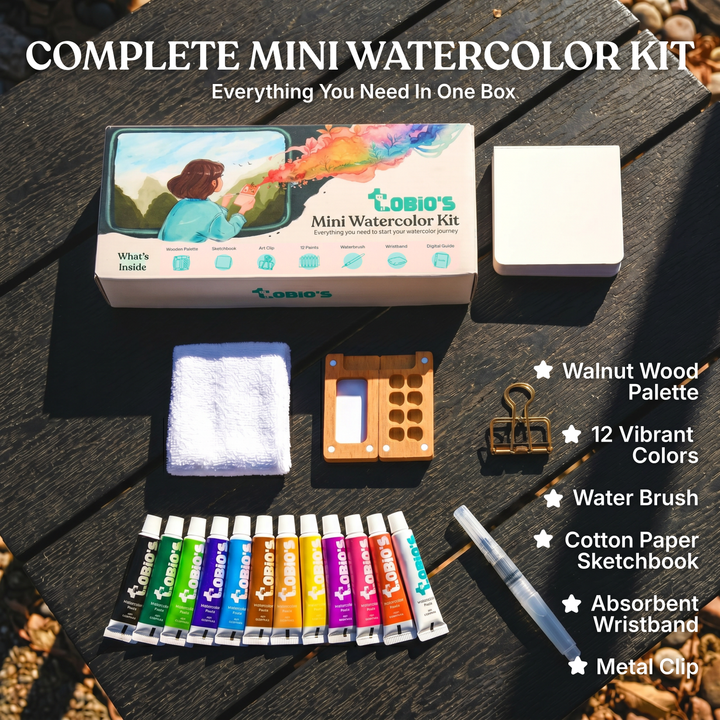
Ready to paint along?
Everything you need to paint anywhere and feel inspired doing it.
- Ultra compact
- Express yourself creatively
- For total beginners