


Starfish Watercolor Painting: Step-by-Step Tutorial


What You'll Need
- Watercolor Paper
- Pencil and eraser
- Two water cups
- Watercolors
- Round brush
Color Palette
Welcome to the loose, expressive side of art! If you love the look of a lively starfish watercolor painting but your last attempt turned into a stressed-out, overworked blob, you are not alone. Watercolor is equal parts "gorgeous" and "wait, why is it doing that?"
While this tutorial will teach you the ropes of a classic starfish watercolor painting, we are completely ditching the masking tape, perfectionism, and complex layering. Instead, we are focusing on a fast, beginner-friendly "Loose Sketchbook Style." This is all about celebrating the unpredictable, beautiful nature of water and pigment. Grab your mini travel palette, open up your sketchbook, and let's get splashing.
If you want more projects like this after you finish, you can browse our full library of step-by-step lessons on Watercolor Tutorials.
The Color Palette
Based on the beautiful, simple sketchbook study above (and that incredibly cute wooden clip-on palette!), we are keeping our colors limited and impactful. Here are the specific pigments you'll need to recreate this exact look:
- Yellow: The warm, sandy base wash for the starfish.
- Burnt Sienna: A muted, earthy orange-brown used for the starfish's shadows, edges, and bumpy texture.
- Cerulean Blue: The soft, watery mid-tone blue that makes up the bulk of the expressive ocean water.
- Sap Green: Touches of gentle, sea-glass green mixed into the wet blue background for a shallow-sea vibe.

The Barely-There Sketch
Keep it tiny and simple. Draw a soft, five-armed star right in the middle of your sketchbook page. No tracing, no rulers, no heavy templates, just let the arms be a little wonky and organic. Erase the pencil until it's just a ghost of a line. Your paint is the star here, not your pencil.

The Splishy-Splashy Background
We are starting with the ocean! Wet the paper around your starfish shape (this is the wet-on-wet technique). Drop in your Cerulean Blue and let it bleed outward into the damp paper. While it's still wet, tap in a little Sap Green.
Let the brushstrokes be messy, let the paint pool a little, and leave some white space. Don't overthink it, and try not to paint inside the starfish lines!

The Warm Base Wash
Once your background is mostly dry, it's time for the main event. Mix a watery wash of Yellow and paint the inside of the starfish. Let the brush dance a bit, and intentionally leave a few tiny spots of bare, dry paper, these act as natural highlights catching the sun.

Expressive Shadows and Details
While the Yellow base is still slightly damp, drop a little Burnt Sienna into the center where the arms meet and gently along the edges. The damp paper will give you a soft, blurred shadow. Once the whole starfish is completely dry, use the very tip of your brush to tap in a few final Burnt Sienna dots down the arms for that classic, bumpy starfish texture.
And you're done! Close up your travel palette and admire your work.
Style Variations: Deep Sea Shadow, Sunlit Tide Pool, and Storybook Star
Want to change the vibe of your starfish watercolor painting?
Try these quick sketchbook adaptations:
The "Deep Sea Shadow" (Dramatic & Heavy)
- Cool the palette: Swap your sunny Yellows for deep, moody blues like Indigo, or mix an extra-heavy wash of Cerulean Blue right into your Burnt Sienna for a murky brown.
- Deepen the shadows: Paint the center and the undersides of the arms much darker, leaving only a tiny sliver of pale rim light catching the top edges.
- Lost edges: Let the tips of the bottom arms bleed entirely into a dark, heavy ocean wash to anchor the starfish in the mysterious deep sea.
The "Sunlit Tide Pool" (The Smooth, Gentle Phase)
- Lighten the palette: Stick to highly watered-down Yellow and only the palest, ghostliest wash of Burnt Sienna.
- Change the proportions: Soften the jagged bumps so the arms sit as flat, rounded, water-polished shapes.
- The "Fresh" Texture: Skip the heavy, crunchy shadow dots entirely. Keep the washes light and smooth for a fresh, submerged, sun-bleached look.
The "Storybook Star" (Simplified for Cards & Patterns)
- Exaggerate shapes: Push the shape language into a perfectly symmetrical, chubby star, or give it delightfully wonky, stylized dancing arms.
- Bring back the speckles: Lean into the illustrative vibe by flicking a few perfect, deliberate splatters of paint over the dry starfish for a playful, stylized texture.
- Flat color: Skip the messy, unpredictable watermarks. Use flat, highly-pigmented, graphic washes of solid color for a modern illustration feel.
Inspiration: Why This Style Works
This loose, expressive sketchbook approach to a starfish watercolor painting is perfect for:
- Beach Journals and Vacation Logs:
Capture the cool marine life you spotted on a coastal walk without needing a macro lens or a marine biology degree. You don’t need to paint every single microscopic suction cup; you just need that classic, five-armed silhouette to bring the salty memory right back. - Coastal & Nursery Decor:
Because starfish are naturally playful and oceanic, a soft, loose study looks timeless in a beach-themed bathroom or a cozy nursery. Frame a trio of these (perhaps adding a quick painted seashell or a piece of sea glass) for instant, ocean-inspired wall art that feels personal, not "store-bought."
Frequently Asked Questions
Why did my starfish watercolor painting turn into a muddy puddle?
You probably rushed! If your yellow starfish bled into your blue background, the paper wasn't fully dry yet. Remember the golden rule: for crisp, clean edges, you must paint on dry paper. Take a breath, let it dry completely, and try again!
Do I really need 140lb/300gsm paper for a quick sketch?
Absolutely! This loose style uses a lot of water. Thin paper will warp into a taco shape and make your paint pool weirdly. Thick 140lb paper absorbs water evenly and gives you those beautiful, natural watercolor blooms.
Can I use this loose technique for other ocean art?
100%! The core formula, wet-on-wet background, simple base wash, dry details, works for anything. Try it on a soft pink jellyfish or a piece of sea glass. Just pick 3–4 colors, sketch lightly, and resist the urge to overwork it!
Conclusion
Painting a starfish in watercolor is mostly about timing and restraint: a soft base wash, a slightly darker shadow while the paper is damp, then crisp dots on dry paper. Keep your palette simple, let layers dry before glazing, and do not “fix” it to death.
When you are ready for your next painting win, explore more projects in our watercolor tutorials, or browse Tobio's Kits for more creative, printable friendly ocean inspiration.
Mel, Founder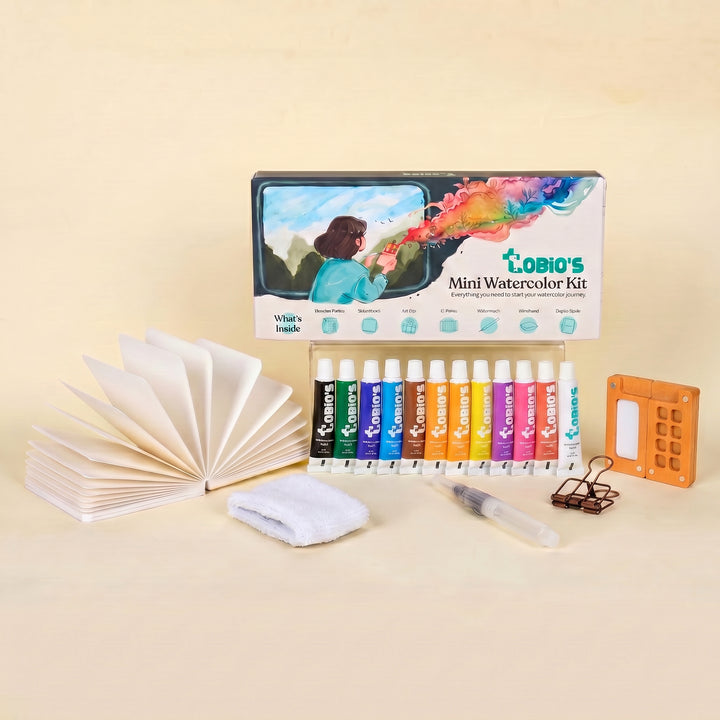
Ready to Paint?
This tutorial was designed for use with our Watercolor Kit.
Link to the link


