


Tiger Watercolor Painting: Step-by-Step Tutorial


What You'll Need
- Watercolor Paper
- Pencil and eraser
- Two water cups
- Watercolors
- Round brush
Color Palette
If you’ve ever started a tiger watercolor painting and ended up with a stiff, overworked orange blob, you are in the right place. We are throwing perfectionism out the window. While this is a tutorial for a beautiful tiger watercolor painting, we are focusing entirely on a "Loose Sketchbook Style."
This approach is fast, wonderfully beginner-friendly, and perfect for capturing the essence of the animal without stressing over every single hair. You don’t need hours of free time or professional tracing skills, you just need 15 minutes, a willingness to let the paint do its thing, and a little bit of brush confidence.
If you want more projects like this after you finish, you can browse our full library of step-by-step lessons on Watercolor Tutorials.
The Expressive Color Palette
Based strictly on the warm, lively painting above, you only need four specific pigments to bring this big cat to life.
Put away the massive 48-color sets; limited palettes prevent muddy mistakes.
- Yellow Ochre: For that warm, golden base glow.
- Cadmium Orange: The bright, vibrant punch for the midtone fur.
- Burnt Sienna: A reddish-brown for adding depth and gentle shadows.
- Ivory Black: The bold, opaque dark used for those striking stripes and facial features.

The "Suggestion of a Cat" Sketch
Keep your pencil lines incredibly light. You are just creating a map, not a coloring book page.
- Sketch a soft circle for the head and place the ears.
- Block in the muzzle as a simple rounded shape.
- Lightly mark where the eyes will sit.
- Do not draw the stripes yet. You will trap yourself into painting "inside the lines."

The "Wet and Wild" Base Wash
Mix a pale, watery wash of Yellow Ochre and a touch of Cadmium Orange. Using a medium round brush, drop the color into the fur areas.
- Let the water do the work. Don't scrub the paper.
- Crucial: Leave the paper completely bare (white) for the whisker pads, the chin, and the areas around the eyes.
- Let this layer dry completely. Watercolor patience is annoying, but it’s the secret to keeping your colors crisp.

Building Character with Warmth
Once the first layer is dry, mix a slightly thicker, more pigmented batch of Cadmium Orange and Burnt Sienna.
- Add gentle depth around the cheeks, the top of the head, and the bridge of the nose.
- Keep the edges soft. Let the colors bleed into each other slightly to mimic the natural fluff of the fur.

Rogue Stripes and Soulful Eyes
Here is where the magic happens. Grab your smaller brush and your Ivory Black.
- The Eyes & Nose: Paint the eyes simply, leaving a tiny fleck of bare paper for the highlight to make them look alive. Add a soft wash to the nose, deepening the nostrils.
- The Stripes: Real stripes have variation, they are not stamped on. Press, pull, and lift your brush to create tapered ends. Let some stripes break or fade. Keep them delicate around the face and bolder on the body. Don't overthink it; fast, confident strokes with your black paint will make the tiger pop.
Style Variations: The "Midnight Jungle," "Sunlit Cub," and "Storybook Feline"
Want to change the vibe of your tiger watercolor painting?
Try these quick sketchbook adaptations:
The "Midnight Jungle" (Moody & Dramatic)
- Cool the palette: Swap your warm, sunny oranges for deeper, muted rusts. Mix a touch of Indigo or extra Payne’s Gray into your Burnt Sienna for a heavy, shadowy base.
- Deepen the shadows: Paint one side of the tiger's face much darker, leaving only a tiny sliver of pale rim light on the edge of the cheek and brow.
- Lost edges: Let the bottom of the chest and shoulders bleed entirely into a dark, heavy background wash to anchor the cat in the deep jungle shadows.
The "Sunlit Cub" (Soft & Gentle)
- Lighten the palette: Stick to highly watered-down Yellow Ochre and the palest wash of Cadmium Orange.
- Soften the features: Round out the jagged, fierce edges of the stripes so they sit as soft, gentle markings rather than aggressive slashes.
- The "Fresh" Texture: Skip the heavy, crunchy shadows under the chin. Keep the washes light, smooth, and fluffy for a fresh, youthful look.
The "Storybook Feline" (Simplified for Cards & Patterns)
- Exaggerate shapes: Push the shape language into stylized, geometric blocks. Give the tiger a more distinct, triangular nose or perfectly swooping, graphic stripes.
- Bring back the speckles: Lean into the illustrative vibe by flicking a few perfect, deliberate splatters of orange and black paint around the dry portrait for a whimsical texture.
- Flat color: Skip the beautiful, messy watercolor bleeds. Use flat, highly-pigmented, graphic washes of solid color for a modern, pop-art feel.
Inspiration: Why This Style Works
This loose, expressive sketchbook approach to a tiger watercolor painting is perfect for:
- Wildlife Journals and Zoo Sketchbooks: Capture the fierce energy of a big cat you spotted at the sanctuary without needing a macro lens or a zoology degree. You don’t need to paint every single strand of fur; you just need that bold, iconic orange-and-black contrast and a soulful eye to bring the memory back to life on the page.
- Bold & Eclectic Wall Decor: Because tigers are naturally striking and dynamic, a soft, loose study looks incredibly sophisticated in a home office or a cozy reading nook. Frame a lively, 15-minute piece like this for instant, nature-inspired wall art that feels vibrant and full of movement, rather than stiff and "store-bought."
Frequently Asked Questions
How do I avoid muddy fur in my tiger watercolor painting?
Stick to the 4-color palette and let your first watery base wash dry completely before you add darker midtones or stripes.
What if I accidentally paint over the white highlights?
No problem! Once the painting is completely dry, you can use a dot of white gouache or a white gel pen to add the eye highlights and crisp whiskers back in.
How do I stop my black stripes from bleeding?
Bleeding means your paper is still too wet. Make sure the orange and brown fur layers are 100% dry to the touch before applying your Ivory Black with fast, confident strokes.
Conclusion
A strong tiger watercolor painting is not about painting every hair, it’s about clean layering, smart values, and confident stripe work. Keep your first wash light, let things dry, build contrast where it counts, and save the sharpest details for the eyes and muzzle.
When you’re ready to level up with more guided practice, head to Tobio’s watercolor tutorials and keep the momentum going.
Mel, FounderLike these guides? Set Tobio's as a preferred source on Google and our pages will show up first when you search for watercolor questions.
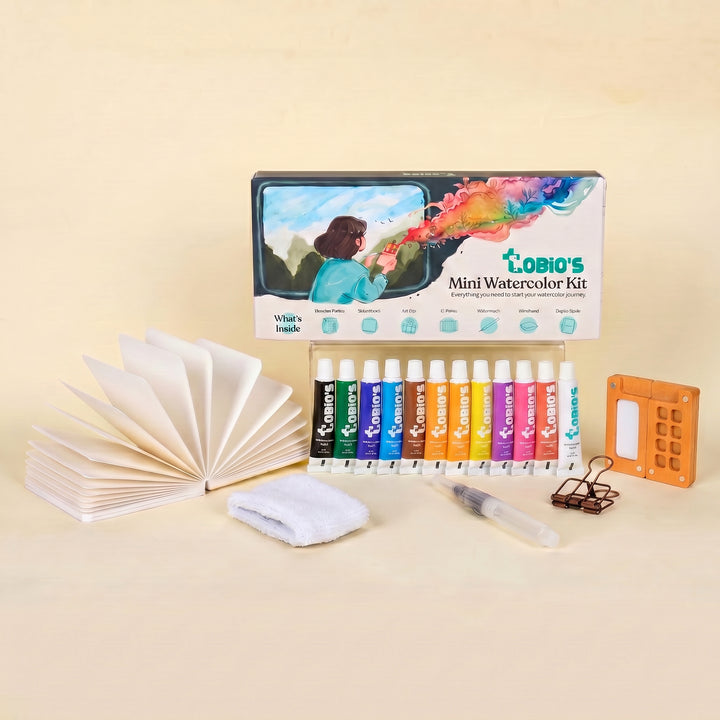
Ready to Paint?
This tutorial was designed for use with our Watercolor Kit.
Link to the link


