Tulip Watercolor Painting: Step-by-Step Tutorial


What You'll Need
- Paper
- Brushes
- Paint colors
- Palette
- Water cup
- Pencil
Color Palette
Forget everything you know about botanical accuracy. We aren't painting perfect specimens for a science textbook; we are painting a joyful, messy bunch of tulips that feels like spring.
In this loose sketchbook study, we are capturing a group of colorful tulip watercolor paintings using simple, repetitive shapes and wet-on-wet blending. This approach is fast, forgiving, and perfect for when you need a creative boost but don't have hours to spare.
The Supplies (Keep it Simple)
- Paper: 140lb/300gsm Cold Press paper. (You need the tooth to hold the watery washes).
- Brush: A Size 6 or 8 Round Brush (flexible enough for petals and leaves).
- Paints: See our "Spring Fling" palette below.
The Color Palette
Based on the sketchbook study above, we are using a bright, cheerful primary palette.
- Cadmium Red (or similar warm red): For the bold red tulips.
- Cadmium Yellow (or Lemon Yellow): For the sunny yellow blooms.
- Yellow Ochre: To mix with the bright yellow for variation.
- Sap Green: For the stems and leaves.
Step-by-Step: Your Expressive Tulip Watercolor Painting
The secret to this painting is simplicity. Tulips are basically egg shapes with a little texture at the top. Don't overthink it. If you try to paint every individual petal, you lose that fresh, energetic feel. We want to capture the gesture of the flower, the way the heavy heads nod on those long stems. To get those beautiful, effortless blends without the mud, using the right paper and pigments makes a huge difference, you can find the exact materials we recommend in our full collection of kits.

The "U" Shape Petals
- Load your brush with juicy Cadmium Red.
- Paint a simple "U" or cup shape.
- The Texture: Instead of closing the top with a straight line, flick your brush upward to make jagged little peaks. This mimics the petals opening up.
- Repeat this for the yellow tulips using Cadmium Yellow. vary the heights so they aren't all in a soldier row.

The Two-Tone Blend & The Stems (One Motion)
- While the yellow tulips are still wet, drop a tiny touch of Yellow Ochre or Red into the bottom of the cup.
- Let it bleed. This creates a natural shadow at the base of the flower without you having to "paint" a shadow.
- Do the same for the red tulips, maybe drop in a deeper red or purple at the base.
- Mix a fresh Sap Green.
- Place your brush tip right under a flower head and pull down in one smooth stroke.
- If the green touches the wet flower color, GOOD. Let it bleed a little. It makes the flower look attached to the stem rather than glued on.
- Artist Tip: Don't make the stems straight like rulers. Give them a little curve. Tulips are floppy!

The Leafy Filler
- Tulips have long, strappy leaves.
- Using your green mix, paint long, pointed leaves starting from the bottom of the page and sweeping upward.
- Fill the empty spaces between the stems. Overlap them!
- Vary the green: Add a little yellow to some leaves and a little blue to others to keep the greenery interesting.
- Step back and look. Do you see little triangles of white paper between the stems and leaves?
- Those sparkles of white light are what keep the painting looking fresh and airy. If you fill every gap, the painting will look heavy and overworked.
Add a simple background (optional)
If your bloom feels like it’s floating, add a whisper of background:
- A pale wash behind the flower (keep it very light)
- A soft shadow under the bloom or along one side
Want more project-style painting ideas you can do without hunting down supplies? Browse Tobio’s Kits to find creative kits designed to be approachable and fun, not fussy.
Frequently Asked Questions
How do I keep my tulips from looking like lollipops?
Curve the stems! Real tulips bend and twist toward the light. Also, vary the size of the flower heads, some fully open (wider), some still closed (narrower).
My yellow tulips look dirty.
Yellow is easily polluted. Rinse your brush thoroughly before switching from red or green back to yellow. If your water water is murky, change it. Dirty water = dirty yellow.
Can I use a flat brush instead?
You can, but a round brush is easier for tulips because the belly of the brush naturally makes that nice rounded cup shape, and the fine tip is perfect for the jagged petal tops.
Why do my leaves look stiff?
You are probably painting too slowly. Leaves need confidence! Plant your elbow on the table and flick your wrist upward to create a sweeping, energetic line.
Conclusion
A strong tulip watercolor painting comes down to three things: a light sketch, a light first wash, and a second layer that’s placed on purpose, not everywhere. Keep your highlights, let layers dry, and stop before you “perfect” it into lifelessness.
If you want to keep building your watercolor confidence with more approachable projects, visit Tobio’s watercolor tutorials, or browse Tobio’s Kits to find creative kits that make it easy to actually start (and finish) what you plan to paint.
Mel, FounderLike these guides? Set Tobio's as a preferred source on Google and our pages will show up first when you search for watercolor questions.
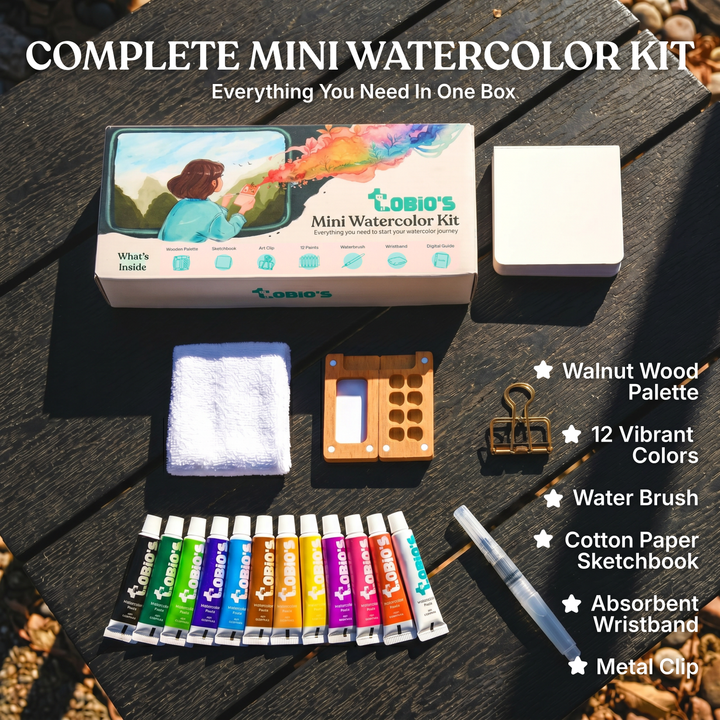
Ready to paint along?
Everything you need to paint anywhere and feel inspired doing it.
- Ultra compact
- Express yourself creatively
- For total beginners