


How to Paint Trees: A Comprehensive Watercolor Guide


What You'll Need
- Watercolor Paper
- Pencil and eraser
- Two water cups
- Watercolors
- Round brush
Color Palette
If the phrase watercolor painting trees makes you feel like you need a degree in botany, take a deep breath. Look at the photo above. Do you see individual leaves? No. Do you see complex bark textures? No. You see shapes, feelings, and a bit of beautiful mess.
We aren't trying to paint a photograph here. We are doing a "sketchbook study", a fast, loose approach that captures the vibe of a forest without the stress of counting branches. This is about putting paint on paper and letting the water do the work.
If you want more projects like this after you finish, you can browse our full library of step-by-step lessons on Watercolor Tutorials.
The Palette: Forest Tones
To get the look in the image, we aren't using 50 different colors. We are using a limited palette to keep things cohesive. Based on these trees, here are the specific pigments you need:
- Sap Green: Your main mid-tone for the leafy masses.
- Burnt Sienna: The perfect reddish-brown for warm trunks.
- Ultramarine Blue: To cool down the green for the shadowed areas or that distant, bluish tree in the background.
Supplies: Keep It Minimal
You don't need a studio setup. The beauty of watercolor painting trees in this style is that it fits in your lap.
- Paper: A sketchbook with 140lb / 300gsm cold press paper. The texture is vital, it grabs the pigment and creates those lovely jagged edges naturally.
- Brush: Just one. A Size 6 or 8 Round Brush. It’s big enough to hold water for the leaves but has a point sharp enough for the trunks.

The "Blob" Phase (Foliage)
Load your brush with Sap Green and plenty of water. We are going to paint the canopies of our trees first.
- Don't draw a circle. Dab your brush on the paper to create irregular, organic shapes.
- Artist Tip: While the green is still wet, drop in a touch of Ultramarine Blue on the bottom left. Let them bleed together.

The Anchors (Trunks)
Wait until your green shapes are mostly dry (damp is okay if you like soft bleeds, but dry is better for crisp lines).
- Mix a creamy consistency of Burnt Sienna.
- Start the brush stroke inside the green foliage and pull down.
- Wobble the line. Trees aren't telephone poles. Let the line break or thicken at the bottom.
- For the tree on the far right, split the trunk into a "Y" shape as it enters the leaves.

The Floor (Grounding)
Floating trees look weird. We need to put them on the ground.
- Without cleaning your brush thoroughly (a dirty mix of green and brown is perfect here), swipe a loose horizontal wash across the bottom of the trunks.
- Let the brown of the trunks bleed slightly into this ground line. It connects the tree to the earth instantly.

The "Expressive" Details
This is where we stop watercolor painting trees and start making art.
- Take your brush with a darker green (Sap Green + tiny bit of Blue) and add just a few dabs of shadow under the main leaf clumps.
- Don't overwork it! The charm of this sketch is the white space and the rough edges. If you think you’re 90% done, you’re actually 100% done. Put the brush down.
The "Walk Away"
The hardest part? Stopping. You will want to smooth out a bloom in the canopy or "fix" a messy trunk.
Don't.
The charm of watercolor painting trees lies in those unpredictable drying lines and rough textures.
Drop the brush and let the magic happen on its own.
Style Variations: Deep Forest, Spring Sapling, and Storybook Grove
Want to change the vibe of your watercolor painting trees? Try these quick sketchbook adaptations:
The "Deep Forest" (Moody & Atmospheric)
- Cool the palette: Swap your bright Sap Green for a deep, moody mix of Ultramarine Blue and a touch of Burnt Sienna.
- Fuse the canopy: instead of separate trees, paint one large, wet mass of dark foliage, then drop in water to create "blooms" that look like light filtering through.
- Lost edges: Let the bottom of the trunks bleed entirely into a dark, heavy ground wash to suggest dense undergrowth.
The "Spring Sapling" (Fresh & Airy)
- Lighten the palette: Stick to highly watered-down Lemon Yellow and the palest wash of Sap Green.
- Change the proportions: Make the trunks razor-thin and the foliage sparse and wispy.
- The "Fresh" Texture: Skip the heavy layering. Keep the washes light and smooth for a fresh, new-growth look.
The "Storybook Grove" (Simplified for Cards)
- Exaggerate shapes: Push the shape language into perfect circles or distinct triangles for a graphic look.
- Negative space: Lean into the illustration vibe by leaving deliberate white gaps between branches to suggest sky holes.
- Flat color: Skip the messy watermarks. Use flat, highly-pigmented washes of Sap Green for a bold, sticker-like effect.
Inspiration: Why This Style Works
This loose, expressive sketchbook approach to watercolor painting trees is perfect for:
- Nature Journals and Hiking Logs: Capture the forest you walked through without needing a botanical degree. You don’t need to paint every single leaf or twig; you just need that vertical rhythm and green silhouette to bring the memory back.
- Gallery Walls & Home Decor: Because trees are naturally organic, a soft, loose study looks timeless in a hallway or living room. Frame a trio of these (perhaps varying the height and color slightly) for instant, nature-inspired wall art that feels personal, not "store-bought."
Frequently Asked Questions
My watercolor painting trees look like green lollipops. How do I stop this?
The "lollipop effect" happens when you outline a circle and fill it in. Stop drawing! Instead, use the side of your brush to "stamp" irregular shapes. Let the brush bristles create the ragged edges of the leaves for you. Real trees are messy, so your shapes should be too.
I accidentally got a "bloom" (watermark) in the canopy. Is the painting ruined?
Absolutely not. In a loose sketchbook study, a bloom is just free texture. It looks like a dense cluster of leaves without you having to paint them. Embrace the accident, it usually looks more organic than anything you could plan.
Why do my greens turn into "swamp soup" when I mix them?
You are likely over-mixing on the palette. For fresh, vibrant watercolor painting trees, try mixing your colors on the paper. Drop in your Sap Green, then touch in a bit of Blue or Yellow while it's wet and let them swirl together on their own. The less you stir, the fresher the green.
Conclusion
Good watercolor painting trees is mostly about three things: big shapes first, controlled darks second, and just enough detail to suggest structure. Practice the four mini tree tutorials, keep your greens clean with simple mixes, and use depth tricks like overlaps and ground shadows to make your scene feel real.
If you want guided projects that help you build these skills without overthinking the setup, explore Tobio’s Kits and practice alongside the step-by-step lessons in Tobio’s watercolor tutorials.
Mel, FounderLike these guides? Set Tobio's as a preferred source on Google and our pages will show up first when you search for watercolor questions.
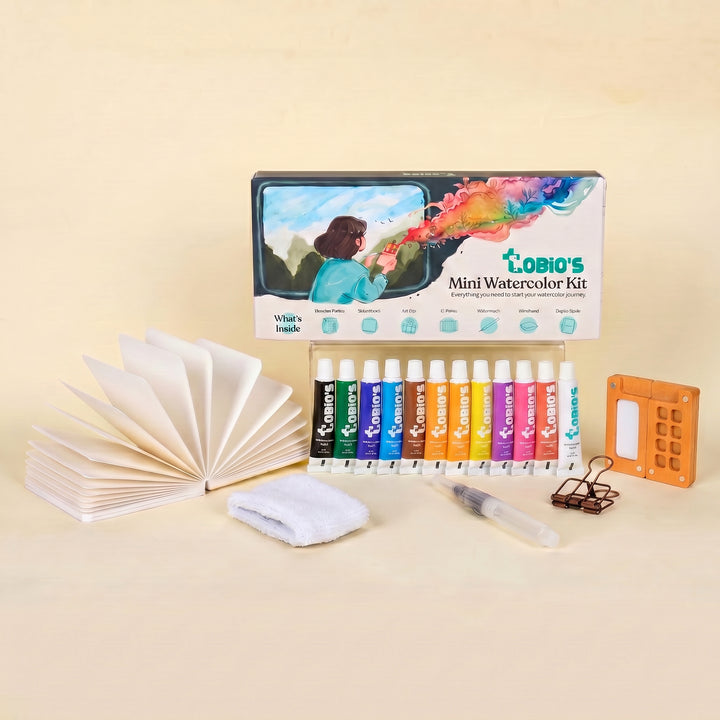
Ready to Paint?
This tutorial was designed for use with our Watercolor Kit.
Link to the link


