


How to Use a Watercolor Workbook, Step by Step


What You'll Need
- Watercolor paints in a range of mixable colors
- A round brush, or a water brush (water stored in the handle)
- Water and a cup (if you’re not using a water brush)
- A rag, paper towel, or wristband to blot excess water
You’ve just got your new watercolor workbook and it’s open in front of you. Now what? You’ve bought something you’re so excited to use but once you get it, it can feel a little scary. What if you mess up? What should you even paint? Where do you get started? And what do you do with those pretty line drawings in the book? It’s printed and pretty, so you’re scared to touch it.
I know how it feels because that used to be me back in the day when I started painting with watercolors. But it shouldn’t feel intimidating or scary. You don’t have to be good at art or figure out any composition. All you have to do now is have fun and experiment.
So let’s open it and actually use the thing.
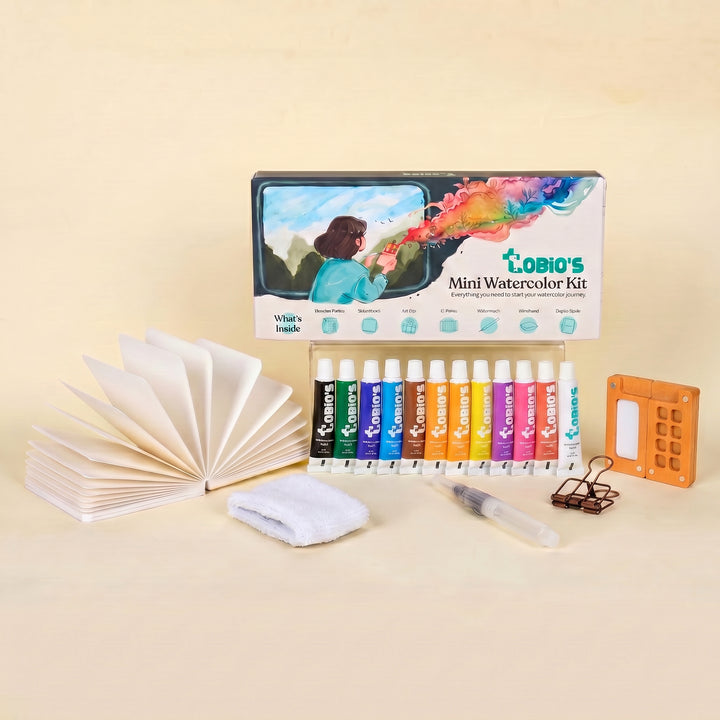
You don’t need a whole lot of stuff — the whole point of a workbook is that the drawings are already there. If you’d rather not gather all of that from a bunch of different places, our complete watercolor kit comes with the workbook, the paints, the brushes, the palette, and even a towel-material wristband in one box, so you get everything you need in one kit. And if you want extras, a water brush set is quite a lovely add-on.

Make a Test Swatch First
This is hands down my favorite trick. I always keep a little paper on the side where I test the color before putting it on the “real” page. Like a little scrap paper. It doesn’t have to be made from watercolor paper. You can use a page from a sketchbook, the back of an envelope, or whatever you happen to have at home.
Load the brush with color, dab it on the scrap paper, and see if the swatch matches your expectations. If not, just keep mixing and swatching until you’re happy. Maybe you need a bit more water or a bit less. Or the shade is not exactly right. This is the perfect way to find out before you make a mark on your actual artwork.
If you’re new to color theory, this is also a great way to see what colors come out when you mix the paints together.
Want a stack of scrap that’s the same lovely cotton paper as the workbook? Grab an extra sketchbook to practice.

Mix Your Colors and Load Your Brush
Watercolor is exactly what it sounds like. A love story between paper, paint and water. When you add more water, the colors become less intense and more transparent and the shade is lighter. If you use less water, you get more intense and vibrant colors.
For a first pass, you should aim for lighter colors. Don’t go too dark too fast because you can’t layer as easily over darker colors. It’s better to start a bit lighter, and then build with more color if needed.
So dip the brush in water, or squeeze the pen if you have water in the handle, and then swirl it in the paint. If you want to mix two colors, don’t mix directly on the page. Always use the palette to properly blend everything. Do a little swatch on the scrap paper, and then start painting.
If the paint is looking a bit sad and brown-ish, you may have mixed too many colors at once. It happens quite a lot to be fair. Just stick to two colors and you’ll be fine.
And if you want a bigger range to play with as you go, the 12 paint refills let you keep mixing without running low. Or you can go big and get the 50 Watercolor Paint Set to get even more lovely shades to choose from.

First Wash, Light to Dark
Now comes the exciting part. Painting.
In the workbook, you get 30 pre-sketched illustrations. You just pick your design and follow the lines.
Start with the lightest colors and always start with thin layers. You want an even, thin wash inside of the lines. You can always deepen the color later if you want to. But you can’t un-paint a layer that went on too dark from the beginning. Watercolor doesn’t come with an undo button.
So for example, if you pick the flower to paint in the workbook, start with the lighter colors, and then when you add more layers, you’ll be able to create that sense of depth and shadows that truly bring the flower to life.
Watercolor is like a cat. It likes to be left alone sometimes. So don’t overwork it. Put down loose and gentle strokes and let it dry between the layers. If you add too much water or do too many colors at once, it will start to pill a bit. So avoid scrubbing the paper and leave the wet areas alone for a bit, or they will go patchy and weird. And we don’t want that. So take a little coffee break, and it’ll be good to go in no time.
A soft, even wash is its own little skill, so if you want to nerd out on that part later, my guide on how to paint clouds in watercolor is all soft washes. I think you’ll love it as a next step.

Let It Dry, Then Layer and Add Detail
Like I mentioned, patience is the key to avoiding rookie mistakes and frustration. Let the lighter layer dry fully before applying the next layer. That’s what makes the difference between a beginner and someone who’s learned some great tips and tricks. Because if the two layers blend together, you’ll lose all of the crisp and clean edges.
Once the paint is dry, it’s where the fun bit happens. Now you can add another layer with some stronger colors, and watch how your artwork comes to life. Add your darker areas, shadows, and details. You build up slowly and get something that looks truly beautiful.
The best thing is that the workbook guides you because the shape is already there. All you need is a bit of patience and a sense of wanting to explore and try new things.
Let It Dry Again, Then Look at It
Here’s the thing… When the color is still wet, it looks darker and more dramatic. Once it’s dry, it naturally becomes a bit lighter. This means you should always wait to judge your work. A painting you didn’t like a lot when wet, might be your favorite once it’s dry. This happens to me all the time.
What I’d really encourage you to do is to keep the painting. Even if you’re not happy or if it’s your early work. I know it can feel a bit cringe. Almost like reading your teenage-year journal. But trust me, it’s so nice to see the progress and you’ll be able to compare and see how much you’ve improved. It’s a lot quicker than you might expect.
You will love the feeling of seeing how the time you put in makes a difference.
One Honest Thing Before You Go Further
I’ll be honest with you. With a workbook, you’ll get started quicker and you’ll probably have more fun from the very first brush stroke. However, a workbook won’t teach you how to draw, so when you get to the blank pages or if you decide to draw freehand, you need to start with a composition from a blank page.
The line drawings do that part for you. You get fruits, flowers, plants, sceneries and more. The composition is there. The thinking part has been done for you. When you start drawing freehand, that work falls on you.
But if you truly love painting the line art, you can always get more workbooks from our collection, and do even more motifs based on seasons or vibes.
Common Mistakes to Watch For
Most beginner mistakes have a few things in common. I’ve done all of them many times, so here it goes:
- Too much water. This is probably the number one mistake. Use a little less than feels right and blot your brush on the paper towel or rag first.
- Going dark too soon. You can always add more color. You can’t take it away. Start with lighter layers and build on them.
- Not waiting for it to dry. This one I’m so guilty of doing. I get impatient and add more color straight away. But with time you learn that letting the paint dry gives you much better results.
That’s It, Go Paint
Let’s do a quick little recap: always use a piece of scrap paper to make a swatch, paint from light to dark and let each layer dry. That’s basically it.
One more thing I think is really important. Maybe the most important of all. You will make mistakes. Even professional artists do. So don’t strive to be perfect. Just aim to have fun and learn a bit with each painting. You never have to be scared of being bad at it, because who’s really judging you except yourself? Just get started.
If you want the workbook on its own, you can get Tobio’s Beginners Workbook ($10). If you’d rather have everything handled in one box, the complete watercolor kit ($26) comes with the paints, the water brush ($6) and a gorgeous walnut wood palette that closes with magnets. And if you just want spare paper to practice on, grab an extra sketchbook ($7). You can also browse all workbooks or dig into more watercolor tutorials when you’re ready for the next thing.
I’m Mel, founder of Tobio’s. I make portable watercolor kits and the guided workbook that goes with them, and I named the company after my cat. I write these guides for the beginner I used to be, the one who was too scared to touch the page. Read the Tobio’s story.
Frequently Asked Questions
Do you paint directly in the workbook?
Yep. That’s the whole brilliant idea. The paper is real watercolor paper made to handle water, and the designs are printed right on it so you paint right on the actual page. The only thing I’d add is to swatch your color on scrap first, so you’re sure of the shade.
What supplies do you need?
Paint, a round brush with a water cup or a water brush, and a paper towel. That’s it. The complete watercolor kit packs all of it in with the workbook, so you can open the box and get started straight away. Otherwise, you’ll need to do another shopping trip.
Can you reuse a watercolor workbook?
Not really, and especially not the printed ones. Once you’ve painted a design, that page is done. When you want to practice the same thing again or just paint freely, use a separate extra sketchbook with the same paper.
Like these guides? Set Tobio's as a preferred source on Google and our pages will show up first when you search for watercolor questions.
More watercolor tutorials


Ready to start painting?
Everything you need in one beginner-friendly kit: the guided workbook, 12 student-grade paints, water brushes, a walnut palette, and 300gsm cotton paper - all in a pocket-sized box.
Get the Tobio’s Watercolor Kit


