


How to Use Tobio's Watercolor Kit: Setup to First Painting in 8 Steps


What You'll Need
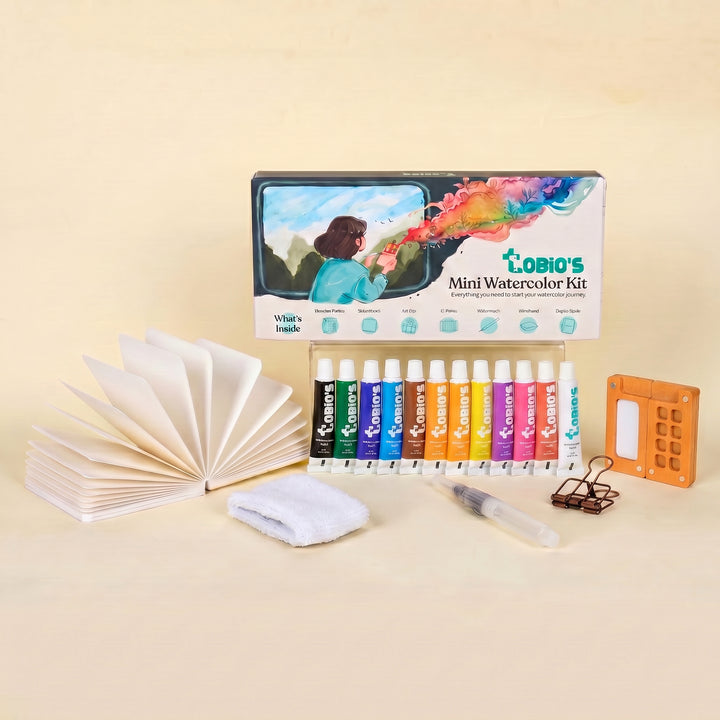
- Your Tobio's Watercolor Kit (palette, 12 tubes, water brush, sketchbook, clip, wristband)
- Clean water, once, to fill the brush
- A paper towel or the wristband for blotting
- The Beginners Workbook if you would rather paint over a sketch than a blank page (optional)
Tobio's Watercolor Kit is a pocket-sized watercolor set with a walnut palette, 12 tubes of paint, a water brush, a 60-page cotton sketchbook, a clip and a wristband, and using it takes four steps the first time and one step every time after. The first time, you squeeze each tube into a well of the palette and let the paint dry overnight. After that, you fill the water brush, wake a color with a drop of water, clip the sketchbook to the palette and paint. The water brush holds its own water, so there is no cup, no sink and no setup beyond opening the box. The whole kit was designed around that one idea: that the reason most people never paint is the twenty minutes of setting up and cleaning up, so I removed them. Here are the eight steps, with the mistakes I made so you can skip them.
Key takeaways
- Fill the wells from the tubes once, the evening before you want to paint. The paint lives in the palette from then on.
- One drop of water on a color, 30 seconds, and it is ready. Dry paint is not dead paint.
- Squeeze the water brush gently. Too much water is the first mistake everyone makes, including me.
- Wipe the brush on the wristband between colors, not in a jar.

Unbox and check what is inside
Open the box and lay everything out: the walnut palette (two halves that close with magnets), 12 paint tubes, the water brush, the 60-page sketchbook, the metal clip, the wristband and the card with the link to the digital guide. The palette has 12 wells and a mixing area. If any part is missing, email support before you squeeze anything; the kit is covered by a 60-day guarantee.

Squeeze each tube into a well and let it dry overnight
Unscrew a tube and squeeze it into one well until the well is full, then move to the next color. Keep the colors in a sensible order, yellows next to reds next to blues, so mixing later makes sense; the palette setup post shows a layout. Leave the palette open overnight, or for a day in a damp room. The paint shrinks a little as it dries and may crack on top; that is normal and it rewets fine. You now have a pan set that you refill from tubes, which is cheaper than buying pans and the reason the kit is this small.
The mistake I made: closing the palette while the paint was still wet. It smeared onto the mixing side and I had to clean it. Give it the full night.

Fill the water brush
Unscrew the brush head from the barrel, fill the barrel with clean water under a tap or from a bottle, and screw the head back on. Squeeze the barrel once over a paper towel until the tip is wet. That is the only water you need for the whole session. One barrel lasts me two or three sketchbook paintings.

Clip the sketchbook to the palette
Slide the metal clip over the top of the sketchbook and hook the palette onto it, so the palette sits above the page like a small easel. Put the wristband on your brush hand. Now the whole kit is one unit you can hold in one hand on a train or rest on a knee in a park, and nothing blows away.

Wake the paint with a drop of water
Touch the wet brush tip to a color and leave a drop of water on it for about 30 seconds. The dried paint softens and the brush picks up color. Dry watercolor is never dead; it only needs water. If a color seems chalky or weak, it is not wet enough yet. Give it another drop and a few more seconds, then stir the surface with the brush.

Control the water (the whole skill, honestly)
Squeeze the barrel gently to feed the tip. For a soft wash, squeeze until a bead of water forms on the tip and sweep it across the page. For a line or a detail, do not squeeze at all; the tip holds enough. Too much water puddles and lifts the color; too little drags. Between colors, wipe the brush on the wristband, squeeze once over the paper towel, and carry on. If you want a cleaner rinse, squeeze a few drops through onto the towel until it runs clear. The water control post goes deeper, and the mixing chart shows what the 12 colors make together.

Paint your first page: a wash, a shape, a line
Do not start with a painting. On the first page, paint one wet wash of a single color, let it dry, then paint a simple shape (a leaf, a circle) with less water, then a few thin lines with no water. Those three strokes are every technique in watercolor. Then pick an easy tutorial from the tutorials or a page of the Beginners Workbook, where the sketch is already drawn and you only add color. Easy paintings for absolute beginners is the list I give everyone.

Close up in two minutes
Squeeze clean water through the brush until it runs clear, wipe the mixing area with a damp cloth, and leave the palette open until the wells are dry before closing the magnets. Do not scrub the wells; the dried paint is tomorrow's paint. Keep a little water in the brush if you will paint tomorrow, empty it if you will not. The full routine, including what not to do to the wood, is in how to clean your kit. When a well runs out, a set of 12 refills is $10.99.
Troubleshooting
The colors look pale. Not enough paint on the brush, or too much water. Wake the well longer and squeeze less.
The colors look garish. They are bright primaries by design. Mix a touch of the opposite color in and they calm down.
The paper buckles. Too much water in one spot. The 300 gsm cotton takes a lot, but a puddle will cockle any paper. Blot with the towel and work drier.
The brush tip went floppy. It was stored on its tip. Reshape it wet and store it flat; it usually recovers.
The palette will not close. Paint or paper is in the hinge, or the wells are still wet. Wipe and wait.
Questions new kit owners ask
Do the paints come as tubes or already in the palette?
As 12 tubes. You squeeze them into the palette wells once and let them dry overnight; from then on they work like pans and you rewet them with the brush.
How long does the paint in the palette last?
Months of sketchbook painting from one filling. When a well runs low, squeeze more in from the tube; when the tubes are gone, a set of 12 refills is $10.99.
Do I need a cup of water?
No. The water brush stores water in its handle and feeds the tip when you squeeze. Rinse by squeezing a few drops through onto a towel or the wristband.
Which side of the paper do I paint on?
Either. The sketchbook is 300 gsm cotton with a light texture on both sides; use the side that faces you when the book is clipped to the palette.
Can kids use the kit?
From age six, with an adult nearby. The paints are not food-safe and the clip has an edge.
What should I paint first?
A wash, a shape and a line on page one, then a page from the Beginners Workbook or one of the step-by-step tutorials. Keep the first twenty paintings small.
Where is the digital guide?
The card in the box has the link, and the video tutorials are also emailed after purchase. If you cannot find either, email support and they will resend it.
Open it today, not someday
The kit works best when it is never quite put away. Keep it in the bag you carry most, and paint the ten-minute thing in front of you: the coffee cup, the window, the cat. The first twenty paintings are practice, and they are supposed to look like practice.
If you get stuck, the workbook gives you the drawing and the tutorials give you the steps. Everything else is water control, and that only comes from the twenty paintings.
Mel, FounderLike these guides? Set Tobio's as a preferred source on Google and our pages will show up first when you search for watercolor questions.
Keep reading


Do not have the kit yet?
Twelve paints, a walnut palette, a water brush and a 60-page cotton sketchbook in one pocket-sized box, with the video guide these steps come from. $36.
- 12 colors chosen to mix
- 60-page 300 gsm cotton sketchbook
- Refillable water brush, no cup needed
- Video guide included

4.75/5 from 7,300+ reviews


