


How to Paint Watercolor Lavender: Fast 10-Minute Sketchbook Study


What You'll Need
- Watercolor paper (140lb cold press)
- Sap Green watercolor
- Ultramarine Blue watercolor
- Pale Violet watercolor (thinned)
- Dioxazine Purple watercolor
- Medium round watercolor brush
- Small round watercolor brush
- Watercolor palette
- Two cups of water
- Paper towel
- Pencil + eraser
Color Palette
If you've ever looked at a field of lavender and felt overwhelmed by the idea of painting thousands of tiny flowers, this lavender watercolor painting tutorial is for you. We are not building a professional botanical illustration; we are capturing a feeling. This is a fast, beginner-friendly sketchbook study that focuses on confident gestures over microscopic detail.
By keeping the brushwork loose and letting wet pigment do the blending, you'll end up with that signature soft, floaty glow lavender is known for — without stressing over every petal. No natural talent required, just a relaxed hand and a willingness to stop early.
To get the harmonious look in the reference, you only need four pigments. Keeping the palette this limited is the secret to clean, luminous purples instead of muddy browns: Sap Green for the stems, Ultramarine Blue for the grounding wash, a Pale Violet for soft background blooms, and Dioxazine Purple for the deeper, focal flower clusters.
Step-by-Step: Fast Lavender Watercolor Painting
Watercolor rewards a relaxed hand and minimal layering. We'll build this lavender sprig in three decisive steps using confident washes and a wet-on-damp technique that keeps colors clean. Don't overthink stroke placement — let the pigment merge naturally for soft depth. If you enjoy this looser approach, you'll find plenty more beginner-friendly projects in our full collection of watercolor tutorials.

The Fast Gestural Sketch
Watercolor loves light, confident lines and hates heavy erasing. For this loose style, keep the sketch borderline invisible.
- Stack a few elongated ovals to suggest the main cluster of blooms at the top.
- Add simple ribbon-like curves below for the stems and a single curved leaf shape.
- This is your gestural plan, not a technical blueprint — keep pencil pressure feather-light so it disappears under the first wash.

The Luminous Underwash
We'll build form through intentional value shifts using a wet-in-wet technique.
- Mix a thinned, tea-consistency Sap Green and paint the central stems with one confident sweep.
- While the stems are still glistening, load your brush with thinned Ultramarine Blue and sweep a soft grounding patch directly below the cluster.
- Watch the green naturally bleed into the blue — this automatic, spontaneous blending is what makes the study feel dimensional. Don't fuss with it.

Pale-Violet Blooms and Deep Purple Contrast
This final step layers two pigments to build the flower clusters with depth — restraint is everything here.
- While the underwash is still slightly damp, mix a thinned Pale Violet (watery milk consistency) and dab small, irregular cluster marks along the top of each stem. Vary the size and density so it never feels uniform, and leave a few intentional white gaps between clusters.
- Once that layer is no longer wet but still cool, switch to your small round brush and load a dense Dioxazine Purple (syrup consistency).
- Using just the tip, dab rich little clusters at the very tops of the heads and along the shadow side. Concentrate the deepest dabs at the focal blooms; keep the lower stems sparse. This single high-impact pass defines the form without outlining anything. Stop one stroke before you think you're done.
Troubleshooting: Common Beginner Mistakes (Fixed)
My lavender looks flat
Add one more pass of Dioxazine Purple at the very tops of the cluster and along the shadow edge. Flat usually means not enough value contrast between the pale background blooms and the deep focal dabs.
My purples turned muddy
Mud happens when violet and green mix on the paper while both are wet. Let the green stems dry to a damp (not glistening) state before adding violet petals, and rinse your brush thoroughly between pigments.
My petals look like a uniform stripe
Vary the size, angle, and spacing of each dab. Real lavender clusters are loose and irregular — leave white gaps and let some marks be tiny while others are bolder.
I overdid the deep purple
Pause and let it dry completely. Then float a clean-water wash over the densest area to soften it visually. Next time, halve the number of dark dabs and stop earlier.
For more practice with structured, beginner-friendly steps, browse these watercolor tutorials and apply the same restraint approach to any floral subject.
Frequently Asked Questions
Is this lavender watercolor painting tutorial good for beginners?
Yes — this is a fast, 10-minute expressive sketchbook study designed specifically for absolute beginners. You don't need perfect drawing skills or complex layering. Simple gestures and a wet-in-wet technique do most of the work for you.
What paint colors do I need to paint watercolor lavender?
You only need four pigments: Sap Green for the stems, Ultramarine Blue for a grounding wash beneath the cluster, a Pale Violet (such as thinned Permanent Violet) for soft background blooms, and Dioxazine Purple for the deep focal flower clusters. Keeping the palette this limited prevents muddy purples.
How do I prevent my watercolor lavender from looking flat?
Use intentional value shifts. Start with very thinned, pale washes for the background blooms, then finish by using just the tip of a small brush to dab rich, dense Dioxazine Purple clusters at the focal points. The contrast between pale and deep is what creates dimension.
How do I avoid muddy purples in watercolor?
Mud comes from mixing too many pigments while both layers are still wet. Let the green stems settle to a damp state before adding violet petals on top, and always rinse your brush thoroughly between pigments. Two clean cups of water — one for rinsing, one for mixing — also helps a lot.
What is the wet-on-damp technique in watercolor?
Wet-on-damp means dropping a new color onto a layer that is no longer glistening but still cool and slightly moist. The pigment will bleed and soften without forming hard edges or uncontrolled blooms — perfect for soft shadows and natural blending in florals like lavender.
Can I paint a full lavender field instead of one sprig?
Yes. Once you can paint one sprig, a field is repetition with less detail in the distance. Sketch a soft horizon line, paint 5–10 foreground sprigs using the same three steps, then make spikes progressively smaller, lighter, and less detailed as they recede toward the horizon. An optional pale background wash ties the scene together.
Conclusion
A good lavender watercolor painting is mostly timing: soft underwash first, patience while it settles, then crisp pale-violet petal marks and a controlled deep-purple contrast at the focal points.
Keep your mixes clean, leave a few white gaps, and stop while it still feels fresh.
For more projects with the same beginner-friendly structure, browse Tobio's watercolor tutorials or grab a Tobio's Kit to keep the momentum going.
Mel, FounderMore 15-minute tutorials
Ready to paint along?
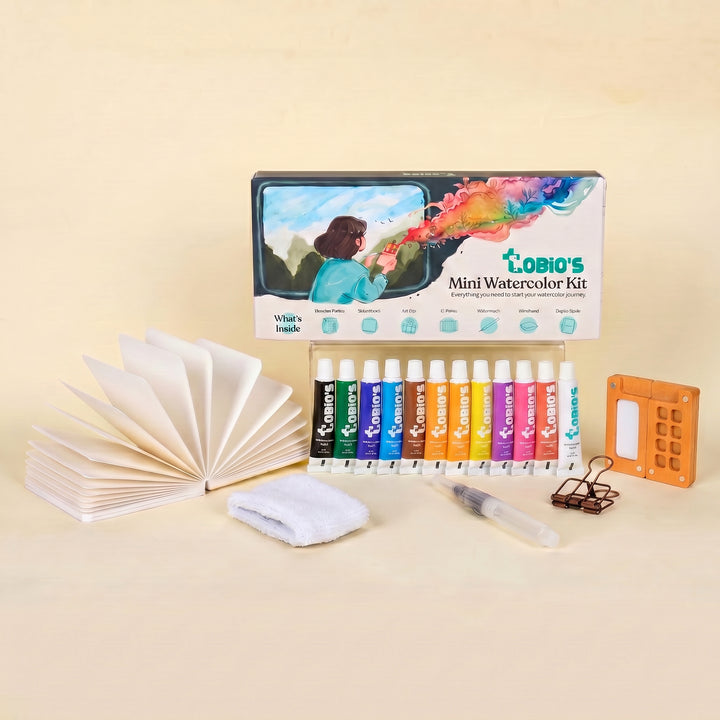
Everything Mel uses in this tutorial: four watercolor pigments, brushes, and 140lb cold-press paper. All in our beginner-friendly kit.
Shop the Kit


