


Watercolor Color Mixing Lab
The Watercolor Color Mixing Lab
Ever wondered how two colors become a third? Drag real pigments onto Tobio's wooden palette below and watch them bloom, swirl, and mix. It's the fun way to learn watercolor color mixing, an interactive mixing chart instead of one you memorize.
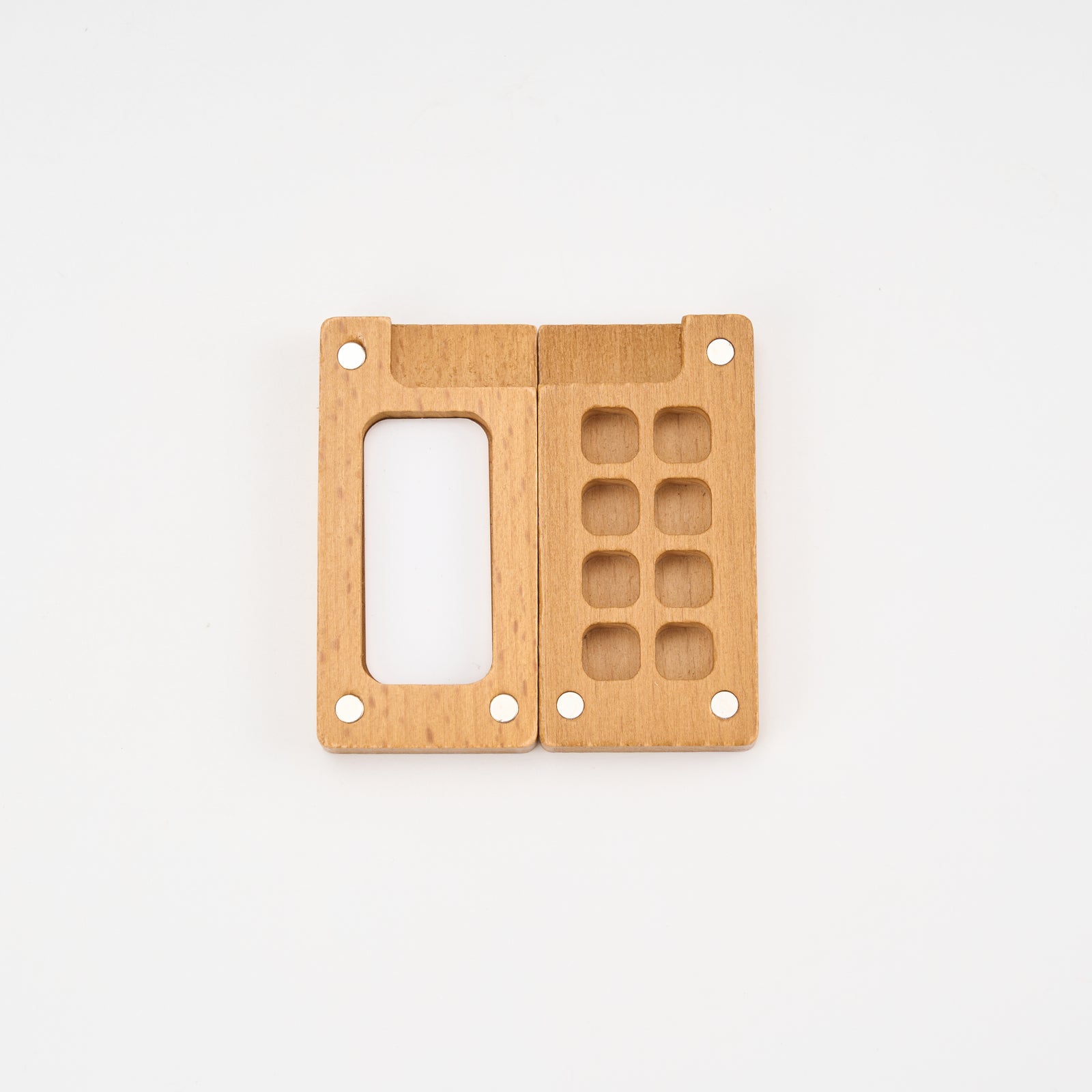
Watercolor Color Mixing Chart: Classic Recipes
Click any recipe card and we'll mix it on the palette for you. This color mixing chart covers the combinations every beginner asks about. Then shift the ratio and see how one extra drop changes everything.
How to Mix Watercolors: Four Golden Rules
Water is a color too
More water = lighter, more luminous washes. Watercolor has no white paint. Your dilution is your white. Notice how the puddle stays paler with fewer drops of pigment.
Two pigments, maybe three
Mixes with 2 pigments stay vibrant. Add a 3rd and you drift toward mud. Useful for shadows, deadly for flowers. Test it in the lab above!
Ratios beat recipes
"Yellow + blue = green" is only the start. 3 yellow : 1 blue gives spring leaves; 1 : 3 gives deep pine. Always mix in small steps.
Swatch before you paint
Keep a scrap strip beside your work and test every mix. Watercolor dries 20–30% lighter than it looks wet.
Color Mixing Questions, Answered
The questions every beginner painter asks, answered in a line or two and provable in the color mixer above.
What colors make green?
Yellow and blue make green. More yellow gives a fresh leaf or spring green; more blue gives deep pine and forest tones. In watercolor, try cadmium yellow + ultramarine, or test the ratio in the mixer above.
What colors make purple?
Red and blue make purple. But because most reds lean orange, the result is often a muted violet. For a vibrant purple, mix a cool, pink-leaning red (rose or crimson) with ultramarine blue.
What colors make brown?
Brown is a mix of complementary colors: blue + orange, red + green, or all three primaries together. Shift the ratio to move from warm chestnut (more red/orange) to cool chocolate (more blue). It's also why over-mixing makes "mud." Brown is what happens when everything meets.
What colors make orange?
Red and yellow make orange. A yellow-heavy 2:1 mix gives bright tangerine; equal parts give a classic warm orange; a tiny touch of blue mutes it into terracotta, beautiful for autumn painting.
What two colors make blue?
None. Blue is a primary color, so you can't mix a true blue from other paints. You can shift a blue you have: a touch of green makes cerulean or teal, a touch of red pushes it toward indigo and violet.
How do you mix black watercolor?
Skip tube black. Mix ultramarine blue + burnt sienna for a rich "chromatic black" that stays lively on paper. Tilt it blue for cool shadows or brown for warm ones. All you need is a good two-pigment palette.
How do you make watercolors lighter?
Add water, not white paint. Watercolor is transparent, so dilution is your white: the more water in the mix, the paler and more luminous the wash. You can see this in the mixer: fewer drops means a lighter color. For guided practice, see our free watercolor tutorials.
Ready to mix for real?
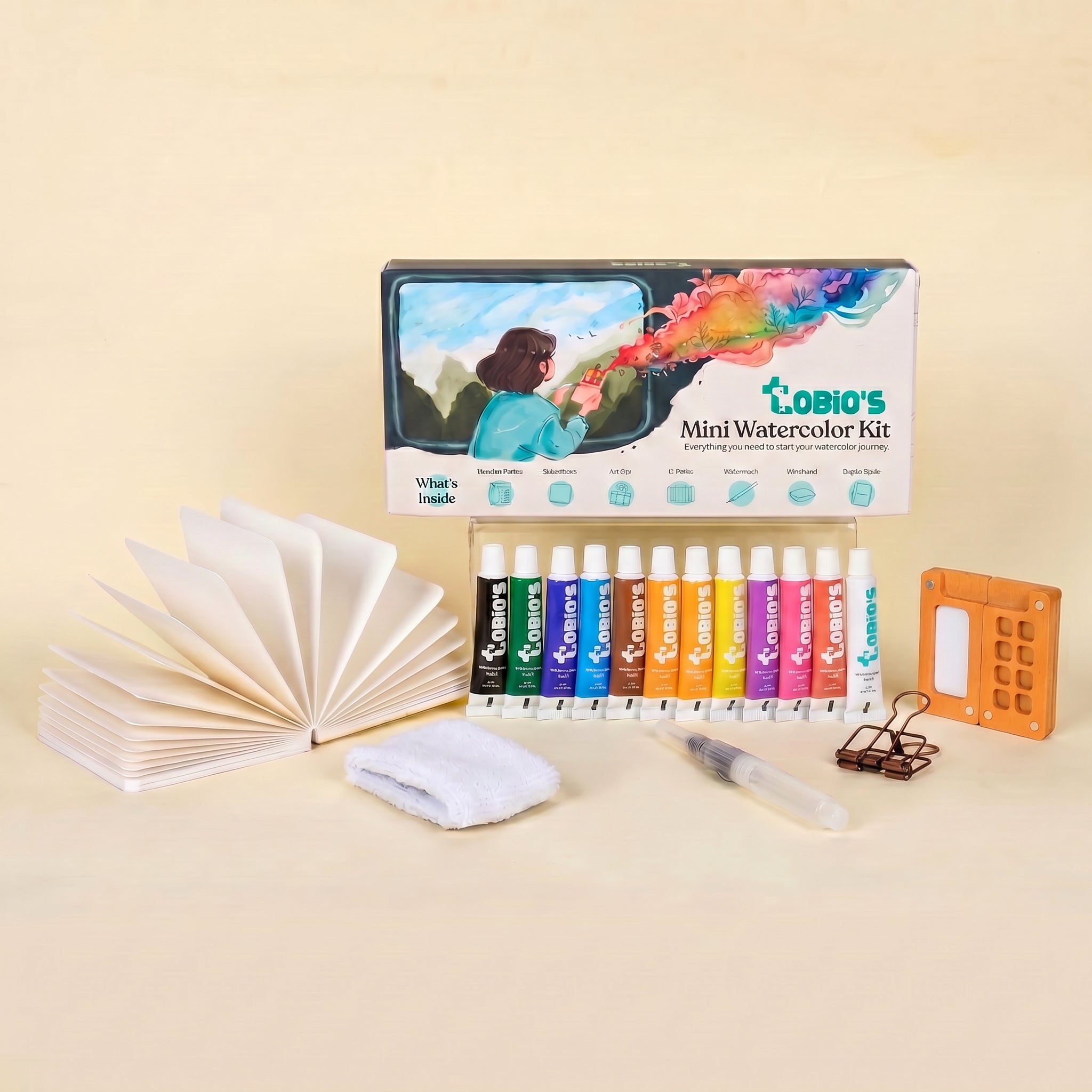
Everything you need in one little box: this very palette, paints, brushes, paper, and a step-by-step guide, so your first real mix looks as good as your virtual one.
Shop the Kit