


Water Brush vs Normal Brush for Beginners: Which One to Start With


What You'll Need
- Decide where you will paint most: a table, or wherever you happen to be
- Watercolor paint, tubes or pans, and paper of 140 lb (300 gsm)
- A rag or paper towel for blotting, plus a cup of water if you choose a normal brush
A water brush is the better first brush for a beginner who wants to paint anywhere, and a normal brush is the better first brush for a beginner who paints at a table. A water brush is a synthetic-bristle brush with a hollow handle that you fill with water and squeeze, so the water arrives at the tip without a cup. A normal watercolor brush has no reservoir, so you dip it in a jar of water every time you load it. Water brush control comes from squeeze pressure on the barrel, and normal brush control comes from how much water you leave in the bristles after dipping and blotting. A water brush gives up some control and shape variety, mostly rounds, in exchange for portability. A normal brush gives you rounds, flats and mops and full control of the water, in exchange for a cup, a rag and a stable surface.
I have used both for years. I also make a watercolor kit with a refillable water brush in it, so I will tell you now where I lean, and where the normal brush clearly wins.
Key takeaways
- Water brush: holds its own water, no cup, easy to carry, harder to control, mostly round tips.
- Normal brush: full water control, many shapes, needs a cup and a table.
- The usual beginner mistake with a water brush is squeezing too hard and flooding the paper.
- Choose by where you will paint, not by which brush sounds more serious.
Should a beginner start with a water brush or a normal brush?
Start with a water brush if you want to paint in short, spontaneous sessions, and with a normal brush if you plan to learn at a table with water nearby. Neither is better in general. Expecting one brush to do everything is the usual mistake.
A water brush keeps painting easy to begin, which matters more than people admit. If getting started takes ten seconds, you paint more often, and that is what improves your painting.

How a water brush works
A water brush works by storing water in the handle and pushing it through the bristles when you squeeze the barrel. Surface tension keeps the water from dripping on its own, so nothing leaves the tip until you press or touch it to paper. A light squeeze gives a damp brush and a firm squeeze gives a wet one. Learning that pressure range is most of the skill.
To use one, unscrew the barrel, fill it with clean water and screw it back on. Squeeze gently until a small bead forms at the tip, touch the bristles to your paint, then paint. To change colors, squeeze water through onto a cloth until it runs clear. Most beginners over-squeeze and get puddles and blooms. Once the brush is loaded, you need less pressure than you think.

How a normal brush works
A normal watercolor brush is a head of natural or synthetic hair in a metal ferrule on a handle, and you control it by dipping, blotting and pressing. The ratio of water to pigment sets how dark, how transparent and how far the paint spreads. For beginners the useful shapes are round, flat and mop. A size 6 or 8 round does fine lines and medium washes, a flat lays even washes over large areas, and a mop holds a lot of water for loose backgrounds.
Natural sable holds a sharper point and carries more water, while synthetic brushes cost less and do the job well for learning. Two jars help, one for rinsing and one for clean water, which keeps colors from going muddy. My guide to brushes for beginners covers which sizes are worth buying.
Pros and cons of a water brush
A water brush is convenient and slightly less accurate, and that trade-off is the whole story. On the plus side:
- No cup needed, so it suits travel and sketching outdoors.
- Easy color changes by squeezing and wiping.
- Good at waking up dry pan paint.
- Light and easy to pack.
On the minus side:
- Limited water control, so it is easy to oversaturate the paper.
- Dry brush texture is harder because the bristles stay moist.
- Fewer shapes, since most are round.
Pros and cons of a normal brush
A normal brush gives you more control and asks for more setup. The pros:
- Full control of the water load every time you dip.
- Many shapes, from fine rounds to broad flats.
- Better for dry brush and detail.
The cons:
- You need a cup, a palette and a rag.
- It is awkward for painting on the spur of the moment.
- Tips need careful cleaning and storage. Leaving a brush tip-down in a jar bends the hairs for good.
What else can a water brush do?
A water brush also lifts color, blends gradients and activates watercolor pencils. To lift paint, press a clean, damp brush onto a dry patch and blot with a cloth, which rescues an area that went too dark. For a soft gradient, rinse the tip and pull a stroke's edge out with clean water. With watercolor pencils, draw first, then dissolve the lines with the brush. I wrote more about that in my watercolor pencils guide.
Which brush suits you?
- You paint on trains, benches, holidays or the sofa: water brush.
- You want a quick start with almost nothing to set up or wash: water brush.
- You paint at a desk and like control: normal brush.
- You want dry brush texture, flats or fine detail: normal brush.
- You cannot decide: buy one of each and see which one you pick up.
The Tobio's Watercolor Kit ($36) includes a refillable water brush, so you can paint without a cup. It is not for you if you want a full set of brush shapes or artist-grade paint, and some customers find the paint lighter than they expected. If you later want more sizes, 4 extra water brushes cost $6.99.
Questions people ask about water brushes
Are water brushes good for beginners?
Yes, for most beginners. They remove the setup and most of the cleanup, so you paint more often. They are less suited to fine detail and dry brush work, where a normal brush is easier to control.
Can you use a water brush with regular watercolor paint?
Yes. A water brush works with tube and pan watercolors, watercolor pencils and some inks. Touch the damp bristles to the paint to pick up pigment, the same as a normal brush. The water comes from the handle, so no cup is needed.
How do you clean a water brush?
Mid-session, squeeze water through onto a cloth until it runs clear. Afterwards, unscrew the barrel, empty it and rinse both parts under a tap. If paint reaches the ferrule, work a little brush soap into the bristles, rinse, and let it dry tip up or flat.
Do I need both kinds of brush?
Not at the start. Pick the one that fits where you paint, and add the other when you notice what is missing. If you are choosing a first set of supplies, my beginner supplies guide lists what is worth buying.
Let the place decide the brush
You do not have to settle this before you start. If you paint on the sofa, on a train or on a park bench, use a water brush. If you paint at a table with a cup of water beside you, use a normal brush. Most people end up owning both within a few months.
Full disclosure: I make a kit with a water brush in it, so I lean portable.
Mel, FounderLike these guides? Set Tobio's as a preferred source on Google and our pages will show up first when you search for watercolor questions.
Keep reading

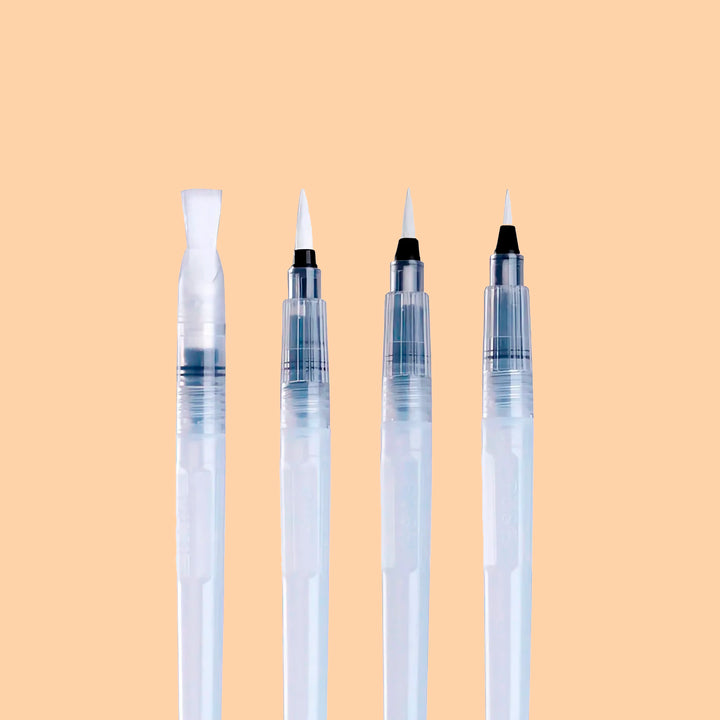
If you want to try the water brush route
Four water brushes in different sizes and tip shapes, so you can find the one that suits your hand. $6.99.
- 4 brushes in different sizes and tip shapes
- Fill the barrel once, no cup needed
- Works with tube and pan watercolor
- Rated 4.84/5 from 320 reviews

4.84/5 from 320 reviews


