


Watercolor Workbook vs. Sketchbook: Which Should You Use?


What You'll Need
- A guided workbook — pre-printed illustrations to paint over
- A blank sketchbook — start from scratch
- 300 gsm (140 lb) cotton watercolor paper
- Your paints, water, and a brush
Right now I have a stack of books on my desk. Tobio — my cat — usually naps on them, but today he’s favoring my lap. One of the books is all blank pages, waiting for someone to bring paint and make them come alive. The other is just as eager, but already has pre-sketched drawings on 30 of its 60 pages.
Both fill a specific role. If you look at a blank page and think “Help! Where do I even start?”, the pre-sketched one is probably your thing — you begin with a ready illustration and don’t have to think about drawing. If you’ve got a bit more experience, an empty page you can make your own might feel more exciting. Most people start guided and graduate to blank once they’ve learned the basics — but whatever feels good to you is the right answer.
This is one of the things we get asked about most. It’s not that one is better than the other; it’s that one might be better for where you are right now. So let me walk you through both.
The quick answer
A workbook comes with illustrations already printed on the pages — you just mix your color with water and paint directly over them. A sketchbook comes with blank pages; you start from scratch (and do the drawing first, if you like).
Never painted before? Start with a workbook. It removes so much of the decision-anxiety beginners feel — no staring at a blank page while it stares back with a question mark. Instead you can focus on learning technique, getting to know your brush, and finding out which subjects you love most.
What a watercolor workbook actually is
When choosing a workbook, check that the paper is made for watercolor and not for markers or crayons — it needs to hold water and take a wash. Think of it like a coloring book, but on watercolor paper.
Our Beginners Workbook ($12.99) has 30 pre-sketched illustrations plus 30 blank pages, so you can warm up on the guided pages before moving to blank ones — or mix and match. The Watercolor Kit ($36) comes with a regular blank sketchbook plus a separate guide book that teaches technique, so if you want printed illustrations, the workbook is the thing you add. (The guide book is where you learn; the sketchbook is where you paint.) Want a themed edition instead of the standard one? We have a whole workbooks collection, from seasons to holidays to a mom-themed one.
Quick note on “student-grade,” since you’ll hear it a lot: it refers to pigment load and lightfastness, and sits below artist-grade. It’s cheaper, and as a beginner you’ll never notice the difference. If you’re curious, there’s even a published standard for what a watercolor label should tell you.
What a watercolor sketchbook actually is
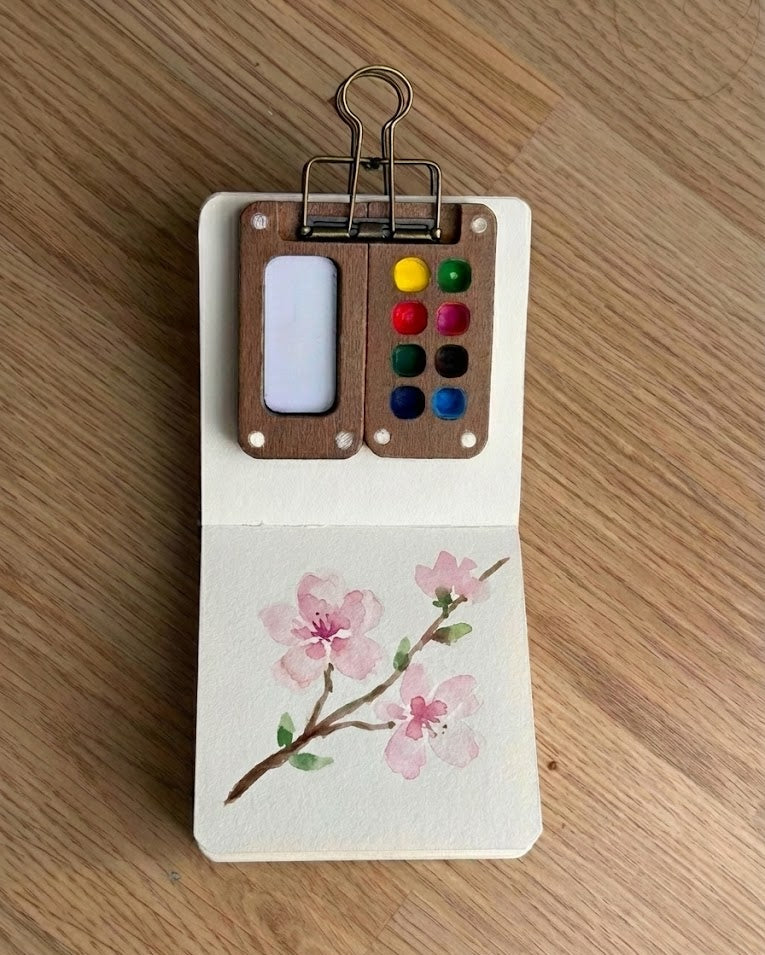
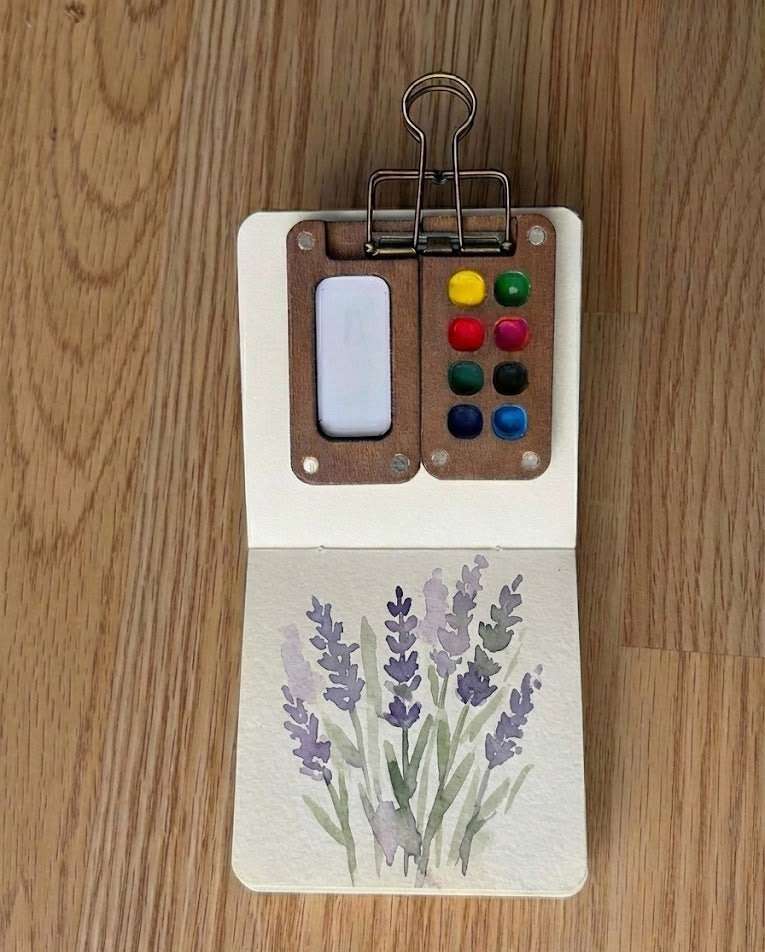
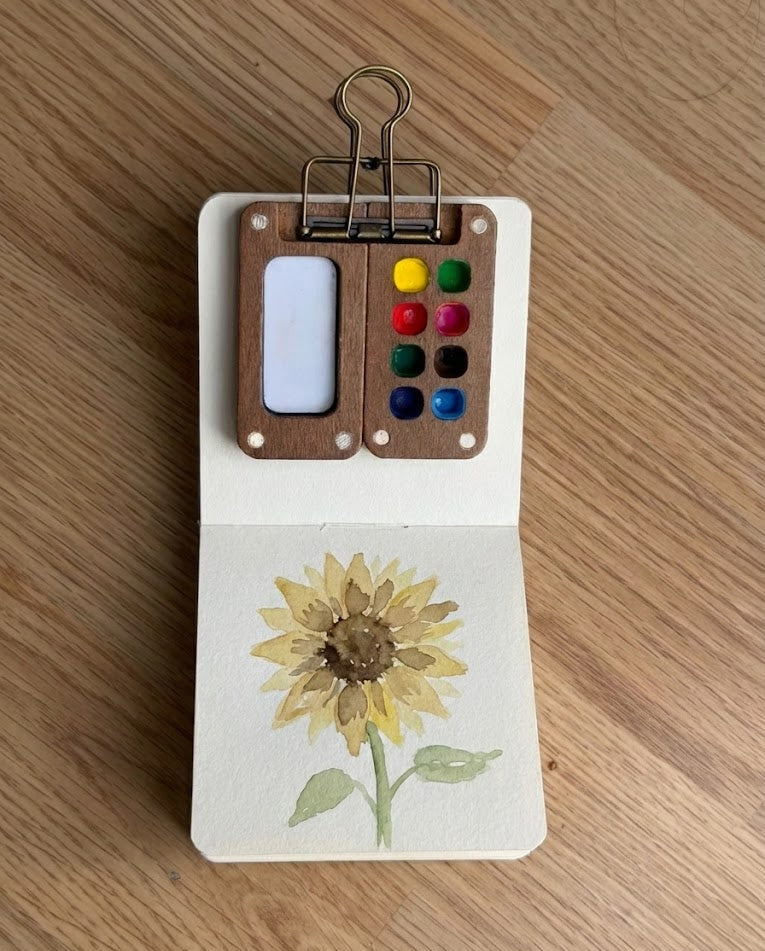
A sketchbook is what comes in the Watercolor Kit ($36): all blank pages, no illustrations. The paper is still watercolor paper, so it takes water just like the workbook. Blank pages can feel scary or liberating — you get to make something fully your own. Sketch your composition in pencil, ink it with a waterproof pen, erase the pencil, then paint on top.
Need more room? The Professional Sketchbook ($7.99) adds 60 more blank pages — handy if you want spares so you’re not scared to “waste” a page (a fear I hear about constantly). For more options, see our sketchbooks and workbooks collection. Just remember: a sketchbook is free painting — on its own it has no step-by-step exercises. That’s what the guide book and our tutorials are for.
Which one suits you right now
Ask yourself: are you more comfortable starting with a little inspiration already gathered for you, or would you rather freestyle? If a blank page makes you freeze, go with the workbook — it’s like training wheels, and it’s a very chill way to start. It’s also best for building a habit, because you can just sit down and paint.
If starting from zero is your jam, the sketchbook gives you freedom to find your own style. And you can always do both, alternating by mood — plenty of advanced painters still love workbooks for the pure play of color without the pressure of composition.
Paper weight is the part everyone skips
All our sketchbooks and workbooks use the same high-quality 300 GSM cotton. GSM is just how much a square meter of paper weighs (it’s standardized under ISO 536) — higher number, thicker sheet, less trouble. For watercolor, 300 gsm (140 lb) is the industry default: it takes many washes without buckling or warping.
Below 200 gsm, one generous wash can wreck the page — which is exactly why a general-purpose drawing pad disappoints the first time you use real water in it. Say you’re painting an evening sky: you wet the paper, drop in Twilight Indigo and Glacier Blue, and let them blend into a smooth gradient. On 300 gsm it stays flat (flat is good). On cheap 120 gsm it pools into blotches and dries bubbly and uneven.
The kit’s notebook is 300 gsm cotton for exactly this reason. Want the deep dive? I’ve written about the best watercolor paper separately — and how much water you carry on the brush matters nearly as much as the sheet, which is a skill of its own.
Why not both
Once you’re past the first few weeks, the setup I actually recommend is one of each, open at the same time — the workbook is half-built for this already (that’s what the 30 blank pages behind the printed ones are for).
Use the workbook as a ten-minute warmup: paint one printed illustration with zero pressure to get into the vibe, then paint the same subject from scratch on a blank page beside it. It’s okay if it’s not perfect. Somewhere in there you’ll start noticing how your materials behave — usually around getting a strong dark — which is where tubes vs pans becomes a real question rather than a shopping detail.
Still making up your mind?
Scared of the blank page? Start guided. Ready to fly? Go blank. Either way, the beginner’s guide and the watercolor tutorials hub have plenty to paint while you decide.
Frequently Asked Questions
What is the difference between a watercolor workbook and a sketchbook?
A workbook has designs pre-printed on the page for you to paint over. A sketchbook is blank, with no illustrations. Both are made of cotton watercolor paper.
Should a beginner use a workbook or a sketchbook?
A workbook is a great place to start — it removes the subject-choosing step that stops most beginners before they begin, and you build the habit much faster.
What weight paper does a watercolor sketchbook need?
300 gsm (140 lb) is the standard, safe choice. Around 200 gsm copes with light washes. Below that, expect buckling as soon as you use real water.
Can you paint watercolor in a normal sketchbook?
You can, but the paper will buckle, colors look duller, and heavy washes may bleed through. Fine for pencil sketching with a light wash on top; for actual watercolor, use watercolor paper.
Pick the one that solves this week’s problem
Both books are great — it’s really about what suits you. Scared of the blank page? Start guided with the Beginners Workbook ($12.99). Running out of room? The Professional Sketchbook ($7.99) gives you 60 more blank pages. Most painters end up owning both.
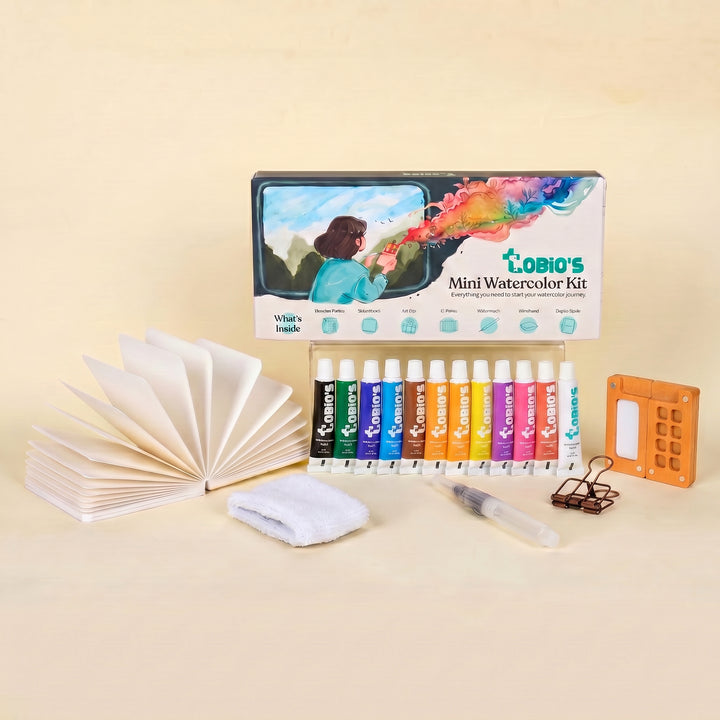
And if you don’t have any supplies yet, the Watercolor Kit ($36) covers the palette, paints, brush, and paper to use them on.
Mel, FounderLike these guides? Set Tobio's as a preferred source on Google and our pages will show up first when you search for watercolor questions.
More watercolor tutorials
No supplies yet? Start here
The magnetic walnut palette, twelve student-grade paints, a water brush, and a 300 gsm cotton sketchbook — everything you need to start painting in one pocket-sized box.
Get the Tobio’s Watercolor Kit


