


Wet on Wet Watercolor Technique: A Step-by-Step Guide for Beginners


What You'll Need
- 100% cotton watercolor paper, 140 lb / 300 gsm
- A soft round brush or a refillable water brush
- Watercolor paint, mixed to the thickness of milk
- Clean water and a paper towel for blotting
Wet on wet watercolor is a technique where wet paint is applied to paper that is already wet. The water on the paper spreads the pigment, so colors blend into each other and dry with soft edges.
Wet on wet at a glance
- Also called Wet-in-wet, wet-into-wet
- Result Soft, blended edges
- How wet the paper should be Even shine, no puddles
- How thick the paint should be Like milk, thicker than the water on the paper
- Best paper 100% cotton, 140 lb (300 gsm)
- Best for Skies, clouds, sunsets, backgrounds, soft petals
- Opposite technique Wet on dry, which gives crisp edges
- Drying time 10 to 20 minutes for a light wash
What is wet on wet watercolor?
Wet on wet watercolor is the technique of touching wet paint into wet paper. The paper is wet first, with clean water or with a wash that is still damp.
Wet on wet works because pigment follows water. The color drifts out from the brush and fades at the edges, and two colors placed side by side mix on the page. Paint stops where the wet area stops, so the shape you wet is the shape you get.
How wet should the paper be for wet on wet?
The paper should be shiny for wet on wet: an even gloss with no standing water. Tilt the page toward the light to check. Paper passes through four stages as it dries.
- Puddle: water pools and moves when you tilt the page. Too wet. Blot it.
- Shiny: even sheen, no standing water. The right moment. Color spreads widely and softly.
- Damp: matte but cool to the touch. Color spreads a little. Use thicker paint here.
- Dry: wet on wet is over. New paint keeps a crisp edge.
I got this wrong for months. I thought wet on wet meant lots of water, so my pages dripped and the color ran onto the table. Shiny, not dripping, is the whole secret.
How thick should the paint be for wet on wet?
The paint for wet on wet should be about as thick as milk, and always thicker than the water on the paper. Wet paper dilutes every stroke and watercolor dries lighter, so a mix that looks too strong on the palette dries about right.
- Tea: mostly water. Too thin for wet on wet. It fades and causes blooms.
- Milk: flows easily, clearly colored. The standard mix for shiny paper.
- Cream: thick and rich. For darker, tighter shapes on damp paper.
The rule: the wetter the paper, the thicker the paint. A brush that carries more water than the paper leaves a bloom.
Mix your paint first
Mix each color to milk thickness before any water touches the paper. Wet paper starts drying as soon as you stop brushing. In the Tobio's Watercolor Kit, wake up two or three wells with a drop of water each.

Wet the paper with clean water
Brush clean water over the exact shape you want to paint, in even, overlapping strokes. Go over it twice so the water sinks in. The paint will go wherever the water went and nowhere else.
Check the shine
Tilt the page toward the light. An even sheen with no puddles means go. Blot any pooled water with a paper towel, and rewet the whole shape if part of it has turned matte.

Touch in the first color
Touch the tip of the loaded brush to the wet paper and watch the color spread. Use light dabs or one slow stroke, then lift the brush away. The less you push the paint around, the softer it looks.
Add a second color and let the two meet
Rinse the brush and touch the second color in next to the first, leaving a small gap of wet paper. The two colors blend on their own. Stay with two colors while you learn; three wet colors that all touch tend to turn brown.
Leave it flat until it is completely dry
Lay the page flat and leave it alone. A light wash on 300 gsm cotton paper dries in 10 to 20 minutes. The paper is dry when it no longer feels cool. Only then add details on top.
Three easy wet on wet exercises for beginners
These three wet on wet exercises take about fifteen minutes and fit on one sketchbook page.
1. The three squares. Wet three small squares. Touch the same blue into the first while it is puddled, the second while it is shiny and the third once it is damp. Label them. That is your own reference for each stage of wetness.
2. The two-color sky. Wet a rectangle. Touch Sunset Orange along the bottom and Electric Rose along the top, and let them meet. This is the start of every watercolor sunset.
3. The soft cloud. Wash Glacier Blue over a wet rectangle, then press a crumpled tissue into the wet paint and lift. The white shapes are soft-edged clouds. The clouds guide takes this further, and the flowers guide uses the same idea for petals.
What is the difference between wet on wet and wet on dry?
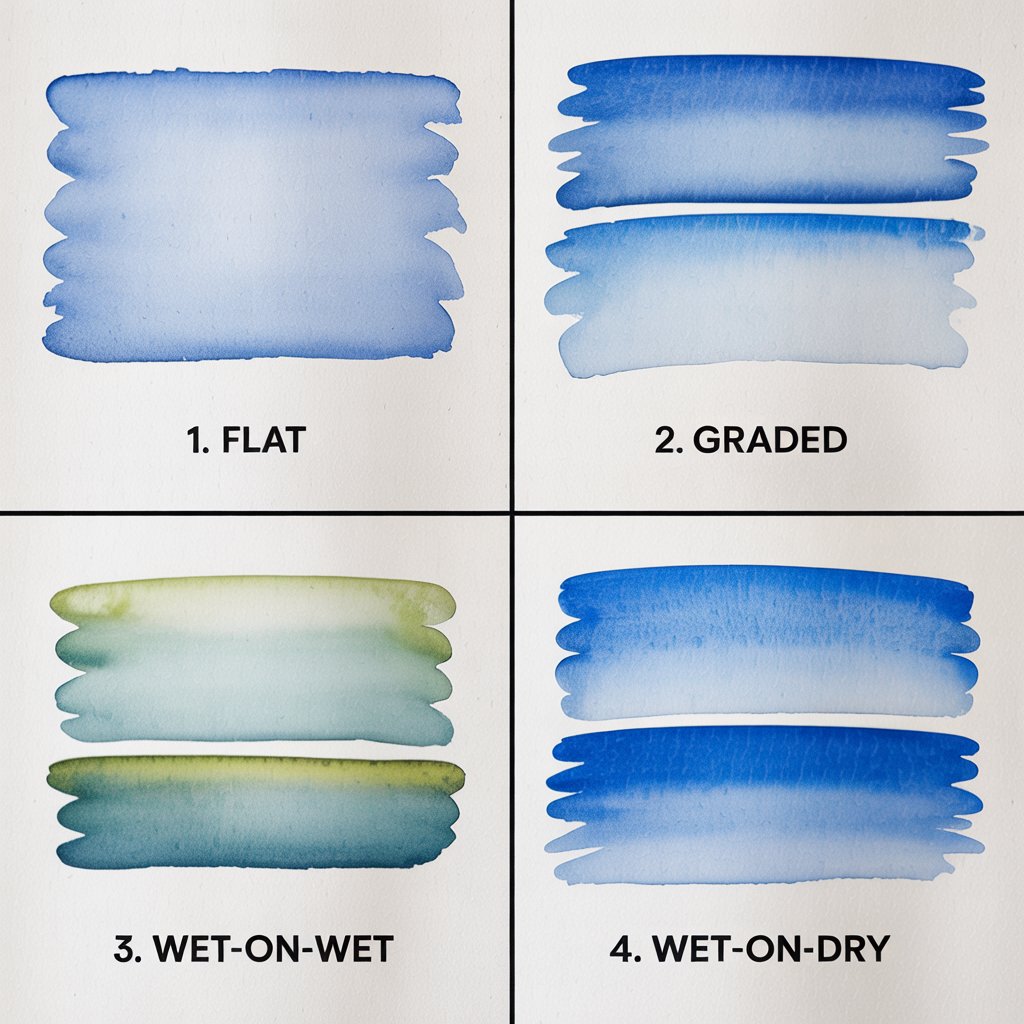
Wet on wet is wet paint on wet paper and gives soft, blended edges. Wet on dry is wet paint on dry paper and gives crisp, controlled edges. Most paintings use wet on wet for the first layer and wet on dry for the details on top.
- Edges: wet on wet is soft. Wet on dry is sharp.
- Control: wet on wet is loose. Wet on dry stays where the brush puts it.
- Color: wet on wet dries lighter. Wet on dry dries stronger.
- Best for: wet on wet for skies and backgrounds. Wet on dry for details and outlines.
My wet on dry guide covers the other half. A thin wet on dry layer over a dry wash is called glazing.
Wet on wet problems and how to fix them
- Blooms (cauliflower shapes): a wet brush touched paper that had started to dry. Stop adding water once the shine has gone, or use thicker paint.
- Hard, blotchy edges: the paper was too wet. Blot puddles before you paint.
- Paint ran too far: paint follows the water. Wet a smaller shape, or wait until the paper is damp.
- Colors dried pale: the mix was too thin. Use milk or cream thickness.
- Colors turned muddy: too many colors met while wet. Use two at a time and stop stirring.
- Paper buckled: the paper was too thin. Use 300 gsm cotton, or tape the sheet down as in my paper stretching guide.
What paper is best for wet on wet watercolor?
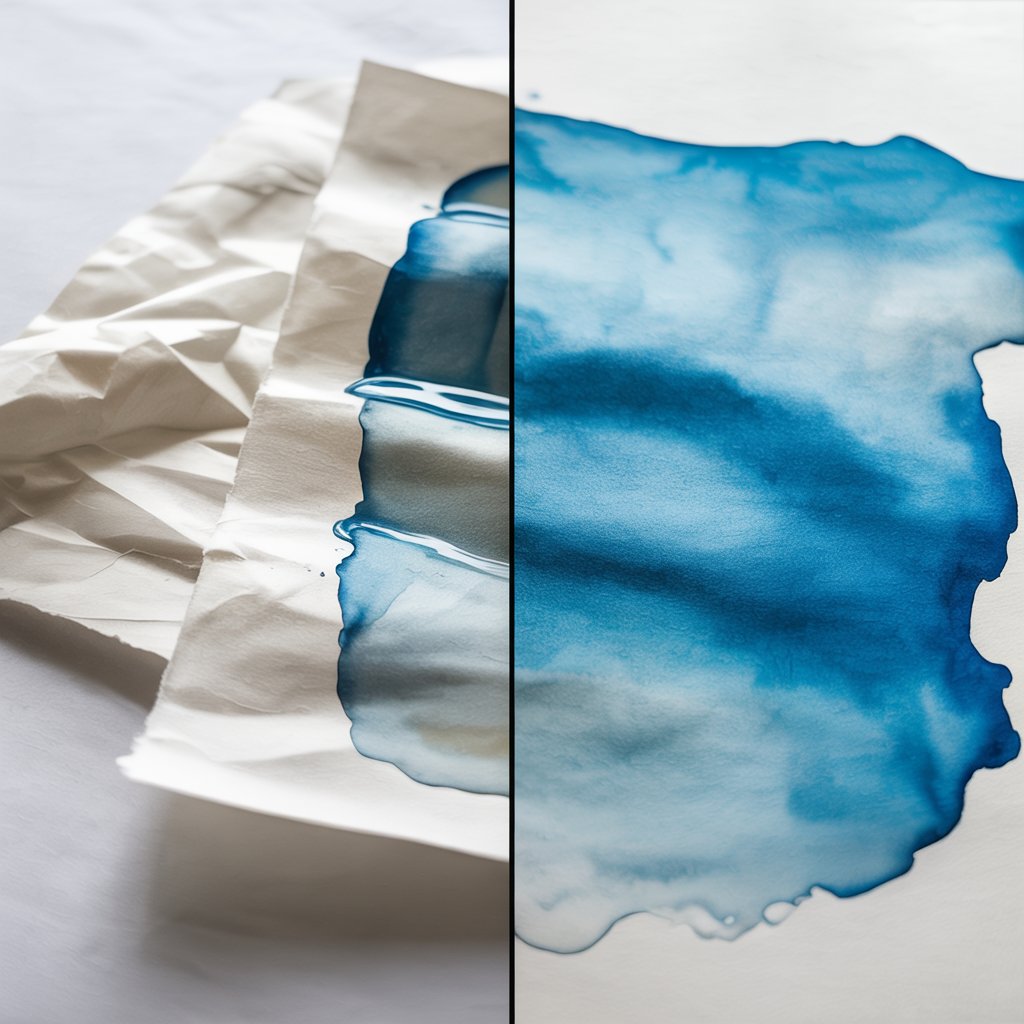
The best paper for wet on wet watercolor is 100% cotton paper of 140 lb (300 gsm). Cotton absorbs water evenly and releases it slowly, so the surface stays shiny for longer and the sheet stays flat. Wood-pulp paper dries faster and in patches.
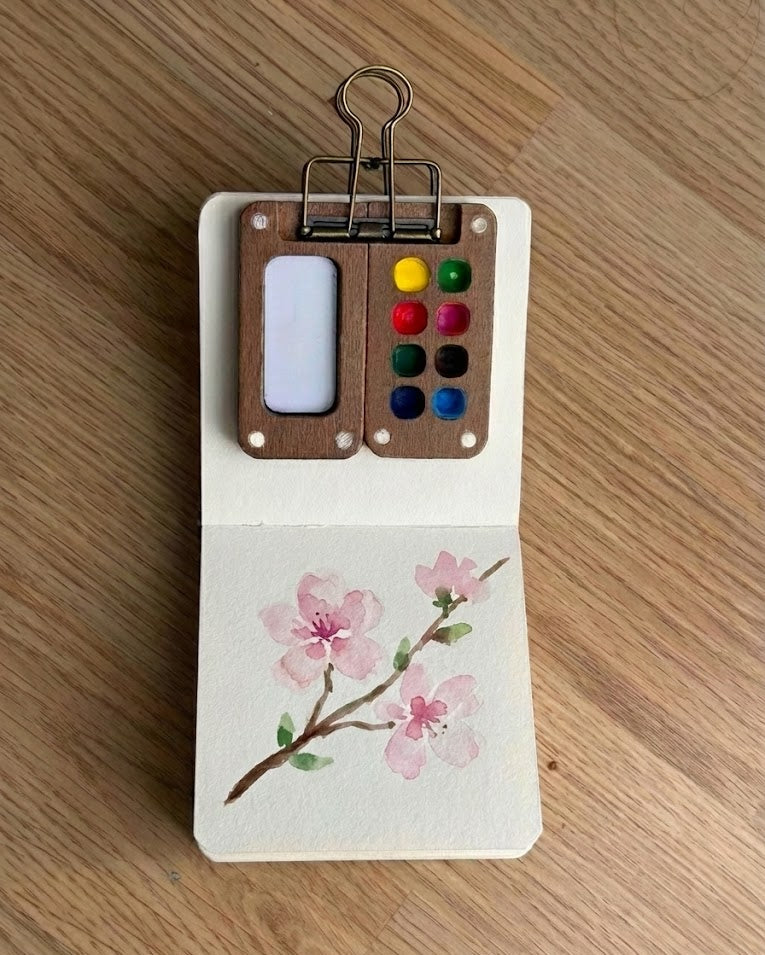
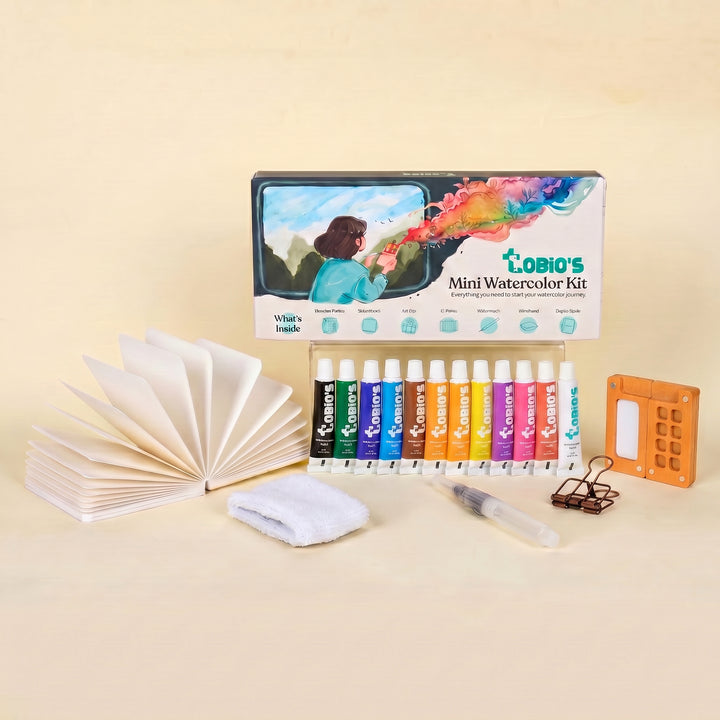
The sketchbook in the Tobio's Watercolor Kit is 100% cotton at 300 gsm, and the kit includes a refillable water brush. For more practice pages, an extra sketchbook is $7.99, and the 4 Extra Water Brushes set is $6.99.
Questions people ask about wet on wet watercolor
What is the wet on wet watercolor technique?
Wet on wet is a watercolor technique where wet paint is applied to paper that is already wet. The water spreads the pigment, so colors blend and dry with soft edges. It is also called wet-in-wet or wet-into-wet.
How wet should the paper be for wet on wet?
The paper should have an even shine with no puddles. Tilt it toward the light to check. Blot standing water with a paper towel, and add a little water if part of the area has turned matte.
What is the difference between wet on wet and wet on dry in watercolor?
Wet on wet is wet paint on wet paper and gives soft, blended edges. Wet on dry is wet paint on dry paper and gives sharp, controlled edges. Most paintings use wet on wet for the first layer and wet on dry for the details.
What type of paper is best for wet on wet watercolor?
100% cotton watercolor paper at 140 lb (300 gsm) is best. Cotton stays evenly wet for longer and does not buckle under a normal wash.
Why do I get blooms or cauliflowers in wet on wet?
Blooms form when a brush that is wetter than the paper touches a wash that has started to dry. Add paint only while the paper is shiny, or use thicker paint once it is damp.
Is wet on wet watercolor the same as the Bob Ross wet on wet technique?
No. Bob Ross painted in oils, and his wet on wet technique (also called alla prima) means putting wet oil paint over wet oil paint. In watercolor, wet on wet means wet paint on paper that is wet with water.
How long does wet on wet watercolor take to dry?
A light wet on wet wash on 300 gsm cotton paper usually dries in 10 to 20 minutes at room temperature. A hair dryer on low, held back from the page, shortens that to a couple of minutes.
Shiny paper, thicker paint
Wet the paper until it has an even shine with no puddles. Load the brush with paint that is thicker than the water on the page. Touch the color in and let the water do the moving.
Use wet on wet for the soft layer, let it dry, then paint the sharp details on top with wet on dry.
Mel, FounderLike these guides? Set Tobio's as a preferred source on Google and our pages will show up first when you search for watercolor questions.
Practice wet on wet on these


Ready to try it yourself?
Everything you need for wet on wet in one pocket-sized kit: 100% cotton 300 gsm paper that holds water, a refillable water brush and twelve colors that blend cleanly.
Get the Tobio's Watercolor Kit


