


Easy Watercolor Paintings for Absolute Beginners (Step by Step)


What You'll Need
- Watercolor paints — a small student-grade set
- Watercolor paper, around 140 lb / 300 gsm
- A water brush or a soft round brush
- A cup of water and a paper towel for blotting
One of the first things I ever painted with watercolor was a lavender sprig. It wasn’t perfect — it looked more like a caterpillar than a flower — but I loved the process, and it still ended up on the fridge. Sometimes you just have to celebrate the little wins.
When you’re getting started, a blank page can feel intimidating: you don’t know what to paint, let alone how. So here are five of my favorite things to paint as a beginner — easy, fun, and very satisfying.
Before you start
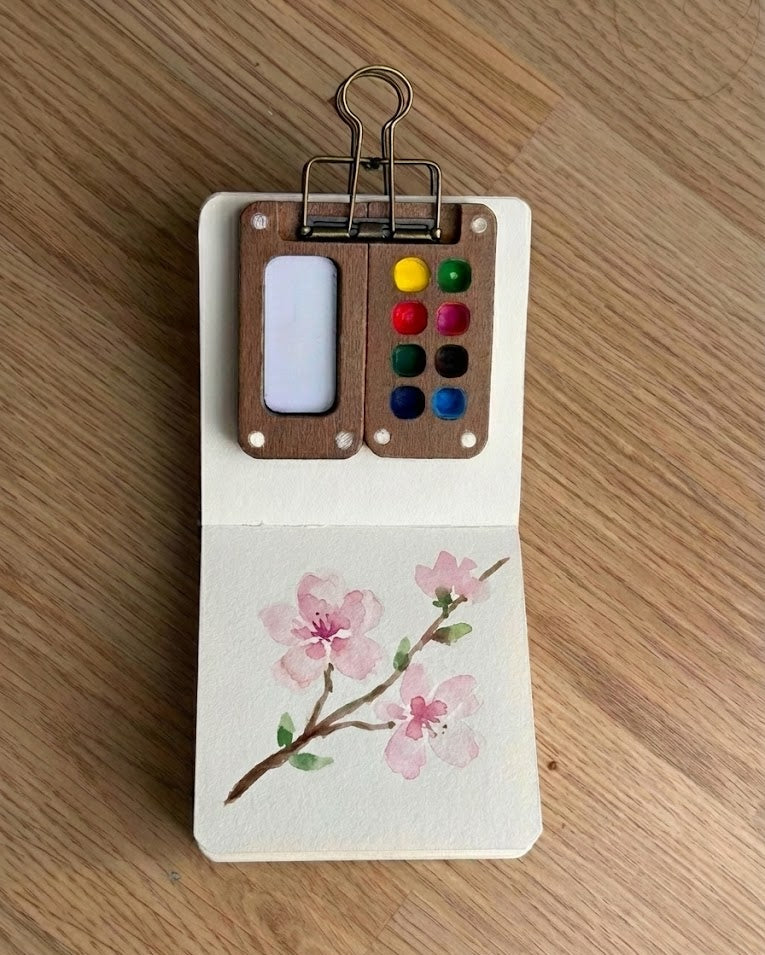
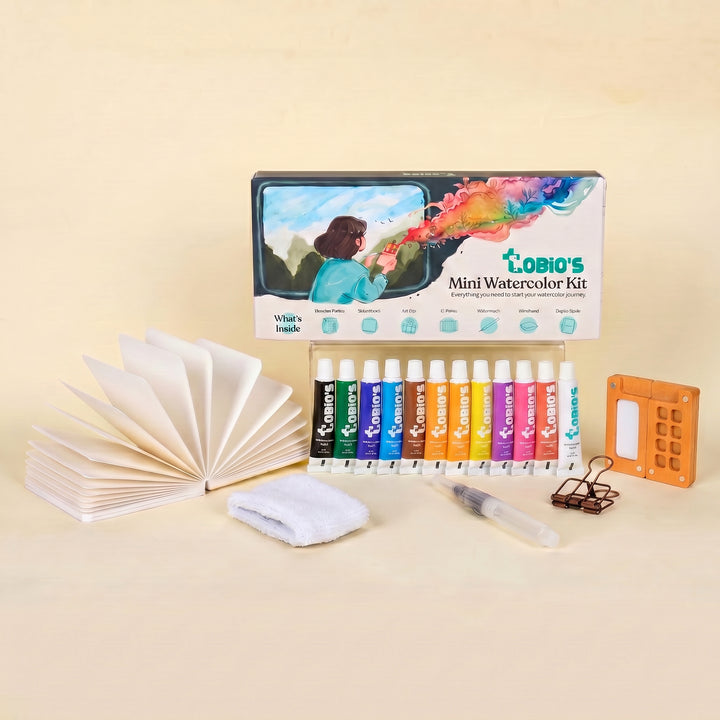
You’ll need a few supplies: paints, paper, a palette or somewhere to mix, and a cup of water. If you don’t already have them, our Watercolor Kit has everything in a single package, so you can skip the shopping trip and start right away. It’s designed to travel and paint on the go, so it’s miniature — if you love big canvases the size might feel small, but if you like a portable, non-intimidating format, you’ll love it. Want to compare or go deeper on supplies first? My beginner’s guide to watercolor gives you the full rundown.
A few things to keep in mind: work light to dark (you can always deepen a color later, but you can’t lighten one once it’s dry), watch your water (too much and colors bleed further than you want; too little and they won’t blend), and let each layer dry before adding the next. Patience is the secret trick.

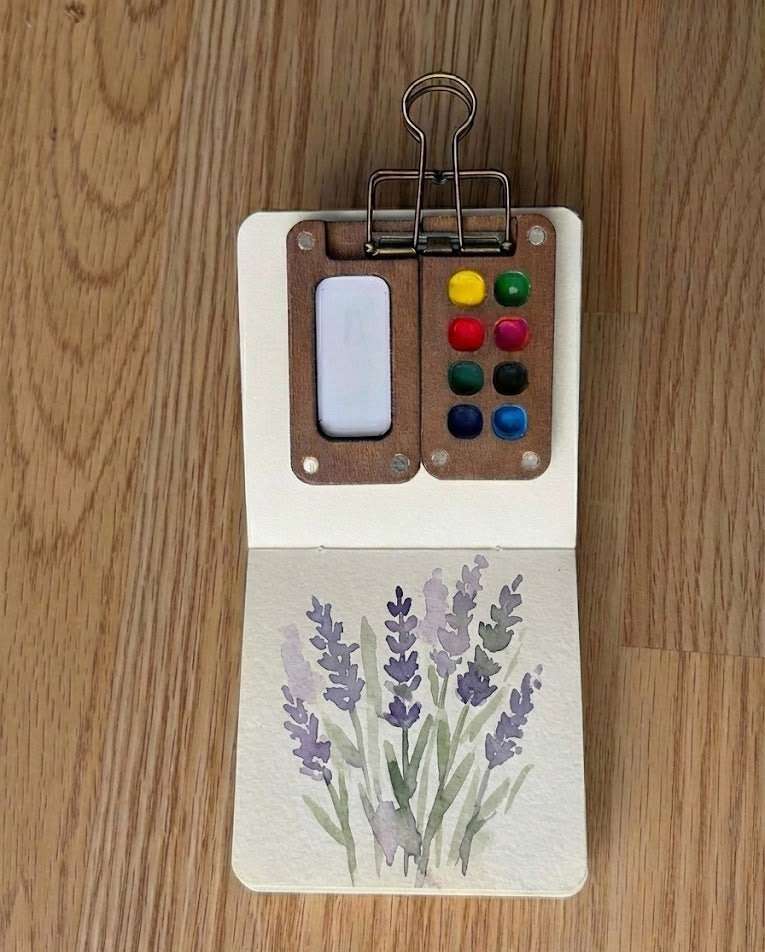
Loose lavender sprig
Time: about 10 minutes.
- Load your brush with a purple and paint a thin, slightly curved vertical line for the stem.
- Working up the stem, dab small oval strokes on alternating sides. Don’t aim for identical shapes — uneven is what makes it look like a real sprig.
- While the little shapes are still wet, touch a slightly darker purple to the base of a few and let it bleed upward. That gives each bloom depth without any blending work.
- Once everything is dry, add a few thin green leaves along the lower stem the same way.
Want the fuller version? My paint lavender tutorial walks through the extended technique.

Simple sunset
Time: about 15 minutes.
- Wet the top two-thirds of your paper with clean water.
- While it’s still shiny, drop your lightest warm color in near the horizon and let it bloom upward. Tilt the paper a little for extra effect.
- Add a slightly deeper warm color just above it, letting the two mix where they meet for a gorgeous gradient.
- Let the whole sky dry completely. Be patient!
- Paint a simple, flat, dark silhouette across the bottom — a tree line, a few hills, anything with a clear shape.
This is the wet-on-wet method that makes the softest, dreamiest skies. My full sunset walkthrough covers the technique in more depth, including how to add a water reflection.

A single poppy
Time: about 10 minutes.
- Paint four or five loose, rounded petal shapes in a circle, leaving small gaps between each petal.
- While the petals are still wet, touch a deeper red or orange into the base of each one and let it bleed toward the tip.
- When it’s dry, add a small dark circle in the center, then a few short, thin black lines radiating out from it.
- Add a thin green stem and one or two simple leaf shapes — and there’s your little poppy.
A single poppy is forgiving because real poppies are never symmetrical. To go further, my how to paint a rose tutorial and my broader how to watercolor flowers guide are two great places to continue.

Cactus in a pot
Time: about 15 minutes.
- Paint a simple rounded or columnar shape in a mid-tone green as the cactus body.
- While it’s still wet, add a slightly darker green down one side to suggest shading and let it blend into the lighter green.
- Once dry, add a simple pot underneath in any color you like — terracotta is my favorite.
- Finish with small white or very pale dots for spines, or skip them if you prefer.
- Looking flat? Add one more layer of shading with a touch more water and a darker green on one side.
For more cactus shapes and lots of pots, my dedicated paint a cactus tutorial has several to try.

Abstract wash card
Time: about 5 minutes.
This is the fastest one on the list — perfect if you only have a few minutes, or want a low-pressure warmup before something more detailed.
- Wet a small, card-sized area of paper with clean water.
- Drop in two or three colors you like together and let them bleed and blend on their own.
- Tilt the paper gently to encourage the colors to drift into each other and form gradients.
- Let it dry completely, then fold it into a card or trim it into a bookmark.
There’s no wrong way to do this one — it’s a genuinely low-stakes way to warm up your hand and get a feel for how your paint moves.
Where to go next
These five are a great place to start, and they’ll give you a real sense of what you enjoy painting most. For a bigger list of subjects and in-depth guides, dive into our watercolor tutorials hub — or keep practicing with guided prompts in the Beginners Workbook ($12.99).
And there’s a reason painting feels so lovely beyond making something pretty: creative activities like this have documented calming effects. Harvard Health notes the benefit doesn’t depend on how skilled you are — it’s the process itself that helps, not the finished piece. So enjoy the process and don’t worry about perfect.
Frequently Asked Questions
What is easy to paint with watercolor?
Start with simple shapes and forgiving, organic subjects. Skip anything with lots of detail, complex shadows, or mixed techniques.
What should a beginner paint first?
Flowers, plants, and nature scenes with simple shapes are the most forgiving. Fruit, hot-air balloons, simple landscapes and sunsets, feathers, and mushrooms are great too.
What are simple watercolor paintings for beginners?
Paintings without much detail — aim for loose strokes and basic shapes rather than fine detail or exact linework.
How do you paint something easy in watercolor?
Work light to dark, keep your shapes loose and organic, and let the water do some of the blending. Don’t overwork each stroke, and always let the layers dry.
Stop waiting for talent
Pick one painting, work light to dark, and let your first try be a little wobbly. Stop waiting for talent and just have fun — it grows with practice.
Want everything in one box? The Watercolor Kit ($34) has the paint, paper, and brush ready to go, and the Beginners Workbook ($12.99) gives you more guided pages once these five are done.
Mel, FounderMore watercolor tutorials
Everything you need to start tonight
The paint, the cotton paper, the water brush, and a pocket-sized wooden palette — all in one beginner-friendly kit, so you can paint your first of these five right now.
Get the Tobio’s Watercolor Kit


