


Watercolor Paintings of Frogs: Step-by-Step Tutorial


What You'll Need
- Paper
- Brushes
- Paint colors
- Palette
- Water cup
- Pencil
Color Palette
Forget hyper-realistic biology textbooks. If you've been wanting to create those charming, character-filled watercolor paintings of frogs but always end up with a sad green puddle, you are in the right place. The trick isn't having "artist hands", it's embracing the loose, joyful, and slightly chaotic nature of watercolor in a sketchbook style.
This tutorial is built for speed, fun, and capturing the soul of these little creatures in under 20 minutes. We aren't worrying about anatomical perfection or precise details; we are celebrating soft washes, happy blooms, and simple spots that make each frog unique. This style is fast, forgiving, and guaranteed to make you smile.
Ready to make a splash? Grab your sketchbook and let's get messy!
The Supplies (Keep it Simple)
- Paper: 140lb / 300gsm Cold Press watercolor paper. (A small square or sketchbook page is perfect).
- Brush: A Round Brush (Size 6 or 8) and a small detail brush (Size 2).
- Paints: See our "Pond Friends" palette below.
The Color Palette
Based on the bright, cheerful study above, we are using a very limited, cool palette for our watercolor paintings of frogs:
- Sap Green: For the main, lively body of both frogs.
- Ultramarine Blue: To add cooler depth for shadows on the bellies and chin.
- Burnt Sienna: To mix with Sap Green for the varied warm spots.
- Lamp Black (or Payne's Gray): Just a tiny amount for the expressive eyes and smiles.
Step-by-Step: Your Expressive Frogs Watercolor Painting
Ready to create some charming, character-filled watercolor paintings of frogs? This tutorial is all about capturing the friendly, curious spirit of these pond dwellers in a loose, approachable sketchbook style. We are not aiming for rigid perfection. Instead, we'll celebrate soft washes, happy blooms, and those distinctive spots that make each frog unique.
This 20-minute study will guide you through a simple limited palette, help you gesture a frog from basic shapes, and show you fundamental techniques like wet-on-wet blending and soft layering to effortlessly build dimension. By the end, you'll have your very own friendly creature staring back at you and a deeper confidence in letting the paint take the lead.
Ready to make a splash and start your expressive watercolor paintings of frogs? If you’re looking for curated kits to make starting even easier, explore the watercolor supplies at Tobios Kits for everything you need to begin.

Gesture Sketch with Pencil
- Start by extremely lightly gesturing the basic shapes. Forget anatomy think "bean-shaped body" and "circular head". Use just a few light lines to mark the placement of the big, buggy eyes and those simple "L-shaped" limbs. Keep these lines very faint; in an expressive study, we want the paint to do the talking, not the graphite.

Expressive Sap Green Wash
Load your brush with a very watery mix of Sap Green. Starting from the head, sweep this translucent green over the entire frog form in one or two decisive moves. Don't fiddle! The goal is a light, luminous wash.
- The Trick: Immediately, while that wash is still wet, drop a more concentrated dab of the same green onto the tops of the thighs and the chin, allowing the pigment to bleed naturally.

The Character Spots
- While the dolphin is drying, paint a messy, horizontal wash of blue and a touch of Sap Green at the bottom.
- Use your brush to leave jagged white lines in the water, these represent the sea foam and ripples.
- Don't worry about clean edges; let the water flow where it wants.
Easy Variations: Tree Frog, Lily Pad, and Kid-Friendly Version
Once you have the basic frog down, you can turn it into a whole set of watercolor paintings of frogs without learning new skills. Just swap the setting.
Variation 1: Tree frog on a leaf
- Sketch a long oval leaf with a pointed tip and one main vein line.
- Wet the leaf with clean water, then drop in yellow-green.
- Add darker green along one edge for shadow.
- When dry, glaze thin vein lines.
Variation 2: Frog on a lily pad (with simple water)
- Sketch a big circle under the frog. Cut a V notch out of one side for the lily pad look.
- Paint the pad wet-on-wet in medium green, darker where the frog sits.
- Paint the water around it with a light blue wash, darker near the pad, then fade outward with clean water.
If you want to build this into a bigger nature-themed activity, browse Tobio’s Kits for playful, kid-centered inspiration.
Frequently Asked Questions
Is painting frogs in watercolor beginner-friendly?
Yes, watercolor paintings of frogs are very beginner-friendly. You can build a charming, character-filled frog using only simple circles and ovals for the gesture sketch. By focusing on a loose, 20-minute study style, you are encouraged to embrace the unpredictable nature of watercolor, making it less intimidating and more forgiving than realistic biology illustrations.
What is the best watercolor paper for painting frogs and getting a loose look?
For an expressive study like our watercolor paintings of frogs, you should use 140lb (300gsm) cold-press watercolor paper. This heavier-weight paper won't buckle under the wet-on-wet techniques we use for soft washes, and its texture will naturally grab and hold the "sketchy" brushstrokes that are a hallmark of this style.
How do I get those soft, character-filled spots in a watercolor frog painting?
To achieve the natural, blurred "soft spots" you see in charming watercolor paintings of frogs, use the "wet-on-damp" technique. Mix your character color (like a Sap Green and Burnt Sienna blend) and tap it gently onto the frog's back while the initial wash is still damp. The pigment will bloom spontaneously, creating that lively, organic texture.
Do I need a large range of green paints to get started painting watercolor frogs?
No, you only need one core green like Sap Green, to create vibrant watercolor paintings of frogs. You can neutralize and darken this single green by adding its complementary color (red/orange, such as Burnt Sienna) or by cooling it down with Ultramarine Blue. This limited palette keeps your study harmonious and prevents muddy results.
Conclusion
Making watercolor paintings of frogs is mostly about three things: a simple sketch, a light first wash, and letting layers dry before you start bossing the paper around. Use wet-on-wet for softness, glazing for depth, and lifting for easy highlights, and your frog will come to life fast.
If you want to keep the momentum going, pick your next project from Tobio’s watercolor tutorials and build a whole little collection of friendly creatures.
Mel, FounderLike these guides? Set Tobio's as a preferred source on Google and our pages will show up first when you search for watercolor questions.
Ready to Paint?
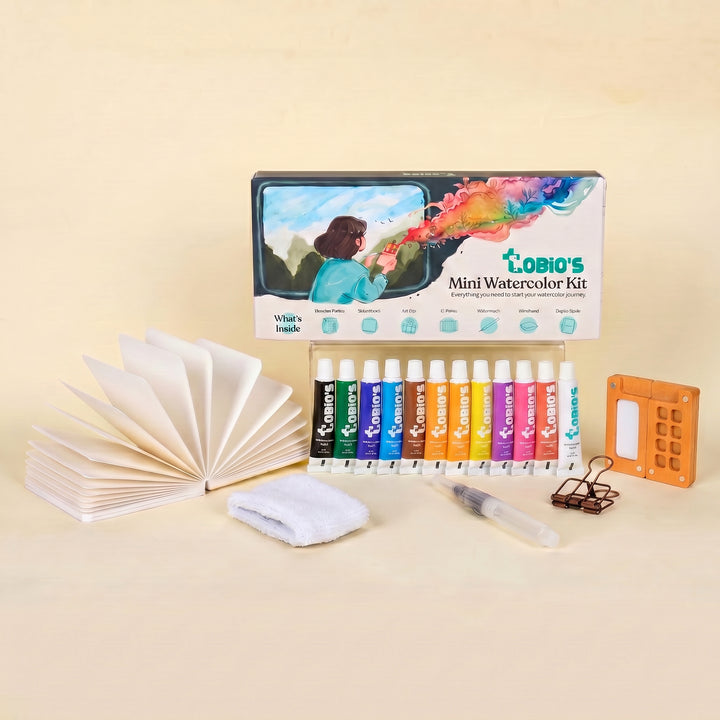
This tutorial was designed for use with our Watercolor Kit.
Shop the Kit


