


What Are the 4 Pillars of Watercolor?


What You'll Need
- Value — how light or dark, regardless of color
- Shape — the big forms, before the details
- Edges — hard vs soft, where you direct the eye
- Color — the mood (and the least important pillar)
For a while I kept a giant note on my phone called “watercolor tips,” and it had everything — long, messy, and impossible to navigate. I wanted to cram in every technique I could find.
With time I realized simpler is often better. That’s when I found the four pillars, and it changed how I look at watercolor — because sometimes four pillars are worth more than sixty random tips. (If you want the basics first, start with my beginner’s guide instead.)
The four pillars in one line
The four pillars of watercolor, as taught by painter Alvaro Castagnet, are color, shape, value, and edges. They’re not a set of techniques but a way of diagnosing a painting: value builds depth, edges direct the eye, shape carries the subject, and color sets the mood.
Castagnet laid them out in his book Watercolour Masterclass, and they’ve traveled well beyond his own workshops. Worth saying they’re not “official” — other masters have their own frameworks — but I find his a great way to understand painting and improve. A note on paint: you don’t need an expensive one. I do these exercises with the Tobio’s Watercolor Kit ($36), because twelve colors is the sweet spot — exactly what you need and nothing you won’t use.
Value — the one that carries the most weight
Value is probably the most important pillar: how light or dark something is, regardless of its color. Tate files this under tone — the relative lightness or darkness of a color. A painting with accurate values and random colors will look better than one with accurate colors and random values. If a painting looks flat or off, the values are usually too close together.
Quick check: squint at it until the detail disappears and only light and dark shapes remain. If it all turns to one grey mush, your lights and darks are too close. Student-grade paint carries less pigment than artist-grade, so you’ll need more layers to reach a deep dark — the 12 Extra Paint Refills ($10.99) let you be generous with pigment while you learn. Reaching for the black tube is the other trap; how to make black watercolor teaches you to mix a dark with life in it. Tate’s coursework guide on tone has great exercises too.
Edges — where you tell the eye to look
An edge is the border between two shapes, and its sharpness matters a lot. Some objects want a soft edge, some a hard one, and most paintings have both — the mistake is using the same hardness everywhere. Softer edges come from damp paper; crisper edges from dry paper. That’s the mechanism, covered properly in the wet-on-wet technique.
My cloud tutorial is really an edges exercise in disguise — mostly soft edges with one or two hard ones for structure. Control comes from the brush as much as the water, and a pointed round that holds its tip makes soft transitions easier; the Artist Brush Set ($21.99) covers the range if you need more than the kit’s water brush.
Shape — what you’re actually painting
Castagnet’s advice is to think in shapes rather than details. We fixate on capturing every leaf in a tree, but it’s far easier to block the big shapes first and let the small stuff be born later — or not at all. Often you don’t need the details to read the object.
Color — the one everybody starts with
This might surprise you, but color is the least important pillar. It’s the first thing people notice, yet even getting every color wrong affects a painting less than you’d think — value, edges, and shape all matter more to how we read a picture. For mixing the shade you want, a color mixing chart of your own palette beats any chart someone else made, and how to use watercolor paint covers getting a wash to the strength you meant.
How the four work together
The pillars don’t happen in a fixed order. Shape and value get decided together, before you touch water — usually in a quick sketch or a scrap-paper test. Edges are different: you’re making edge decisions the whole time you paint, because a hard or soft edge is set the moment you lay it and can’t easily be changed after. Color comes last, added on top of the shape, value, and edges you’ve already worked out.
That same order is your repair kit when a painting isn’t working: check value first, then shape, then edges, and only think about color after that. The golden rule of watercolor fits in here too — it’s really a value decision, because you choose your lightest areas before the first wash.
Frequently Asked Questions
What are the four pillars of watercolor?
Color, shape, value, and edges — set out by painter Alvaro Castagnet in his book Watercolour Masterclass.
What are the fundamentals of watercolor?
The same four, plus the physical habits of the medium: working light to dark, letting layers dry, and keeping your whites.
What is value in watercolor?
How light or dark a passage is, regardless of its color.
What are hard and soft edges?
A hard edge is painted onto dry paper and stays crisp. A soft edge is painted into damp paper and blurs outward.
Master four things, not sixty
A framework beats a list of tips because it tells you where to look when something’s off: check value first, then shape, then edges, and worry about color last. With sixty tips you’re just guessing which one applies.
The Watercolor Kit ($36) has the limited twelve-color palette these exercises want.
Mel, FounderMore watercolor tutorials
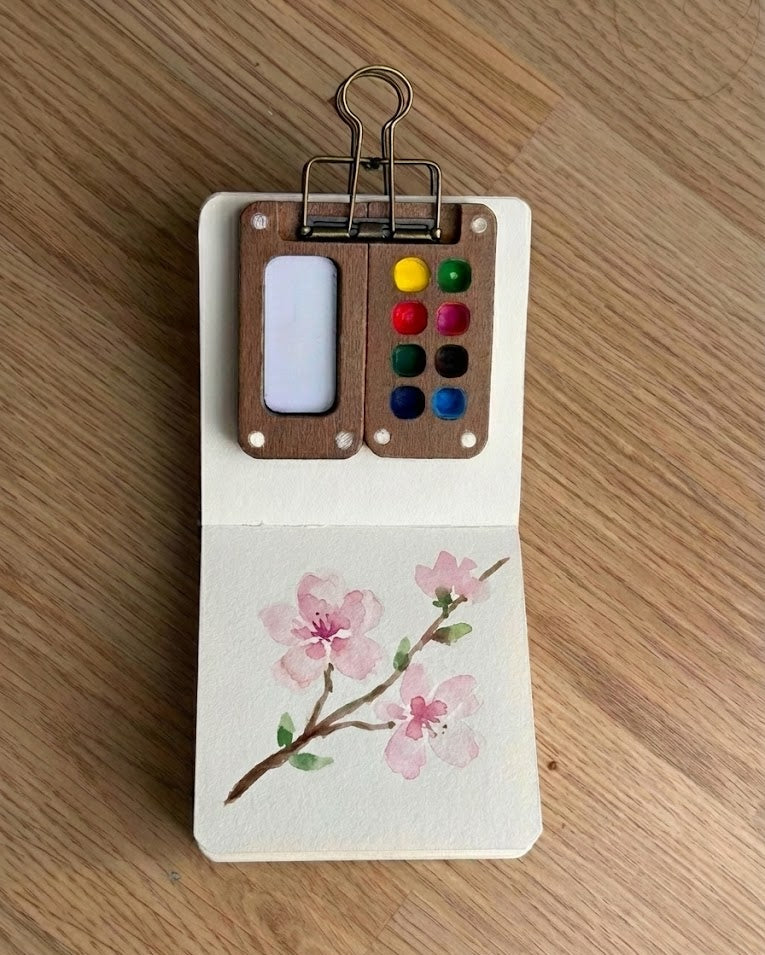
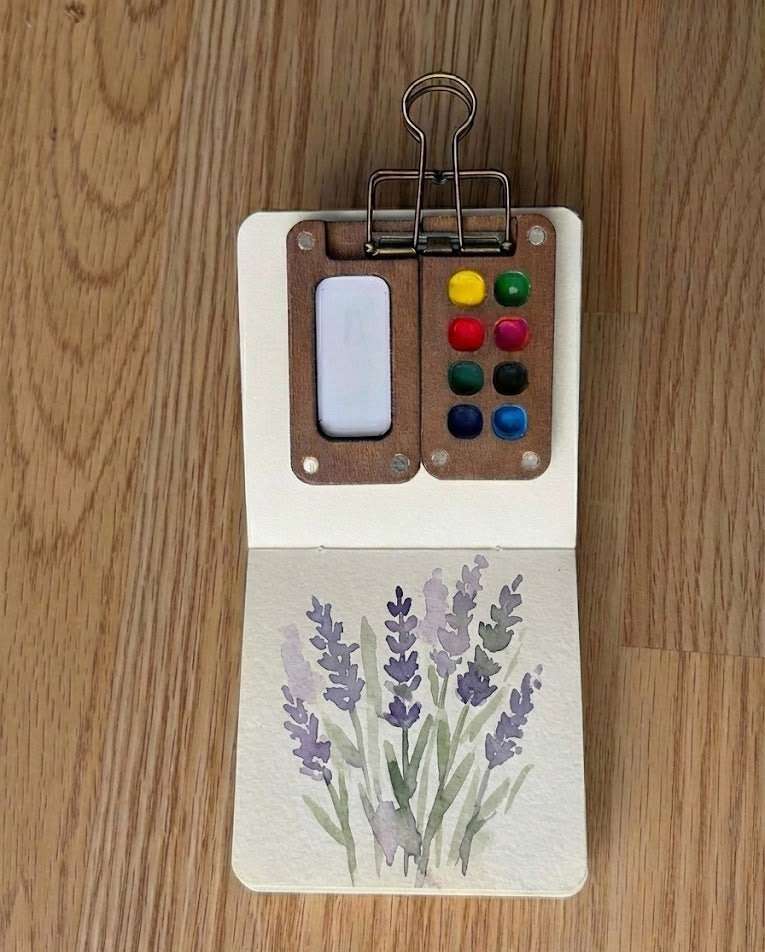
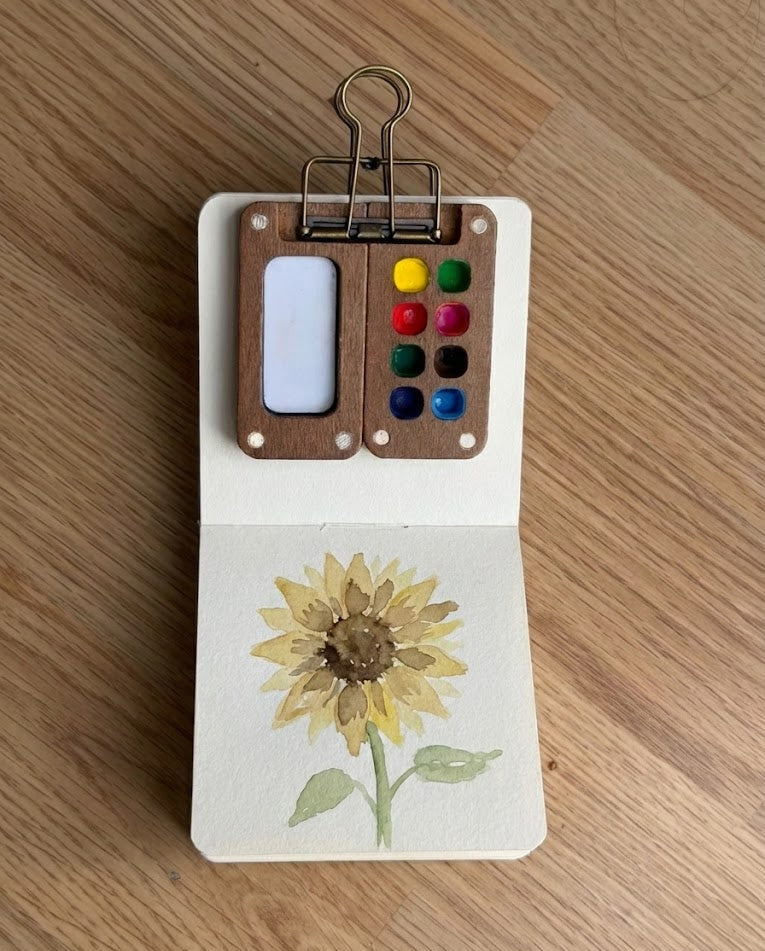
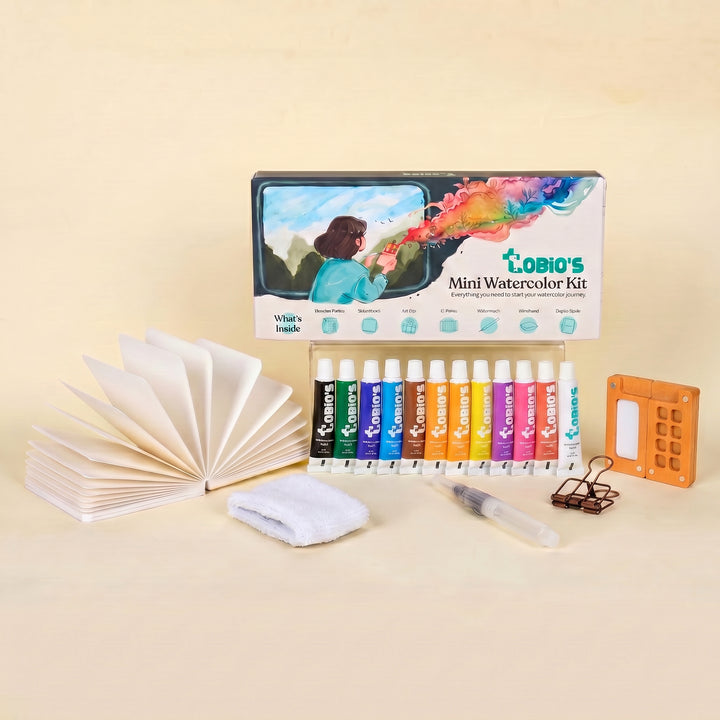
The limited palette these exercises want
Twelve student-grade colors, a magnetic walnut palette, a water brush, and 300 gsm cotton paper — the focused kit that makes practising value, shape, edges, and color simple.
Get the Tobio’s Watercolor Kit


